Kanna
Kanna History: Sceletium Tortuosum From the Karoo to Today
A short history of kanna: its Karoo home, the Khoikhoi and San, kougoed, Cape records from the 1600s, its scientific name, and modern extracts.

Key Takeaways
Kanna (Sceletium tortuosum) is a succulent plant native to South Africa, used by San and Khoikhoi peoples for centuries to support emotional resilience, endurance, and social bonding. Oral traditions suggest this use stretches back millennia, long before any written records existed. The kanna plant was not a casual intoxicant but a deeply respected tool for navigating daily hardships and ceremonial life.
The earliest European written records of kanna date to the 17th century, when Dutch settlers at the Cape of Good Hope documented trade with indigenous communities. However, the first European documentation of kanna dates back to as early as 1610 in some accounts, with more detailed records emerging around 1662 when Jan van Riebeeck noted kanna being bartered among local peoples. Archaeological and oral evidence points to far older indigenous use than any colonial journal could capture.
The traditional fermented preparation known as kougoed-meaning “something to chew” in Afrikaans-reflects sophisticated empirical knowledge. Traditional preparation involves fermenting Sceletium tortuosum for several days, a process that transforms harsh raw plant material into a gentler, mood enhancing remedy. Fermentation increases alkaloid levels compared to dried plant material, shifting the chemical profile toward compounds associated with calm and uplift.
Modern research has explored kanna’s potential as a natural supplement for mood enhancement, and science is now probing its biological and pharmaceutical properties. Sceletium tortuosum contains alkaloids like mesembrine and mesembrenone, which show promise for easing stress and low mood. Kanna has antidepressant properties confirmed in clinical studies, and Sceletium tortuosum reduces anxiety and promotes relaxation in early trials.
If you’re curious about experiencing this ancient tradition in a modern, responsible form, Poppy & Lotus offers carefully sourced kanna products that honor both the plant’s South African roots and contemporary quality standards.
Introduction: Why Kanna’s History Matters Today
Kanna-scientifically known as Sceletium tortuosum-is a small, unassuming succulent that once traveled through the hands of indigenous South African traders as a prized chewable cure. Long before it appeared in capsules or wellness blogs, this kanna plant was currency, medicine, and social glue for the communities that first learned its secrets. Understanding kanna history is more than an exercise in botanical trivia. It is a way to see why this plant matters, who it belongs to, and how its story should shape the way we use it today.
Kanna’s journey spans deep prehistory through colonial disruption, scientific curiosity, and the modern dietary supplements market. Along the way, it touches on San and Khoikhoi traditions, the art of kougoed fermentation, early European encounters at the Cape, the isolation of mesembrine alkaloids, and the ongoing conversation about ethics, conservation, and plant medicine in a globalized world. Each layer adds meaning to what might otherwise seem like just another herbal trend.
This article traces that full arc. And at the end, you will see how Poppy & Lotus approaches kanna with the kind of respect its history demands-sourcing thoughtfully, honoring traditional processing insights, and making it accessible for anyone drawn to this remarkable South African legacy.
The Kanna Plant: Botany and South African Roots
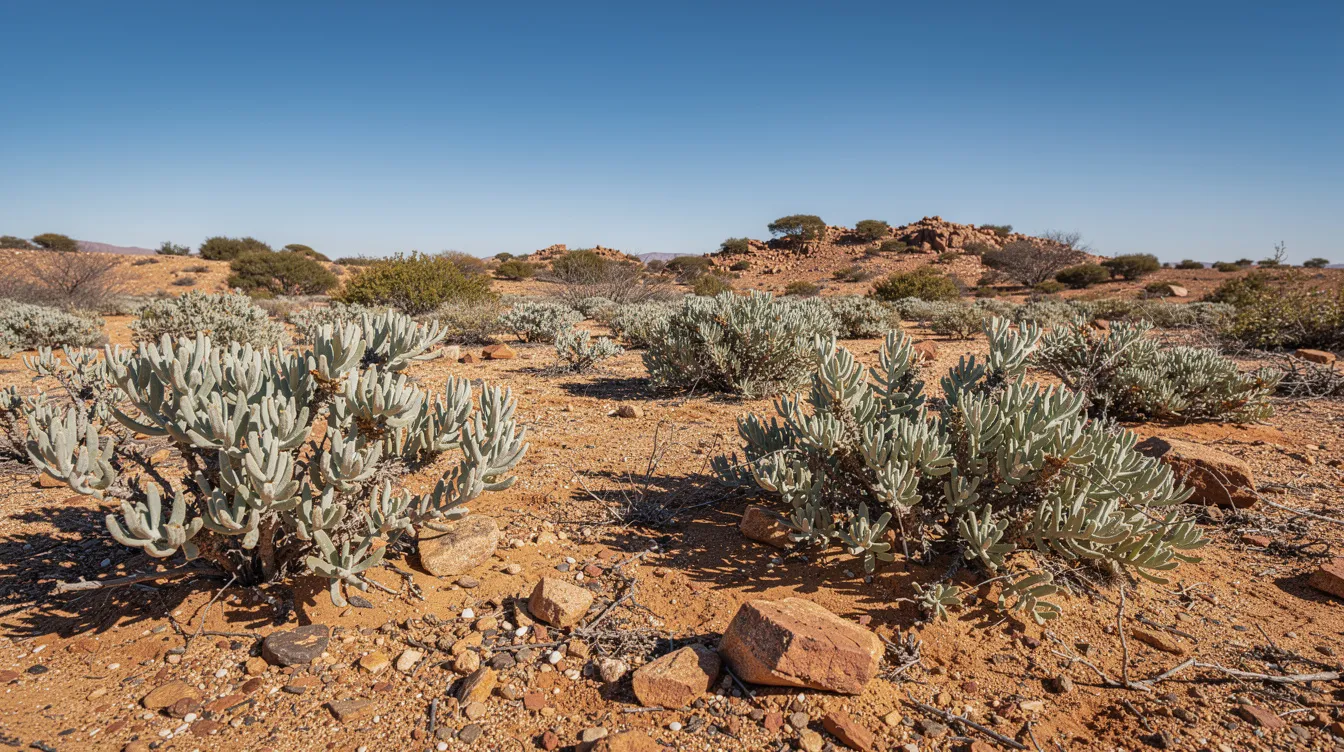
Kanna is a low-growing succulent in the Aizoaceae family-the same family that includes the ice plants you might recognize from coastal gardens. It thrives in the semi-arid karroid landscapes of South Africa’s Western Cape Province, Northern Cape, and Eastern Cape, clinging to rocky, sandy soils beneath shrubs where rainfall is sparse and seasonal.
The botanical name tells its own story. “Sceletium” derives from Latin for “skeleton,” a reference to the visible skeleton-like network of veins in the dried leaves. “Tortuosum” means twisted or contorted, describing the plant’s gnarled stems. These names align with its Afrikaans and Khoisan common names-kanna, channa, kougoed-each reflecting a different community’s relationship with the same plant.
Its distribution runs from Namaqualand through the Cederberg mountains toward Montagu and Aberdeen. Within that range, different wild populations develop distinct alkaloid profiles, known as chemotypes. One stand might be rich in mesembrine; another, just a few valleys away, might lean toward mesembrenone. This natural variation later shaped local traditions, as healers learned which sites yielded the best plant material for specific medicinal purposes.
While the genus Sceletium includes several sceletium species-such as S. expansum, S. strictum, and S. emarcidum, among other species-it is S. tortuosum that anchors both traditional mood-supporting use and current scientific research. Other sceletium plant species have been used in some communities, but far less frequently and with less documentation. Among the many medicinal and aromatic plants of southern Africa, kanna stands out for its psychoactive constituents and its deep cultural roots.
Khoisan Origins: San and Khoikhoi Discovery of Kanna
The San people-hunter-gatherers whose presence in southern Africa stretches back tens of thousands of years-and the Khoikhoi pastoralists are among the earliest known users of kanna. Kanna has been used by San and Khoikhoi tribes for centuries, and oral histories suggest the relationship is far older still. Knowledge was not written down. It was sung, danced, and passed from healer to apprentice through lineages that connected people to the land and its plants.
Kanna was historically used for healing, endurance, and social bonding. It was gathered from wild stands across the Cape, and the knowledge of which sites to visit, which season to harvest, and how much to take was considered specialized healer knowledge. Within the framework of traditional South African medicine, kanna occupied a distinct place: not as a casual snack, but as a purposeful plant medicine for emotional resilience and communal well-being.
The word “kanna” itself carries layers of meaning. In Khoisan cosmology, the eland antelope-a powerful, symbolic creature associated with potency, rain, and fertility-shares linguistic and spiritual overlap with the plant. Both represented sources of strength and connection. For these communities, kanna was embedded in a worldview where plants, animals, and people formed an interconnected web of meaning.
Kanna was a multi-purpose tool: it eased hunger on long treks, calmed nerves before difficult decisions, and helped people navigate grief, fear, and exhaustion. It was not a mind altering substance used recklessly, but a respected element in a broader system of plant knowledge and spiritual practice.
Kanna in Daily Life: Traditional Uses Before Colonization
Before any European ship rounded the Cape, kanna was woven into everyday Khoisan life. Herders and hunters chewing kanna on long journeys relied on it to suppress hunger and thirst, sharpen focus, and maintain stamina across miles of arid terrain. Kanna is traditionally used to relieve stress and tension-qualities that made it indispensable for people living close to the limits of physical endurance.
At the end of a hard day, kanna served as a tool for “heart-lightening.” After conflict, loss, or grueling physical labor, small amounts helped ease emotional weight and smooth social interactions around the communal fire. Women used fresh juice mixed with breast milk for infant colic, and fresh leaves were applied directly to sore gums or aching teeth.
Kanna can be chewed, smoked, or prepared as tea or snuff. Each method served different contexts. Chewing was the most common everyday approach. Smoking or snuffing was reserved for certain occasions, sometimes combined with other local psychoactive plants. In later periods, kanna was occasionally mixed with dagga (Cannabis sativa), though these were distinct traditions with different purposes.
Critically, preparation methods, dose, and occasion were carefully distinguished by experienced elders and healers. A small amount chewed casually during a walk was different from a larger dose prepared for ceremony. Some early European observers noted that the plant appeared to possess narcotic properties at higher doses, but within indigenous practice, moderation and intentionality were the rule, not the exception. Kanna’s role in traditional herbal medicine was precise, not haphazard.
Ritual, Trance, and Eland Symbolism
Kanna’s role extended beyond the practical and into the sacred. In Khoisan healing rituals-where rhythmic dance, song, and drumming could carry participants into trance states-kanna was sometimes used to support emotional openness, deepen communal connection, and sustain endurance through hours of movement. Among the psychoactive plants known to the San, kanna was valued not for hallucinations but for its ability to calm fear, lift sadness, and foster a sense of shared presence.
The eland, the largest antelope in southern Africa, held enormous symbolic weight. It was a figure of potency, rain, and fertility in San cosmology-a “trance animal” through which healers connected to spiritual power. Kanna’s effects-emotional elevation, communal bonding, calm endurance-mirrored qualities attributed to the eland. The overlap was not accidental. It reflected a worldview in which plants, animals, and human experience were interwoven.
It is important to understand that kanna was one element in a broader ritual toolkit. It worked alongside movement, breath, prayer, and community. It was not a stand-alone “drug experience” in the modern sense. Psychoactive substances in this context functioned as aids to already established spiritual practices, not as shortcuts to altered states.
For modern readers, these traditions deserve respect rather than casual appropriation. Learning about them is valuable. Trying to recreate them without context is something else entirely.
Kougoed: The Art of Fermenting Kanna
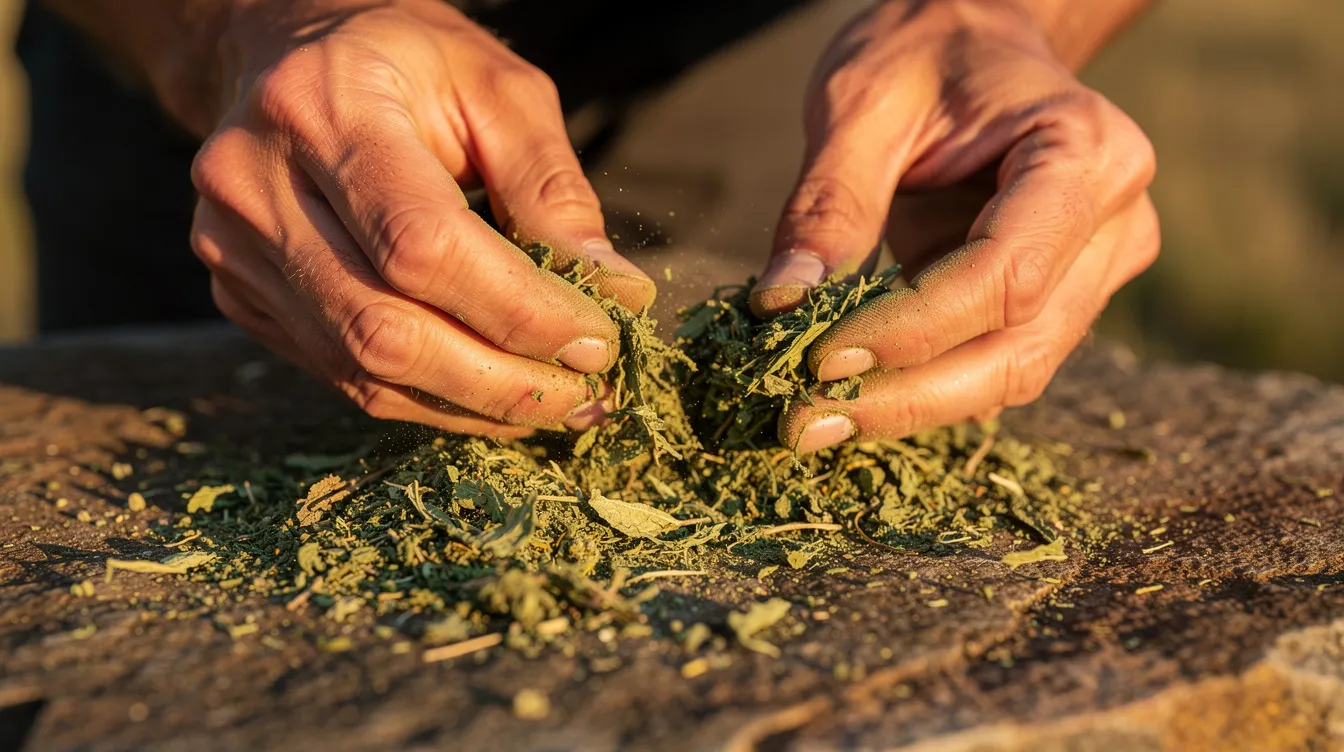
Kanna is traditionally called kougoed, which means “something to chew” in Afrikaans-a name that speaks directly to its most common use. But kougoed is more than just dried plant. It is the traditional fermented form of Sceletium tortuosum, and its preparation reflects centuries of empirical refinement.
The classic process works like this:
Harvest the aerial parts-leaves, stems, sometimes roots.
Bruise or crush the plant material, often with stones.
Heap the crushed material in sealed bags, pits, or containers.
Allow controlled fermentation for several days-typically two to three days of initial “sweating,” followed by mixing and further fermentation up to about eight days.
Spread the material in the sun to dry, then press it into plugs for chewing.
The Khoikhoi and San peoples developed fermentation methods for kanna that were anything but crude. Scientific analysis has confirmed that during fermentation, mesembrine content drops dramatically-from around 1.33% to roughly 0.05%-while mesembrenone, a related compound, increases. Sunlight and moisture are essential for these transformations, and crushing is what makes enzymatic conversion possible in the first place.
Khoikhoi healers emphasize proper preparation for effective use, and for good reason. Incomplete fermentation or hasty drying produces a harsher product with undesirable side effects. The shift from raw kanna to properly fermented kougoed reflects sophisticated insight into how processing changes the same plant’s biological and pharmaceutical properties-insight that modern producers are only now beginning to understand scientifically.
Poppy & Lotus draws on these traditional principles while following contemporary quality and safety standards, honoring the knowledge that makes kanna work as it should.
Earliest European Encounters: 17th-Century Records
European awareness of kanna begins with the earliest colonial outposts at the Cape of Good Hope. The first European documentation of kanna dates back to 1610 in some early Portuguese and Dutch references, though the most detailed early account comes from around 1662, when kanna was traded by Jan van Riebeeck with native tribes. Van Riebeeck’s records at Cape Town note that kanna was already a valued trade item between Khoi and San communities, bartered alongside livestock and other goods.
Kanna was documented by early European settlers in the late 17th century with increasing specificity. In 1685, Dutch Governor Simon van der Stel led an expedition to Namaqualand that produced one of the earliest European visual records of Sceletium-an illustration of the plant with its skeleton-like dried leaves, alongside notes describing it as “Canna,” gathered by the Nama people in October and held in high esteem. Van der Stel’s party compared it to betel among Indians-a familiar reference point for mind altering plant materials from the East.
By 1738, the traveler Kolben described channa as “the greatest Chearer of the Spirits, and the noblest Restorative in the World.” Europeans consistently compared kanna to stimulants like coffee, tobacco, or betel, yet frequently misunderstood its subtler emotional effects. The psychoactive effects of kanna did not fit neatly into European categories of intoxication, and much nuance was lost in translation.
What is clear is that early European curiosity about kanna set the stage for later botanical classification and pharmaceutical interest-even as much of the indigenous context was overlooked.
18th–19th Century: From Curiosity to “Chewable Cure”
Throughout the 18th century, botanists and travelers documented the preparation and trade of kanna and kougoed along the Cape routes. Some of these accounts reached institutions like the Royal Botanic Gardens, where naturalists catalogued specimens from around the world. Kanna increasingly entered the European conversation about useful plants, though always at the margins.
Reports described kanna being chewed, smoked, and occasionally mixed with dagga (Cannabis sativa). Some writers compared it to “ginseng of the South” for its tonic effects. By the early 1800s, kougoed had developed a reputation among settler communities for easing nervousness, low spirits, and minor aches-a local chewable cure that could be prepared at home with minimal tools.
Around the 1830s, written references begin using the name “kougoed” regularly, reflecting a merging of indigenous practice with colonial language. Medical missionaries and colonial physicians recorded uses for snakebites, stomach complaints, exhaustion, and teething. Pappe, writing in the mid-19th century, documents tincture and infusion forms. The plant’s medicinal value was increasingly acknowledged in what might be called an emerging south african herbal pharmacopoeia, though this corpus was informal and fragmented.
Despite growing European interest, much of the nuanced indigenous knowledge about dosing, timing, context, and preparation methods was ignored or oversimplified. Settlers adopted the product but often stripped it of the careful, occasion-specific protocols that made it safe and effective within Khoisan practice.
Early Scientific Interest: Alkaloids and Pharmacology
The late 19th and early 20th centuries marked a shift from ethnographic notes to laboratory analysis. Naturalists and chemists began isolating the active compounds in Sceletium tortuosum, seeking to understand what gave this humble succulent its mood enhancing reputation.
Key milestones include the early work of Zwicky around 1914, who proposed chemical formulas for what he called “mesembrin.” In 1937, Rimington and Roets published crystallization data for mesembrine, establishing its chemical identity more firmly. These mesembrine alkaloids would later prove central to understanding kanna’s effects on the central nervous system.
Sceletium tortuosum contains alkaloids like mesembrine and mesembrenone, along with compounds like mesembrenol and tortuosamine. Sceletium tortuosum alkaloids and the broader family of sceletium alkaloids drew interest because they appeared to act on neurotransmitter systems-particularly serotonin-in ways that aligned with the plant’s traditional reputation for easing mental diseases and emotional distress.
Scientists began to recognize potential pharmaceutical properties in kanna, but research remained sporadic through the mid-20th century. Synthetic drugs dominated psychiatry and pharmacology, and interest in south african medicinal plants faded into the background. The rapid characterization of kanna’s chemistry would have to wait for more advanced tools and renewed cultural interest.
Colonial Disruption and Survival of Indigenous Knowledge
Colonization did not simply bring curious botanists. It brought land dispossession, forced labor, disease, and the systematic suppression of Khoisan spiritual practices. Traditional knowledge about kanna-along with thousands of other threads of indigenous knowledge-was disrupted, fragmented, and in some cases nearly lost.
Much detail about ceremonial use, subtle dosing, and the spiritual context of kanna went underground. In rural and remote regions-Namaqualand, the Cederberg, the Karoo-elders, shepherds, and traditional healers quietly preserved preparation methods, passing them to trusted apprentices. Farm laborers continued to chew kougoed for relief from exhaustion and low spirits, maintaining a thread of practice even as the broader cultural framework was eroding.
This survival was not guaranteed. It required active resistance, memory, and a commitment to continuity in the face of enormous pressure. But it set the foundation for modern ethnobotanists to re-learn kanna lore directly from knowledge holders in the late 20th century. Without these individuals, the living tradition of kanna might have been reduced to museum specimens and colonial journal entries.
Modern readers should understand that kanna products available today are rooted in living cultures, not in Western “discovery.” The knowledge survived because people chose to keep it alive.
Ethnobotanical Revival: Retracing Kanna’s Trail
Beginning in the 1990s, South African ethnobotanists undertook a remarkable effort to retrace the historical trade routes through Namaqualand and the Cape, documenting living memory of kanna use before it faded further. Researchers like Smith, Gericke, and Viljoen collected oral histories from Nama, Griqua, and San communities, recording detailed accounts of harvesting practices, fermentation protocols, and distinctions between medicinal versus social kanna use.
These studies revealed a richness of practice that colonial records had barely scratched. Communities described how to identify the best chemotypes, when to harvest for maximum potency, and how to judge fermentation by taste, aroma, and color. This body of knowledge was not “folk wisdom” in the dismissive sense. It was a sophisticated empirical tradition refined over generations.
Ethical partnerships began to emerge during this period. Indigenous knowledge holders became co-researchers and partners in cultivation projects, and discussions about intellectual property and benefit-sharing gained momentum. South Africa’s Regulatory Framework for Bioprospecting, formalized around 2012, includes Sceletium tortuosum among the species covered by agreements designed to ensure that local communities benefit from commercial use of their traditional knowledge.
Cultivation trials, launched in the mid-1990s and expanded by about 2000, provided a way to produce consistent plant material for research and commercial product formulations without depleting wild stands. This revival bridged traditional wisdom and modern science, and it directly enabled the later appearance of standardized kanna extracts in global markets.
From Pasture to Pharmacy: Biological and Pharmaceutical Properties
For generations, Khoisan users observed that kanna calmed anxiety, lifted low mood, reduced pain, and supported endurance. Modern pharmacological research now provides mechanistic explanations for these observations, and the results are compelling.
Modern research has explored kanna’s potential as a natural supplement for mood enhancement across several domains. Key findings include:
Serotonin reuptake inhibition: Mesembrine, an alkaloid in kanna, inhibits serotonin reuptake-the same mechanism targeted by many conventional antidepressants. Mesembrine is a serotonin reuptake inhibitor found in kanna, and this action is thought to underlie its mood-lifting effects.
PDE-4 modulation: Mesembrenone acts as both a serotonin reuptake and PDE4 inhibitor, giving it a dual mechanism that may contribute to anti-inflammatory and cognitive benefits. Mesembrenol contributes to the pharmacological profile of kanna as well, adding complexity to how the plant works.
Anxiety reduction: Clinical trials show kanna reduces anxiety scores significantly. One placebo controlled trial in healthy adults demonstrated that a proprietary extract sceletium tortuosum ameliorates experimentally induced anxiety, consistent with traditional use for managing anxiety.
Cognitive effects: Studies in cognitively healthy subjects have explored cognition effects, measuring changes in cognitive performance, cognitive function, and even spectral local field power in the brain. Research in conscious freely moving rats has shown that tortuosum extracts alter neural activity in ways consistent with anxiolytic and mood-stabilizing compounds.
Broader applications: Kanna’s alkaloids exhibit anti-anxiety and antidepressant effects across multiple models. Kanna has antidepressant properties confirmed in clinical studies, and plant extracts show anti-inflammatory and antioxidant activity in vitro. Researchers are now investigating potential roles in mood disorders, cognitive impairment, and mental health conditions.
Kanna’s bioactive alkaloids-at least nine distinct compounds identified so far-interact with the central nervous system in ways that align closely with what traditional users reported for centuries. Sceletium tortuosum reduces anxiety and promotes relaxation, and the acute effects in healthy volunteers have generally been well-tolerated.
It is essential to note, in balanced language, that while early animal and human clinical trials are promising, kanna is not a replacement for prescribed treatment for mental diseases without medical guidance. But this research helps explain why a humble South African chewable cure is now of interest to pharmaceutical properties researchers worldwide.

Kanna in Modern Dietary Supplements and Wellness
From the early 2000s onward, kanna began appearing in dietary supplements, herbal blends, and functional wellness products around the world. Kanna is sold as dietary supplements globally, and Sceletium tortuosum is commercially available in various forms. Kanna products include teas, capsules, and powders, as well as tinctures, chewable tablets, and occasionally topical preparations. Sceletium tortuosum extract based products-including branded formulations using a standardized extract-have become increasingly popular.
Kanna is marketed for stress relief and mood enhancement, echoing traditional South African uses in a contemporary context. Many commercial product formulations aim to support mood, social ease, focus, and the ability to reduce stress in daily life. The World Health Organization and other bodies have noted growing consumer interest in traditional herbal medicine as a complement to conventional care, and kanna fits squarely within that trend.
However, the rapid expansion of the market raises legitimate concerns. Quality control is inconsistent across brands. Supplement adulteration-where products contain less active compound than labeled, or include undisclosed ingredients-has been documented in the broader herbal supplement industry and applies to kanna as well. Modern day regulatory systems vary by country, and not all products undergo a toxicological safety assessment before reaching consumers.
Consumers should look for brands that disclose sourcing, identify the specific sceletium plant species used, and avoid exaggerated claims. Combining kanna with other serotonin-active psychoactive drugs or medications without professional guidance is a real risk. Responsible use means treating kanna as an aromatic plants-derived supplement with genuine potency, not as a harmless novelty.
Poppy & Lotus positions itself within this landscape as a brand that approaches kanna with respect for its South African roots, prioritizing quality, transparency, and cultural context.
Cultural Respect, Ethics, and Benefit-Sharing
Kanna’s international popularity has raised questions about the protection of Indigenous knowledge-and rightly so. The Khoisan peoples who developed fermentation methods, identified the best chemotypes, and integrated kanna into their spiritual and medical traditions did not consent to having their knowledge commercialized without acknowledgment or compensation.
Benefit-sharing agreements and community partnerships in South Africa have been developed to address this imbalance. The South African biodiversity and bioprospecting regulatory framework includes Sceletium tortuosum, requiring that companies engaging in commercial development of the plant establish agreements with the San Council and other representative bodies. These frameworks are imperfect, but they represent important progress.
As a consumer, your choices matter. Supporting brands that source transparently, engage respectfully with South African partners, and contribute to community development is one tangible way to honor the people behind the plant. Purchasing kanna should not feel like extracting value from a distant culture. It should feel like participating in a relationship.
Poppy & Lotus aims to foreground origin and ethics so customers can feel connected to kanna’s real South African roots-not just its chemistry.
Conservation, Cultivation, and the Future of Wild Kanna
Wild Sceletium tortuosum populations in the Cape provinces are classified as “Least Concern” in broad conservation assessments, but that label masks real pressures at the local level. Sceletium tortuosum is harvested for medicinal use, impacting its population in certain areas where demand outstrips natural regeneration. Habitat loss from agriculture and veld mismanagement adds additional stress.
The rise of cultivated kanna in South Africa offers a meaningful solution. Cultivation programs-expanding since the mid-1990s-provide several advantages:
Consistent chemotypes for research and product development
Reduced pressure on vulnerable wild stands
Economic opportunity for rural and indigenous communities
Greater traceability and quality control for consumers
Cultivated supply now underpins most major commercial extracts and has enabled the kind of standardized research that would be impossible with variable wild-harvested material.
Consumers can support conservation by favoring products that disclose whether kanna is sustainably wild-harvested or cultivated under responsible practices. The future of wild kanna depends on balancing commercial demand with ecological protection-and on ensuring that the communities who have long stewarded this plant continue to benefit from its global success.
How Poppy & Lotus Connects You to Kanna’s Story
Poppy & Lotus sees kanna as a bridge between ancestral South African wisdom and modern self-care. The brand’s interest in this plant is not about chasing trends-it is about honoring a tradition that has supported emotional balance, social connection, and resilience for longer than any written record can capture.
When sourcing kanna, Poppy & Lotus pays attention to origin in South Africa, respect for traditional processing insights, and careful testing for purity and potency. Products are intended to support gentle mood balance and help reduce stress-not to recreate intense trance rituals or replace medical care for serious mental health conditions.
If you are drawn to kanna’s story, Poppy & Lotus invites you to explore their kanna products as a way to experience this history in a grounded, everyday form. Start with low doses. Check for interactions with any medications you take. Approach kanna with curiosity and respect for its cultural roots, and let the plant teach you what centuries of indigenous users already knew: that sometimes the gentlest remedies are the most enduring.
Timeline: Key Moments in Kanna History
Kanna’s timeline stretches from deep prehistory to the present, threading through indigenous practice, colonial encounter, scientific inquiry, and global wellness culture.
In deep prehistory-thousands of years before any written record-San and Khoikhoi communities in southern Africa used Sceletium tortuosum for chewing, healing, emotional resilience, and hunger suppression. Knowledge was transmitted orally through healer lineages, songs, and rituals.
Around 1610, the earliest European references to kanna appear in traveler accounts from the Cape region. By 1662, Jan van Riebeeck’s Dutch settlement at the Cape of Good Hope documented kanna being traded among indigenous communities near Cape Town. In 1685, Simon van der Stel’s expedition to Namaqualand produced an illustration and description of “Canna”-one of the first visual records of the sceletium plant in European colonial documentation. By 1738, Kolben had described kanna as the “greatest Chearer of the Spirits.”
Through the 19th century, kougoed entered colonial herbals and settler practice. Pappe recorded tinctures and infusions at mid-century. In the early 20th century, Zwicky (around 1914) proposed chemical formulas for mesembrin, and Rimington and Roets crystallized the compound in 1937-key milestones in the study of sceletium tortuosum alkaloids.
The mid-20th century brought a lull. Traditional use retreated to rural communities as synthetic psychoactive drugs dominated pharmacology and academic interest waned. Then, in the 1990s, ethnobotanical revival began in earnest. Researchers documented oral histories, launched cultivation trials, and began the ethical partnerships that would shape the industry. By the early 2000s, standardized kanna extracts and commercial products entered global markets.
In recent years, clinical trials in healthy volunteers have explored kanna’s effects on cognitive performance, mood, and anxiety. Cultivation programs have expanded. Benefit-sharing frameworks have matured. And companies like Poppy & Lotus have entered the space with a commitment to cultural context, sustainable sourcing, and responsible product development. The story is still being written.

How Traditional Wisdom Informs Safe Modern Use
Modern guidelines for safe kanna use are deeply informed by historical practices around dose, timing, and preparation. The Khoisan understanding that fermentation transforms the raw plant into something gentler and more effective is not superstition-it is confirmed by alkaloid profiling. Processing matters, and it always has.
Traditional cautions are worth heeding. Taking too much could cause dizziness, nausea, or emotional flattening. Kanna was typically used in moderate, purposeful amounts-intermittently, for specific occasions, not as a daily crutch. Elders watched for signs of overuse and adjusted or paused use accordingly. These patterns reflect a nuanced understanding of psychoactive effects that modern users would do well to adopt.
Translated into modern advice, the lessons are straightforward:
Start with low doses and increase gradually
Avoid combining kanna with SSRIs, SNRIs, MAOIs, or other strong serotonin-modulating medications without professional guidance
Treat kanna with the same respect as any psychoactive substance
Take breaks rather than escalating intake
Listen to your body and consult a healthcare provider if uncertain
While many people use kanna safely, there is still limited long-term safety data in humans. The available clinical trials and traditional usage patterns suggest that a historically rooted, measured approach aligns better with the plant’s South African heritage than chasing intense or recreational effects.
Conclusion: A Living South African Legacy
Kanna’s story is not a relic preserved in museum glass. It is a living thread connecting ancient Khoisan practices, colonial history, modern science, and today’s wellness culture. It begins in the arid landscapes and resilient communities of South Africa, where a small succulent supported emotional balance, social connection, and endurance through conditions most modern readers can barely imagine.
Biological and pharmaceutical research is now beginning to validate what traditional users observed over centuries: that kanna’s alkaloids interact with the brain’s serotonin and other systems in ways that genuinely support mood, reduce stress, and promote calm focus. The gap between ancestral knowledge and laboratory findings is closing, and the convergence is striking.
If kanna’s history resonates with you, Poppy & Lotus offers a thoughtful, ethically minded way to integrate this legacy into your own routine. Their kanna products are crafted with attention to origin, processing tradition, and contemporary quality standards. Explore them not as a shortcut to wellness, but as a quiet act of participation in one of the longest, most enduring stories in the world of plant medicine.

And as you do, remember the people who kept this knowledge alive through centuries of disruption. Their generosity, memory, and resilience are part of every dose.
Frequently Asked Questions about Kanna History and Use
Is kanna the same as cannabis or other psychoactive herbs?
No. Kanna (Sceletium tortuosum) is botanically and pharmacologically distinct from Cannabis sativa, kratom, or classic psychedelics. It belongs to the Aizoaceae family of succulent plants, not the Cannabaceae family. Its traditional effects center on gentle mood lifting, stress relief, and social ease rather than vivid hallucinations or strong intoxication.
Historical reports note that kanna was sometimes smoked alongside Cannabis sativa in South Africa, which may have caused confusion between the two plants. But they are entirely different organisms with different active compounds and different effects. Modern kanna dietary supplements are usually standardized for subtle, functional mood support rather than intense psychoactive experiences.
How did traditional South African users avoid side effects?
San and Khoikhoi communities relied on careful dosing, gradual chewing, and properly fermented kougoed rather than large amounts of raw plant. Kanna was typically used intermittently and purposefully-for long journeys, ceremonies, or specific emotional states-not as a constant daily supplement.
Elders and healers watched for signs of overuse, such as dizziness, emotional flattening, or stomach upset, and adjusted or paused use accordingly. The lesson for modern users is clear: start with low doses, pay attention to your body, take breaks, and avoid escalating intake.
Can kanna be used alongside antidepressants or anti-anxiety medications?
Because kanna may influence serotonin and related pathways, combining it with SSRIs, SNRIs, MAOIs, or other psychiatric medications carries potential risks, including the theoretical possibility of serotonin syndrome. Anyone on prescription antidepressants, mood stabilizers, or anti-anxiety psychoactive drugs should consult a qualified healthcare professional before trying kanna.
Historical use did not have to contend with modern pharmaceuticals, so traditional patterns cannot directly answer complex interaction questions. Prioritize safety and informed medical guidance over self-experimentation when medications are involved.
Is all kanna on the market sourced from South Africa?
While Sceletium tortuosum is native to South Africa, today it may be cultivated both within South Africa and in other compatible climates. Authentic products should clearly identify Sceletium tortuosum as the source species and ideally indicate South African origin or partnership.
Look for transparent sourcing information, and where possible, support brands that work with South African growers and communities. Poppy & Lotus aims to foreground origin and ethics so customers can feel connected to kanna’s real South African roots rather than to anonymous global supply chains.
How can I honor kanna’s cultural history when using it today?
Start by learning about San and Khoikhoi history and acknowledging South Africa as kanna’s homeland. Choose products from companies that support ethical sourcing and, when possible, benefit-sharing with South African partners.
Treat kanna as a teacher plant for emotional balance rather than a quick fix or novelty-mirroring its traditional role in fostering resilience and connection. Every cup of kanna tea or capsule taken with care can be a quiet act of respect for the people who kept this knowledge alive through centuries of disruption.