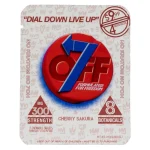
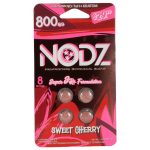
7-OH
Is 7‑OH Legal in Tennessee? 2026 Kratom & 7‑Hydroxymitragynine Law Explained
Tennessee drew a hard line on kratom and 7‑hydroxymitragynine in 2026. If you’ve been searching for clarity on whether 7 OH is legal in Tennessee, the short answer is no-possession, sale, and distribution of both kratom and 7‑OH are now criminal offenses statewide. Here’s everything you need to know about the law, how it got…

Tennessee drew a hard line on kratom and 7‑hydroxymitragynine in 2026. If you’ve been searching for clarity on whether 7 OH is legal in Tennessee, the short answer is no-possession, sale, and distribution of both kratom and 7‑OH are now criminal offenses statewide. Here’s everything you need to know about the law, how it got here, and what it means for you.
Key Takeaways
As of July 1, 2026, Tennessee fully banned kratom and 7‑hydroxymitragynine (7‑OH) under Matthew Davenport’s Law. Below are the critical points:
-
Under HB1649/SB1656 (Matthew Davenport’s Law), kratom and 7‑OH are illegal to possess, sell, or distribute anywhere in Tennessee as of July 1, 2026. Possession of kratom is a Class A misdemeanor; manufacture or sale of kratom is a Class C felony.
-
The law covers both whole‑leaf kratom products and concentrated 7‑OH isolates or derivatives. There is no threshold, no natural‑form exception, and no exemptions for products purchased prior to the enactment of the ban.
-
7‑OH remains federally unscheduled as of November 2026, but the DEA has issued notices of intent to temporarily schedule concentrated 7‑OH nationally above certain thresholds.
-
This article is informational only, is not legal advice, and Poppy Lotus does not sell kratom or 7‑OH products. Readers interested in lawful botanicals can explore Poppy Lotus’s other offerings where permitted.

Overview: Is Kratom & 7‑OH Legal in Tennessee in 2026?
As of July 1, 2026, kratom and 7‑OH (7‑hydroxymitragynine) are illegal statewide in Tennessee under HB1649/SB1656, also known as Public Chapter 950. The Tennessee kratom ban covers kratom’s main alkaloids-mitragynine and 7‑OH-regardless of whether they appear in plant leaf, extracts, gummies, tablets, shots, or any other form.
Key dates to remember:
|
Milestone |
Date |
|---|---|
|
House passage (78–9) |
April 8, 2026 |
|
Senate passage (23–2) |
April 16, 2026 |
|
Governor Bill Lee’s signature |
May 7, 2026 |
|
Effective date |
July 1, 2026 |
This makes Tennessee one of several U.S. states to fully ban kratom, setting it apart from states that adopted a kratom consumer protection act model-an approach that regulates rather than criminalizes. Before 2026, Tennessee law distinguished between natural kratom leaf (legal for adults 21+) and synthetic or concentrated derivatives (restricted). That distinction no longer exists.
How Tennessee Law Defined Kratom, 7‑OH, and Related Alkaloids
The kratom plant contains dozens of alkaloids, but two drew the most legislative attention in Tennessee: mitragynine (the most abundant) and 7‑hydroxymitragynine (far more potent). Together, kratom and 7 OH became the focal point of the 2026 debate because of their action on opioid receptors and the escalating number of harm reports tied to concentrated products.
Tennessee’s 2026 kratom law explicitly names mitragynine and 7‑hydroxymitragynine, bringing both natural kratom and 7‑OH concentrates under the same criminal statute. Section 2 of the act defines “Kratom” as:
-
Any part of Mitragyna speciosa containing mitragynine or 7‑OH.
-
Any substance obtained by extraction of the leaf.
-
Any alkaloid or derivative created by chemical or biosynthetic alteration.
-
Any analog or preparation “substantially chemically equivalent” to kratom.
Prior to July 1, 2026, the Tennessee code distinguished “natural kratom” (whole‑leaf products with naturally occurring alkaloids) from synthetic or highly concentrated derivatives, with the latter treated more restrictively. Post‑ban, Tennessee law no longer recognizes a legal difference-kratom or 7 OH in any form falls under the same prohibition on kratom possession, manufacture, delivery, and sale.
Timeline of Tennessee Kratom & 7‑OH Regulation up to July 1, 2026
Tennessee’s path from restricted‑but‑legal kratom to a full statewide kratom ban unfolded over several years, accelerating sharply in early 2026.
Pre‑2026: Under Tennessee Code § 39‑17‑452, natural kratom leaf was legal for adults 21 and older, provided it met labeling requirements and contained no synthetic adulterants. Concentrated 7‑OH shots and synthetic derivatives were already under scrutiny, but not uniformly banned.
Early 2026: The Tennessee General Assembly introduced competing kratom‑related bills. An initial, more punitive draft (HB1647/SB1655) preceded the substitute pair (HB1649/SB1656) that ultimately passed. A separate “regulate, don’t ban” proposal-HB2594-would have set caps on 7‑OH content and mandated lab testing instead of criminalizing kratom outright. That approach stalled in committee.
April–May 2026: The House passed HB1649 on April 8 (78–9). The Senate passed the companion bill 23–2 on April 16. Governor Bill Lee signed it into law on May 7, making Tennessee one of the strictest states in the country on kratom policy.
July 1, 2026: The kratom ban took effect. The Tennessee Department of Health listed kratom among “Emerging Substances”, warning that all forms-leaf, gummies, shots, extracts-are now banned statewide.

Before the Ban: Legal Treatment of Kratom Leaf vs. Concentrated 7‑OH in Tennessee
Before July 2026, Tennessee operated under a split system: adult access to kratom leaf coexisted with stricter oversight of synthetic or concentrated products. Understanding this history matters because it explains why lawmakers eventually chose a total ban over targeted regulation.
Under the old Tennessee code § 39‑17‑452, sales of natural kratom products to adults 21 and older were permitted, provided the product contained only plant‑derived alkaloids and no added synthetic 7‑OH. Vendors had to label products and could not make medical claims.
Concentrated 7‑OH shots, tablets, and similar isolates were a different story. Because 7‑hydroxymitragynine interacts heavily with the brain’s opioid receptors-binding more aggressively than mitragynine alone-regulators and law enforcement treated high‑potency items as a distinct risk category. Vendors marketing what critics called “gas station heroin” faced increasing pressure even while raw kratom powder sat on the same shelves.
This pre‑ban split-relatively lenient for kratom leaf but tougher on concentrated 7‑OH-set the stage for two competing legislative approaches: tighten regulation around 7‑OH specifically, or fully ban kratom and all its derivatives. Lawmakers chose the latter.
Matthew Davenport’s Law (HB1649/SB1656): What Changed on July 1, 2026
Matthew Davenport’s Law transformed kratom’s legal status from an age‑restricted natural supplement to a controlled substance in Tennessee. The law is named after Matthew Davenport, a Tennessee resident whose 2024 death involved kratom in combination with prescribed medication. His case was repeatedly cited during 2026 legislative hearings as evidence that kratom posed serious risks even for otherwise healthy adults.
Here’s what the law does:
-
Criminalizes knowing possession of kratom and 7‑OH-classified as a Class A misdemeanor (up to 11 months, 29 days in jail; fines up to $2,500).
-
Makes manufacture, delivery, or sale a Class C felony (3 to 15 years in prison, plus significant fines).
-
Escalates penalties when the recipient is a minor: selling or giving kratom or 7‑OH to someone under 18 (by an adult at least two years older who knows the recipient’s age) is a Class B felony.
The statute defines banned substances broadly, sweeping in both traditional kratom and modern extracts. After July 1, 2026, there is no “kratom legal” loophole for adults 21+ in Tennessee. The legal status is uniform statewide: kratom and 7‑OH are illegal. The law provides no exemptions for products purchased prior to the enactment of the ban.
The Ban vs. the Regulate‑and‑Cap Proposal (HB2594)
Tennessee lawmakers weighed two paths: a total Tennessee ban on kratom versus a regulated‑access model with 7‑OH limits. The contrast is worth understanding because it illuminates an ongoing national debate.
HB2594’s core features:
-
Keep kratom legal for adults 21+ while capping 7‑OH content per serving.
-
Prohibit synthetic or spiked alkaloids.
-
Mandate labeling and certificates of analysis from independent labs.
-
Treat concentrated 7‑OH like a controlled additive rather than outlawing the entire kratom plant.
HB1649/SB1656 (the winning approach):
-
Reject partial regulation entirely.
-
Criminalize kratom and 7‑OH together, regardless of dose, form, or purity.
HB2594 failed to advance. Committee inaction, concern about enforcement complexity, and political pressure following high‑profile death cases-including Matthew Davenport’s-left the full ban as the only live option. Organizations like the American Kratom Association had pushed for regulation over prohibition nationally, but those arguments did not carry the day in Nashville.
Why 7‑OH Drew Special Regulatory Attention
7‑Hydroxymitragynine is a kratom alkaloid present at low levels in natural leaf, but when isolated or concentrated, it becomes dramatically more potent. This distinction is at the heart of why 7‑OH attracted more alarm than mitragynine or raw kratom powder.
At a pharmacological level, 7‑OH binds aggressively to the same opioid receptors targeted by prescription painkillers like morphine. Kratom acts on opioid receptors like morphine and codeine, but 7‑OH does so with considerably greater strength, increasing the potential for physical dependence, respiratory depression, and overdose. The FDA warns kratom can cause severe health issues including liver toxicity, seizures, and death.
Tennessee lawmakers and regulators saw 7‑OH products-especially shots, tablets, and fortified gummies-as a distinct public‑health concern. Data from Knox County reported 18 kratom‑involved deaths in 2026 alone, with five cases where kratom alkaloids were identified as the sole cause. Rising emergency visits and polysubstance overdoses fueled calls to ban kratom or 7 OH products outright. Regulators considered capping 7‑OH content (as in HB2594), but ultimately adopted the broader ban.
State Ban vs. Federal 7‑OH Status
The difference between Tennessee law and federal law on kratom and 7‑OH matters-especially if you live near a state border or order products online.
As of November 2026, kratom itself is still not scheduled under the federal Controlled Substances Act. Mitragynine and 7‑OH remain federally unscheduled in finished form, though the DEA filed a Notice of Intent on July 1, 2026 to temporarily place synthetic 7‑hydroxymitragynine above certain thresholds (over 0.050% by dry weight, or above 1.00 mg per dosage unit) into Schedule I. Related synthetic compounds-MGM‑15 and MGM‑16-have already been placed under emergency scheduling orders. However, no final federal scheduling order for 7‑OH had taken effect as of November 13, 2026.
Tennessee’s kratom ban operates independently of any federal scheduling decision. Kratom and 7‑OH remain illegal in Tennessee regardless of their federal status. Federal regulations regarding 7‑OH may differ from Tennessee state law enforcement actions, but residents must comply with the stricter state rule. Tennessee law does not permit sales of 7‑OH products online or delivery into the state-crossing state lines or using the mail does not create a loophole.
Legal Consequences for Kratom or 7‑OH Possession in Tennessee
Penalties under Matthew Davenport’s Law can be severe, particularly for anyone manufacturing or selling kratom or 7‑OH. Here’s a breakdown:
|
Offense |
Classification |
Potential Penalty |
|---|---|---|
|
Knowing possession |
Class A misdemeanor |
Up to 11 months, 29 days jail; up to $2,500 fine |
|
Manufacture, delivery, or sale |
Class C felony |
3 to 15 years prison; significant fines |
|
Sale/delivery to a minor |
Class B felony |
8 to 30 years prison; significant fines |
Selling kratom to a minor is a Class B felony, reflecting legislators’ focus on youth access to high‑potency products. Failure to comply with the kratom ban can result in felony prosecution for businesses that continue stocking kratom products. Using the term “7OH” in marketing also carries regulatory consequences under both state and federal enforcement frameworks.
This article provides a summary, not legal advice. If you face kratom‑ or 7‑OH‑related charges, consult a licensed Tennessee criminal‑defense attorney immediately.
Kratom Dependence, 7‑OH, and Treatment Options After the Ban
Kratom dependence and kratom addiction did not disappear just because Tennessee changed the law on July 1, 2026. Many kratom users across the state still struggle with kratom or 7‑OH use disorder, and the ban may have actually increased withdrawal intensity for some who lost access suddenly.
Kratom and 7‑OH act on the same opioid receptors targeted by prescription opioids. Because of this, kratom dependence is clinically similar to other forms of opioid use disorder and often responds to standard substance abuse treatment approaches. Kratom withdrawal symptoms resemble opioid withdrawal symptoms-muscle aches, anxiety, joint pain insomnia, nausea, opioid cravings, and muscle pain that can make stopping kratom abruptly extremely difficult. Kratom withdrawal symptoms start within 12 to 24 hours of the last dose, and acute kratom withdrawal symptoms peak in the first few days. Withdrawal can be severe for long‑term kratom users who took kratom daily in high doses. Stopping kratom suddenly can trigger opioid‑like withdrawal symptoms comparable to what someone might experience quitting prescription medication cold turkey.
Notably, 79% of kratom‑associated deaths involved multiple substances-meaning other substances like benzodiazepines, alcohol, or opioids were also present, complicating the clinical picture.
Evidence‑based kratom addiction treatment includes:
-
Medically supervised detox to manage withdrawal and monitor severe withdrawal symptoms.
-
Medication‑assisted treatment (MAT): Suboxone (buprenorphine/naloxone) is used for kratom dependence to reduce opioid cravings and manage chronic pain or opioid dependence safely under medical guidance.
-
Cognitive Behavioral Therapy (CBT): Effective for addressing the psychological dimensions of kratom addiction, helping a clinical team and licensed clinician build a treatment plan tailored to each patient.
-
Outpatient and residential options: Kratom dependence treatment includes outpatient programs for those with milder substance use disorder and residential care for more difficult kratom cases. Most commercial insurance plans cover some level of disorder treatment.
Confidentiality in treatment is protected under federal law-seeking help for kratom dependence is a protected medical decision, not a criminal admission. If you or someone you know needs to seek treatment, contact SAMHSA’s National Helpline at 1‑800‑662‑4357.
Poppy Lotus does not provide medical care or sell kratom or 7‑OH products.

Kratom, 7‑OH, and Consumer Safety in a Post‑Ban Market
The July 1, 2026 kratom ban pushed sales off mainstream shelves in Tennessee and into informal channels, increasing safety risks for some users. When a natural remedy or natural supplement becomes illegal, demand doesn’t vanish-it moves underground.
Reports from Tennessee since July 2026 include retailers swapping kratom products for other botanicals, plus the emergence of unregulated resale on social media and in private networks. Some substitute products marketed as “cat’s claw” or similar herbs have allegedly contained 7‑OH analogs or designer compounds, underscoring the dangers of unlabeled, untested items. The Shelby County DA’s office has announced enforcement operations targeting synthetic and chemically manipulated kratom, noting fake lab tests and dangerous products still circulating.
If you’re in Tennessee and looking for botanicals for non‑psychoactive wellness interests-to manage pain, support relaxation, or explore herbal options-choose reputable vendors that prioritize testing, transparent labeling, and legal compliance. Readers interested in lawful, non‑kratom botanicals can explore the broader Poppy Lotus catalog online. The brand does not sell kratom or 7‑OH and complies with all applicable Tennessee and federal regulations.
Checking Current Kratom & 7‑OH Law in Tennessee
State and federal drug laws change, sometimes quickly. Before relying on older information-including this article-verify the current status of kratom and 7‑OH.
Where to check:
-
Tennessee General Assembly website: Search for HB1649/SB1656 (Public Chapter 950) to find the official text, any amendments, or clarifying guidance.
-
Legiscan or Justia: Both offer bill history, vote records, and cross‑references to Tennessee code sections affected by the 2026 kratom ban.
-
DEA and FDA press releases: Monitor for updates on federal actions relating to 7‑OH, including any final scheduling orders following the October 2026 notices of intent.
-
Tennessee Department of Health: Check emerging substance advisories for the latest public health guidance.
This article reflects the law as of late 2026 and should not substitute for professional legal counsel.
Frequently Asked Questions About 7‑OH and Kratom Law in Tennessee
Below are answers to common questions that go beyond the main sections above.
Is there any form of kratom or 7‑OH that is still legal to buy in Tennessee?
No. Under Matthew Davenport’s Law, there is no exception for low‑dose or “natural” kratom in Tennessee. All forms containing mitragynine or 7‑OH are illegal to possess, sell, or distribute after July 1, 2026. Products marketed as kratom alternatives must be evaluated carefully-some may still contain controlled alkaloids or analogs even if the packaging uses different plant names. Making Tennessee one of the most restrictive states has eliminated every previous carve‑out for kratom use.
Can I legally order kratom or 7‑OH online and have it shipped to a Tennessee address?
Tennessee law focuses on possession and distribution inside state borders. Having kratom or 7‑OH shipped into Tennessee can expose the recipient to criminal liability once the package arrives. Crossing state lines or using the mail does not create a legal loophole. The Tennessee ban on kratom applies to residents regardless of where the seller is located.
How does Tennessee’s kratom law affect people traveling through the state?
People passing through Tennessee with kratom or 7‑OH in their vehicle can face the same possession penalties if stopped by law enforcement inside state limits. Travelers should check kratom law not only at their destination but also in each state they transit, since kratom legal status varies widely across the U.S.
Does the kratom ban change my options for treating kratom dependence?
No. The legal change did not eliminate access to substance‑use treatment. Clinicians can still diagnose kratom use disorder and provide evidence‑based care such as medication assisted treatment and counseling. Treatment programs operate under strict confidentiality rules. Seeking help for kratom dependence is a protected medical decision, not a criminal admission. If you need to manage withdrawal, a licensed clinician can help you build a treatment plan that addresses both the physical and psychological dimensions of kratom addiction treatment.
Where can I get reliable updates if DEA finally schedules 7‑OH federally?
For current product options, browse the Poppy Lotus shop.
Visit the official DEA website’s “Drug Scheduling” or “Notices” sections, as well as the Federal Register, for any final rules placing 7‑OH into Schedule I or another category. Even if the DEA later schedules 7‑OH nationally, Tennessee’s state‑level kratom ban already treats kratom and 7‑OH as controlled substances within the state-so the practical impact for Tennessee residents would be minimal compared to what’s already in effect.