7-OH
MIT-B vs 7-OH: How MIT-B Labels Compare to Kratom, Mitragynine, MGM and 7-Hydroxymitragynine
Key Takeaways “MIT-B” is a label category used by some kratom product manufacturers. It is not a confirmed chemical compound and should not be assumed identical to mitragynine, MGM analogs, or 7-hydroxymitragynine (7-OH). 7-OH is a specific kratom alkaloid with known opioid-like activity at the μ opioid receptor. MIT-B labels usually signal a non-7-OH category…
Key Takeaways
-
“MIT-B” is a label category used by some kratom product manufacturers. It is not a confirmed chemical compound and should not be assumed identical to mitragynine, MGM analogs, or 7-hydroxymitragynine (7-OH).
-
7-OH is a specific kratom alkaloid with known opioid-like activity at the μ opioid receptor. MIT-B labels usually signal a non-7-OH category distinct from MIT-A, not a defined molecule.
-
MIT-B vs 7-OH matters for potency, opioid withdrawal risk, and potential controlled substance status, but current MIT-B labels leave those details unknown.
-
Product labels and Certificates of Analysis (COAs) are the only reliable way to see mitragynine and 7-hydroxymitragynine levels. MIT-B branding alone does not provide an alkaloid profile.
-
Poppy Lotus shoppers should use this information to interpret third-party kratom product labels in the wider market. MIT-B and 7-OH products are not implied to be sold by Poppy Lotus.
Introduction: Why “MIT-B vs 7-OH” Matters Right Now
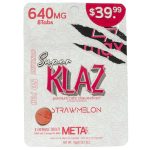
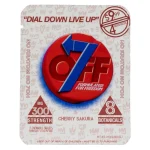
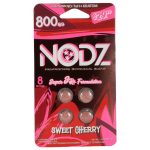
Kratom products have moved well beyond traditional kratom powder and plain leaf kratom. Vendors now sell alkaloid-labeled items like MIT tablets, “MIT-A,” “MIT-B,” and explicit 7-hydroxymitragynine shots or tablets. That shift created the search query this article answers.
-
Buyers search “mit b vs 7 oh” to understand potency, dependence risk, and legal status differences between these marketed categories.
-
MIT-B is a label tier used by some manufacturers. It does not guarantee a specific compound the way 7-OH (7-hydroxymitragynine) does.
-
This article compares how MIT-B labels are used versus what peer reviewed research and regulatory documents say about mitragynine and 7-OH, without assuming any secret or proprietary formulation.
-
A brief note on terminology: “MIT-B” also refers to the MIT-B Engine, a high-precision mechanical-optical apparatus used to mechanically rule diffraction gratings, which are critical components in spectrometers. That device is entirely unrelated to kratom labeling. This article addresses only the kratom product label meaning.
MIT-A, MIT-B, and 7-OH: What the Label Tiers Usually Mean
These three terms appear on product packaging and vendor websites, but they carry very different levels of specificity. Here is how each is typically used.
-
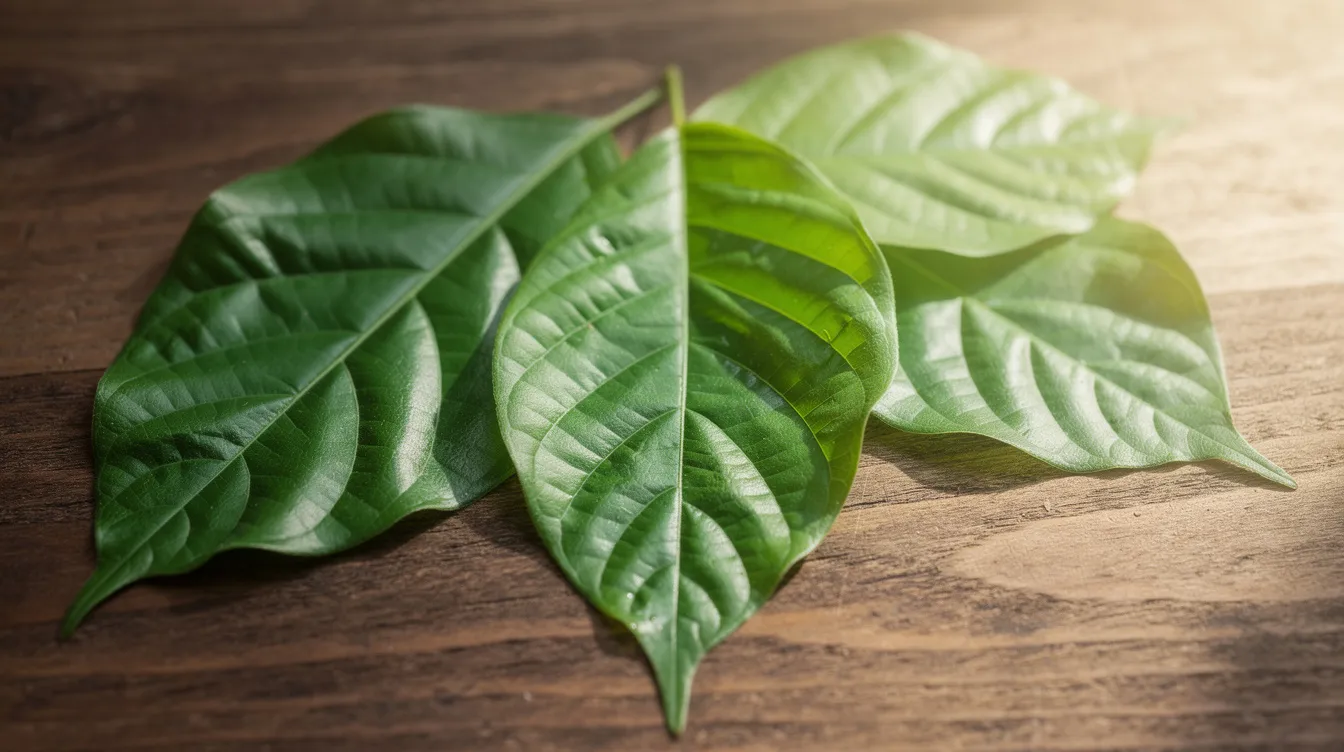
MIT-A usually labels mitragynine-dominant products. “MIT” is shorthand for mitragynine on lab tests and COAs. MIT-A products often reference mitragynine as the primary active alkaloid, sometimes disclosing milligrams per tablet.
-
MIT-B tends to appear as a second “MIT” tier, marketed as distinct from MIT-A and from 7-OH. It does not clearly name an underlying alkaloid. Some vendors position MIT-B between mitragynine-forward tablets and explicit 7-OH products to signal “enhanced” or “different” effects; the actual basis is not standardized.
-
7-OH (7-hydroxymitragynine) is different in kind. It names a specific, structurally characterized kratom alkaloid with documented pharmacology in WHO reviews and FDA assessments. Where MIT-A and MIT-B are branding categories, “7-OH” is a defined chemical term used in peer reviewed research and regulatory documents.
The key point: marketing language created “MIT-A” and “MIT-B.” Chemistry created “7-hydroxymitragynine.”
What MIT-B Labels Explicitly Establish
Here is what we can say about a product labeled MIT-B, based on how these labels actually function in the market.
-
MIT-B on a product label usually establishes that the product is being positioned as a distinct class from both MIT-A and explicit 7-hydroxymitragynine products.
-
The label often signals an alkaloid-standardized product but does not necessarily disclose the exact alkaloid or concentration in milligrams.
-
When MIT-B products are accompanied by COAs, the MIT-B name may appear alongside tested kratom alkaloids like mitragynine and 7-OH, giving some indirect context about mit content.
-
The label also establishes a marketing promise of consistency (similar MIT-B dose per tablet or serving), even if the underlying molecule is not named.
-
Some vendors frame their MIT-B extracts as formulations where any 7-OH present is at trace amounts, sometimes below a detection limit of 50 ppm (0.05 mg/g). This is a claim about what is absent, not a disclosure of what is present.
What MIT-B Labels Leave Unclear or Unknown
The previous section described what MIT-B labels establish. This section covers what they do not.
-
MIT-B labels do not by themselves identify a single chemical structure, unlike “mitragynine” or “7-hydroxymitragynine.”
-
The label usually does not specify whether the main active is a kratom-derived alkaloid, a metabolite (such as a possible MGM-type analog), or a non-kratom compound.
-
MIT-B branding alone does not reveal potency relative to mitragynine, 7-OH, or morphine, leaving opioid-like effects and opioid withdrawal potential uncertain.
-
Without explicit naming, MIT-B labels leave regulatory classification and controlled substance status ambiguous until regulators issue specific guidance.
-
No published scientific definition of “MIT-B” exists. The term does not appear in peer reviewed research, FDA communications, or DEA scheduling documents. That absence is itself a data point: the label is commercial, not scientific.
Mitragynine (“MIT”) Basics and How It Appears on Labels
Mitragynine is the reference point that makes the “MIT” in “MIT-B” potentially meaningful. Here is what the science says about it.
-
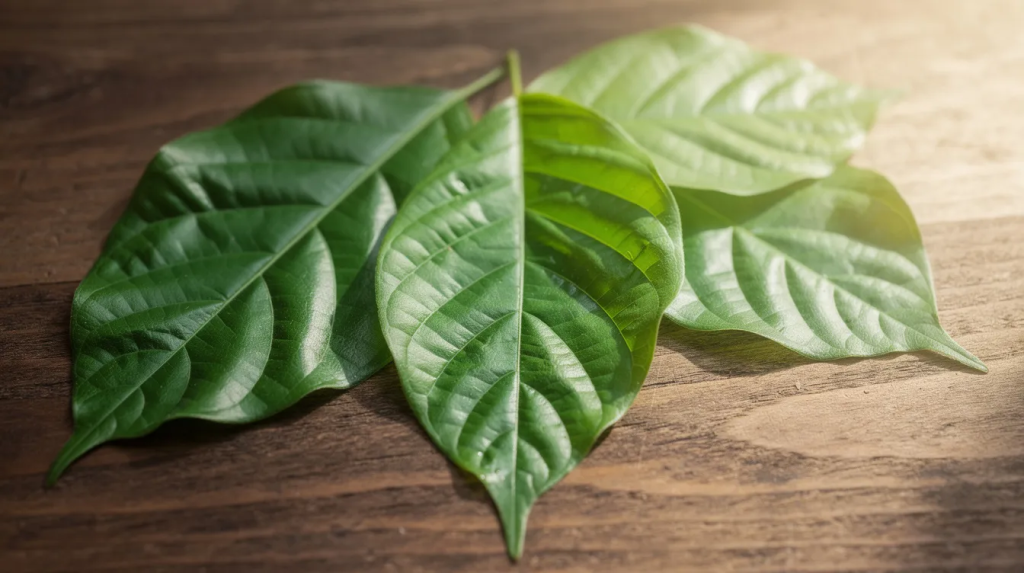
Mitragynine is the primary alkaloid in the kratom plant (Mitragyna speciosa), a tropical tree native to Southeast Asia. It is the most abundant alkaloid in kratom leaves, constituting 40% to 70% of the total alkaloid content. In dried kratom leaf, mitragynine typically represents 1 to 2% of the total mass.
-
Traditional kratom powder COAs commonly show mitragynine content as a percentage (for example, 1.5% MIT). Extract or mit tablets often list mitragynine milligrams per serving.
-
In a 2024 human dose-escalation study, encapsulated dried kratom powders (500 to 4,000 mg of leaf, yielding 6.65 to 53.2 mg mitragynine) produced peak mitragynine plasma levels around 1.0 to 1.3 hours post-dose. Mitragynine’s half-life ranged from approximately 43 hours after a single dose to roughly 68 hours after multiple daily doses.
-
Some product families use “MIT-A” to indicate clearly mitragynine-based tablets, making MIT-B “the other” category by contrast. MIT-B does not automatically mean more or less mitragynine; the exact mitragynine and 7-OH numbers must come from the batch COA.
-
Mitragynine acts as a partial agonist at mu opioid receptors. At low doses, it tends to be stimulating. At higher doses, sedation increases in a dose dependent pattern.
7-Hydroxymitragynine (7-OH): A Defined Kratom Alkaloid
Where mitragynine is the dominant alkaloid in botanical kratom, 7-hydroxymitragynine is a minor alkaloid with outsized pharmacological impact.
-
7-hydroxymitragynine is a naturally occurring but trace kratom alkaloid. It makes up less than 2% of the total alkaloid content in natural kratom leaf. In dried leaf samples from Peninsular Malaysia, 7-OH concentrations ranged from approximately 0.05 to 0.15 mg/g, according to FDA product analysis.
-
7-hydroxymitragynine is 13 times more potent than morphine at the μ opioid receptor. Binding studies have shown 7-OH’s affinity at the opioid receptor to be 5- to 23-fold stronger than mitragynine’s, with greater efficacy in receptor activation.
-
Mitragynine is primarily stimulating at low doses, while 7-OH is sedating. This pharmacological difference explains why concentrated 7-OH products produce effects closer to classical opioids than traditional kratom leaf does.
-
Concentrated 7-OH can cause respiratory depression and overdose, a risk pattern shared with prescription opioids and other depressants. The FDA warns against kratom due to serious health risks including liver toxicity and seizures, and 7-OH-enriched products intensify those concerns.
-
Unlike MIT-B, the term “7-OH” always references this specific molecule, regardless of marketing language around it. It appears by name on many COAs and in FDA and DEA communications.
MIT-B vs 7-OH: Comparing What Can Be Safely Said
This section compares only what is verifiable, not what is speculative.
-
7-OH has a defined structure, known mu opioid receptor potency, and growing direct regulatory scrutiny. MIT-B is a brand tier with no fixed chemistry.
-
You can compare 7-OH content across products in milligrams or as a percentage. You cannot assume any mg-for-mg equivalence between MIT-B and 7-OH.
-
7-OH is more potent than mitragynine at opioid receptors. In a survey of 90 marketed kratom-related products, per-serving morphine milligram equivalent (MME) estimates ranged from 2.7 MME for powders to about 31 MME for tablets. Higher values were driven by elevated 7-OH or mitragynine pseudoindoxyl content.
-
Opioid withdrawal risk and overdose risk have been linked in case reports and advisories to high potency 7-OH or 7-OH-enriched products. MIT-B products do not yet have that same defined evidence base.
-
For safety, consumers should treat unknown MIT-B products cautiously and rely on COAs showing mitragynine and 7-hydroxymitragynine rather than assuming MIT-B is weaker or “non-opioid-like.”
-
Some commercial products have been found to contain 7-OH levels 109% to 509% higher than expected from natural raw leaf values. One pressed pill acquired by journalists contained approximately 15 mg of 7-OH per tablet, far above what any plain leaf kratom product would deliver.
MIT-B in the Wider Context of Kratom Alkaloids and MGM Analogs
Kratom contains over 50 alkaloids, primarily mitragynine and 7-hydroxymitragynine, but the full alkaloid profile includes paynantheine, speciogynine, and dozens of other alkaloids as active constituents.
-
MGM-type analogs (such as MGM-15, also called DH-7OH-MG, a semi-synthetic dihydro-7-hydroxymitragynine) and mitragynine pseudoindoxyl (MP) are synthetic or transformed derivatives. MP arises via metabolic transformation of 7-OH and binds the opioid receptor with higher potency than 7-OH itself, exhibiting full agonist activity.
-
Recent federal actions have targeted these derivatives. The DEA issued a notice of intent in 2026 concerning scheduling of 7-OH, MP, and MGM analogs.
-
MIT-B labels do not specify whether the product contains only native kratom alkaloids or includes modified derivatives like MGM-15, MGM-16, or pseudoindoxyls.
-
Responsible interpretation of MIT-B requires reading the COA for mitragynine and 7-OH data and checking whether any MGM-type substances are named. High performance liquid chromatography and high-resolution mass spectrometry are the standard methods labs use to quantify these active ingredients and separate isomeric forms.
Legal Status: MIT-B vs Mitragynine and 7-OH
Laws in this space change quickly. What follows reflects patterns through mid-2026, not permanent rules.
-
Kratom is not federally controlled in the US under the Controlled Substances Act. Federal regulators have not scheduled mitragynine itself.
-
7-OH is proposed for Schedule I classification by the DEA. The DEA administrator has indicated that concentrated semi-synthetic derivatives (7-OH, MP, MGM analogs) are under active consideration as controlled substances.
-
Seven states have banned kratom as of May 2026. Michigan, for example, introduced a state House bill in October 2026 seeking to ban kratom and derivatives like 7-OH. Several other states have passed or considered a kratom consumer protection act to regulate rather than ban kratom use.
-
MIT-B is not a legal category. Its legal status follows from whatever actual substances are inside the product, which may or may not be controlled substances or threshold-limited kratom alkaloids.
-
Checking current state and federal rules for kratom, mitragynine, and 7-OH is essential, because MIT-B branding will not shield a kratom product from controlled substance classification if its ingredients cross legal thresholds.
-
7-OH’s regulatory status is subject to scrutiny by the FDA and DEA. The FDA warns against kratom due to liver toxicity and seizures, and treats concentrated 7-OH as an emerging opioid threat.

Reading Product Labels and COAs: Practical Guidance
Here is what to look for on third-party kratom product labels and COAs, step by step.
-
Look beyond “MIT-B,” “MIT-A,” or “kratom extract” names and find explicit lines for mitragynine and 7-hydroxymitragynine content. These are the active alkaloid data points that determine what is actually in the product.
-
Check whether product labels or COAs specify alkaloid amounts in milligrams per serving rather than only percentages or vague “total alkaloids.” A percentage of total alkaloid content is useful, but milligrams per serving lets you calculate actual intake.
-
Treat products that disclose clear mitragynine and 7-OH values as more transparent than those relying only on marketing terms like “ultra,” “enhanced products,” or “MIT-B blend.”
-
Verify batch COAs from independent labs whenever possible. Confirm that the lab report data matches the lot or batch number printed on the product package.
-
If a COA lists no 7-OH data at all, that is not the same as confirming zero 7-OH. Absence of a test line means the test was not run or not reported.
-
For context, natural kratom leaf typically contains mitragynine at 9.38 to 18.85 mg/g and 7-OH at roughly 0.05 to 0.15 mg/g. Products with 7-OH levels well above 0.15 mg/g contain concentrated or added 7-OH.
Opioid-Like Risks, Dependence, and Withdrawal Considerations
Both mitragynine and 7-hydroxymitragynine act at the same receptors that prescription opioids and classical opioids target. That shared pharmacology creates real health risks.
-
Withdrawal symptoms can include anxiety, restlessness, and body aches, along with insomnia, sweating, intense cravings, runny nose, and low mood. 7-OH withdrawal symptoms may resemble opioid withdrawal symptoms in pattern and severity.
-
Daily kratom use can lead to physical dependence and withdrawal symptoms, regardless of which label (MIT-A, MIT-B, or 7-OH) the product carries. Daily use of concentrated 7-OH increases dependence risk beyond what traditional kratom leaf typically produces.
-
Because MIT-B does not identify a specific molecule, it is not possible to quantify opioid withdrawal risk without knowing actual mitragynine and 7-OH levels in the product.
-
Concentrated 7-OH can cause respiratory depression similar to opioids, especially in combination with alcohol, benzodiazepines, or other depressants. Polysubstance use raises the risk of heavy sedation and fatal respiratory failure.
-
The FDA warns against kratom due to serious health risks. Anyone experiencing opioid-like withdrawal after stopping a kratom product should seek advice from a healthcare provider rather than self-diagnosing based on product labels. Substance use disorder evaluation may be appropriate for people who find they cannot stop despite wanting to.
How MIT-B vs 7-OH Choices Affect Everyday Use Patterns
-
Some users see MIT-A products as mitragynine-forward and MIT-B as “something different.” That framing can lead to the mistaken assumption that MIT-B is milder or non-opioid-like without evidence. The actual alkaloid profile, not the label tier, determines the risk.
-
Products labeled explicitly as 7-OH are usually treated as higher-risk. Some users reserve them for short-term, occasional use due to dependence concerns. Animal studies and case reports reinforce that 7-OH’s high dose potency makes escalation and tolerance more likely.
-
Substituting an unknown MIT-B tablet for a known 7-OH tablet does not guarantee lower risk. If the MIT-B product contains comparable or higher amounts of 7-OH, the opioid-like effects will be similar.
-
People who choose to use any kratom product should track daily intake, avoid combining with other CNS depressants, and periodically assess whether they experience tolerance (needing more for the same effect) or withdrawal when they skip a dose. Dietary supplements and botanicals are not exempt from dependence risk simply because they are sold outside a pharmacy.
Where a Poppy Lotus Shopper Fits In
This article is written from Poppy Lotus’s perspective to help readers interpret MIT-B, mitragynine, and 7-OH information when they encounter it in the wider market.
-
No specific MIT-B or 7-OH kratom products are being claimed as stocked or sold by Poppy Lotus. The guidance here is educational only.
-
Poppy Lotus shoppers can use these concepts; alkaloid profile analysis, mitragynine content and 7-hydroxymitragynine data, legal status checks; to compare product labels and COAs responsibly whenever they research botanicals or related products.
-
Prioritize transparent labeling, independent testing, and an honest understanding of mental health and physical health risks over marketing shorthand like MIT-A, MIT-B, or generic “kratom extract.”
Summary: How to Think About MIT-B vs 7-OH Going Forward
-
7-OH is a well-defined kratom alkaloid. It is the primary active alkaloid driving opioid-like potency in concentrated kratom products. It has known potency (13 times morphine at the μ opioid receptor), emerging controlled substance thresholds, and clear mention in scientific and regulatory literature.
-
MIT-B is a label category whose chemistry cannot be assumed. It may indicate “non-MIT-A, non-7-OH” positioning, but it does not define the active compound, the dose, or the risk.
-
Responsible decisions hinge on COA data for mitragynine and 7-OH, awareness of local legal status, and a cautious approach to any high potency kratom alkaloid product.
-
Label shorthand (MIT-A, MIT-B, 7-OH) is a starting point. Informed consumers look deeper at actual alkaloid content, FDA approved medications for dependence treatment if needed, and consultation with a healthcare provider for any pain relief strategy that involves opioid receptor agonists.
FAQ
Is MIT-B the same thing as 7-hydroxymitragynine (7-OH)?
No. MIT-B is a marketing or label tier, not a standardized chemical name. It should not be treated as synonymous with 7-OH. 7-OH always refers to the same well-defined kratom alkaloid (7-hydroxymitragynine), which has a known structure and pharmacological profile. MIT-B products may contain different underlying compounds depending on the manufacturer, and no peer reviewed research defines “MIT-B” as a chemical entity.
Does choosing MIT-B instead of 7-OH guarantee lower dependence or withdrawal risk?
There is no guarantee. Opioid withdrawal risk depends on the actual alkaloid profile and dose, not just the label name. Any potent alkaloid tablet, whether labeled MIT-A, MIT-B, or 7-OH, can be habit-forming with daily or high dose use. Without COA data showing what is inside, you cannot determine whether a MIT-B product carries lower, equal, or higher dependence risk than an explicit 7-OH product.
How can I tell if an MIT-B product is a controlled substance?
MIT-B alone does not determine legal status. You must check the product’s ingredients and COA data for mitragynine, 7-OH, mitragynine pseudoindoxyl, and any MGM-type analogs, then compare those against current federal and state regulations. The DEA has proposed Schedule I status for 7-OH, and seven states have banned kratom entirely as of May 2026. Consulting official DEA and FDA announcements, state statutes, or legal counsel is the only reliable path.
What should I look for on a COA if I am worried about 7-OH content?
Look for a line listing “7-hydroxymitragynine” or “7-OH” with a value in mg/g, percentage, or mg per serving. Natural kratom leaf typically contains 7-OH at roughly 0.05 to 0.15 mg/g. If you see values well above that range, especially in tablets, shots, or gummies, the product contains concentrated or added 7-OH and carries higher risk. Also check whether the lab report includes mitragynine pseudoindoxyl (MP), which can be even more potent.
Does Poppy Lotus sell MIT-B or 7-OH kratom products?
This article does not imply any current Poppy Lotus inventory of MIT-B, MIT-A, or 7-OH products. Poppy Lotus provides this information so readers can interpret third-party labels and make safer, more informed decisions wherever they choose to shop. The focus is educational: understanding alkaloid profiles, reading COAs, and recognizing the limits of marketing language when evaluating enhanced products in the kratom market.