Akuamma
Akuamma vs. Hirsuta: Botanical Comparison, Alkaloids, and Opioid Receptor Research
If you have spent any time searching for botanical alternatives to kratom, you have likely encountered two names that surface repeatedly: akuamma and hirsuta. Both plants produce indole alkaloids, both appear in online forums as potential substitutes for kratom or even for prescription opioids, and both carry far more marketing hype than clinical evidence. This…
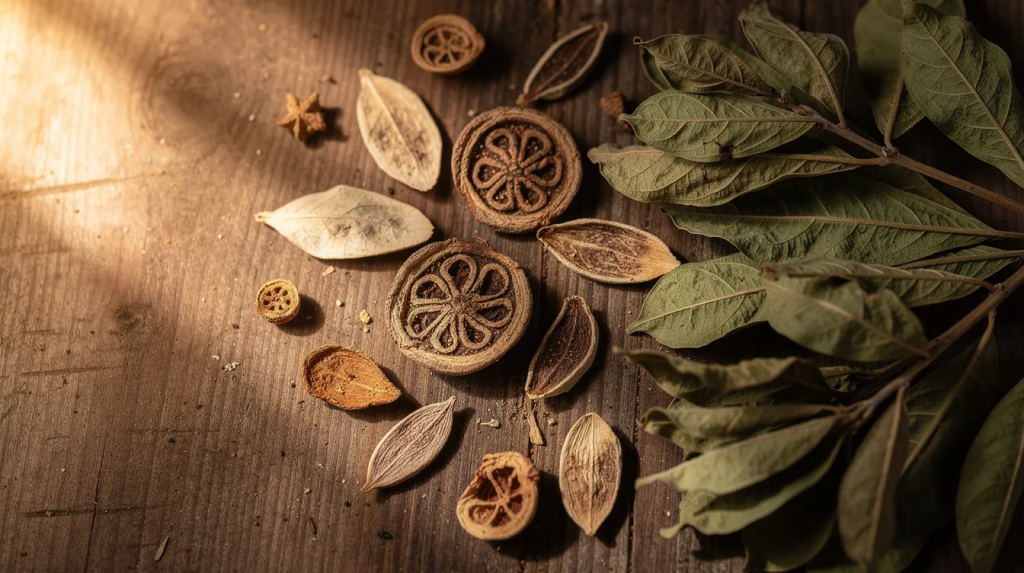
If you have spent any time searching for botanical alternatives to kratom, you have likely encountered two names that surface repeatedly: akuamma and hirsuta. Both plants produce indole alkaloids, both appear in online forums as potential substitutes for kratom or even for prescription opioids, and both carry far more marketing hype than clinical evidence. This guide breaks down the real differences between them-taxonomy, alkaloid chemistry, opioid receptor data, and the many things science does not yet know-so you can make more informed decisions rather than relying on vendor copy.
Key Takeaways
-
Akuamma refers to seeds from Picralima nitida, a West African tree in the Apocynaceae family, while hirsuta typically refers to leaves from Mitragyna hirsuta, a Southeast Asian tree in the Rubiaceae family. They are not botanically related species.
-
Several akuamma alkaloids interact with opioid receptors in laboratory studies, but akuamma is not an FDA-approved medication and is not established as an addiction treatment or a kratom replacement.
-
Mitragyna hirsuta has its own distinct indole alkaloid profile and is not chemically equivalent to kratom, akuamma, or any controlled opioid. No direct potency ranking between akuamma and hirsuta is supported by published data.
-
Neither plant is considered a proven non-addictive alternative to conventional opioids. Consumers should not treat akuamma or hirsuta as interchangeable with kratom, 7-OH, or FDA approved medications.
-
Poppy Lotus does not currently offer these botanicals. Readers should consult healthcare professionals before using either plant, especially alongside other medications.
What This Article Will (and Will Not) Cover
This article focuses on comparing akuamma vs. hirsuta across plant identity, traditional material (seed vs. leaf), alkaloid terminology, and what preclinical research says about opioid receptor activity. Here is what falls inside and outside the scope:
-
In scope: Botanical classification, the term “akuamma alkaloids” and how it differs from hirsuta alkaloid names, a summary of how certain akuamma alkaloids may affect opioid receptors in laboratory tests, and practical shopping and safety guidance.
-
Not in scope: Therapeutic claims. This article does not recommend either plant for addiction treatment, opioid withdrawal management, or as a way to have akuamma replace kratom or prescription opioids.
-
Poppy Lotus reference: Poppy Lotus is mentioned only for general shopping guidance-for example, to illustrate what to look for in reputable vendors and quality testing. No akuamma or hirsuta products are implied to be in stock.
-
Research limitations: The article summarizes preclinical data without converting lab results into dosage recommendations or medical advice.
Akuamma vs. Hirsuta at a Glance
Before diving into chemistry and receptor data, here is a high-level view of the two plants for quick reference.
-
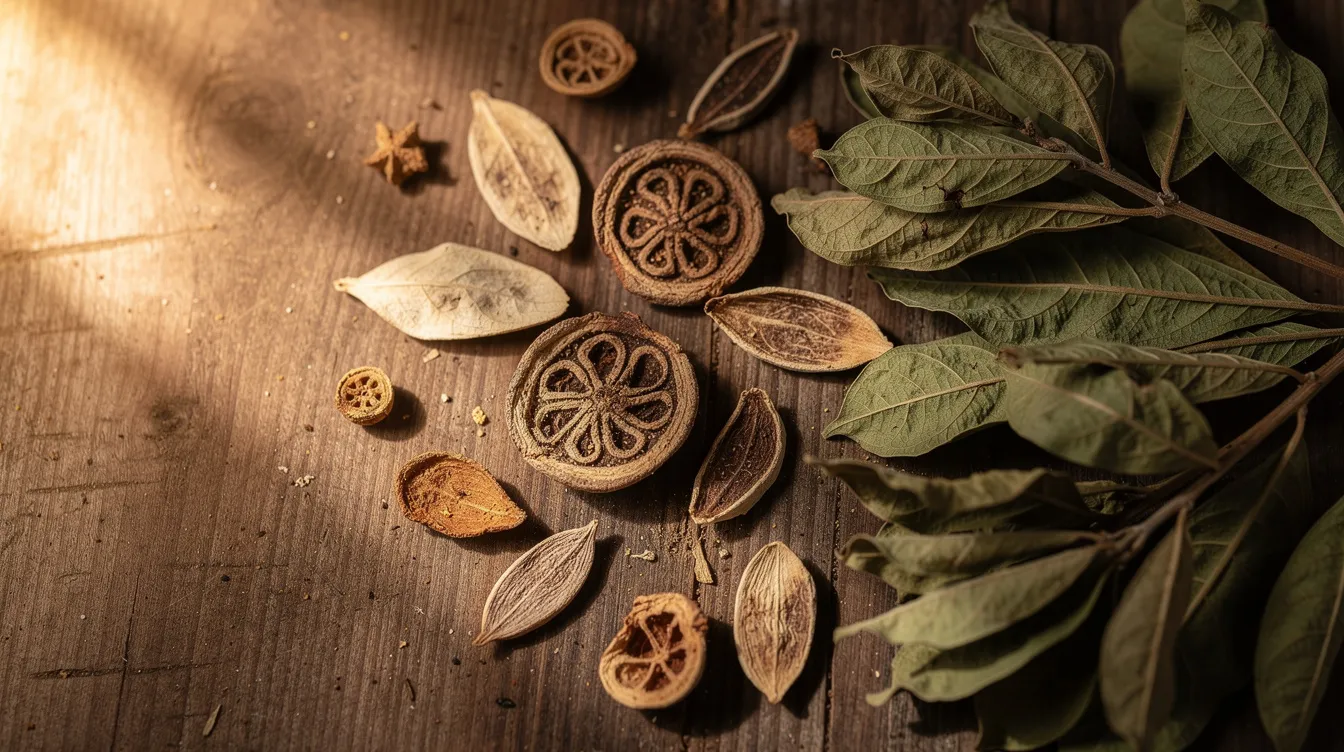
Akuamma comes from the seeds of Picralima nitida (family Apocynaceae), a tree native to West and Central Africa. Akuamma seeds are traditionally used for pain relief, fever, gastrointestinal disorders, and treatment for malaria and other ailments. Akuamma has been used in West Africa for centuries in traditional medicine.
-
Hirsuta comes from the leaves of Mitragyna hirsuta (family Rubiaceae), a tree found in parts of Thailand, Laos, and Cambodia. Hirsuta is traditionally used as a mild stimulant and for relaxation. It is sometimes discussed online as a “kratom relative” because it belongs to the same genus as Mitragyna speciosa.
-
Both plants contain monoterpene indole alkaloids, but the main alkaloids, typical doses, and traditional preparations differ significantly. Akuamma seed use centers on dried or ground seeds; hirsuta use centers on dried leaves or leaf powder.
-
Side-by-side lab data for these two plants usually come from different studies, different assay conditions, and different research groups. They cannot be used to declare one plant “stronger” or safer than the other.
Botanical Identity: Picralima nitida vs. Mitragyna hirsuta
Understanding exactly what each plant is prevents the kind of mix-ups that vendor marketing often encourages.
-
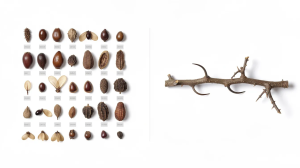
Akuamma is Picralima nitida, a tree native to Ghana, Nigeria, Côte d’Ivoire, and neighboring regions, belonging to the Apocynaceae family. Seeds (and occasionally bark or roots) are the plant parts used in traditional and research contexts. Akuamma is derived from Picralima nitida seeds, and it is these seeds that carry the alkaloids of interest.
-
Hirsuta is Mitragyna hirsuta, a tree or shrub found in mainland Southeast Asia. Hirsuta is native to Southeast Asia and belongs to the Rubiaceae family-the same family as Mitragyna speciosa (kratom) but a distinctly different species.
-
Being in the same genus as kratom does not make Mitragyna hirsuta botanically equivalent to kratom, nor does it mean hirsuta shares the same dominant alkaloids. Taxonomic revisions recognize several Mitragyna species in the region, each with its own chemical fingerprint.
-
Shared classification as indole-alkaloid–producing plants does not imply similar potency, safety profile, or regulatory status. Many unrelated plant families produce indole alkaloids without having overlapping pharmacological properties.

Plant Materials: Akuamma Seed vs. Hirsuta Leaf
What consumers actually receive when they order these products shapes the alkaloid content and potential effects.
-
Akuamma seed material consists of dried, dehulled seeds or ground seed powder, sometimes extracted with ethanol or water. When you see “akuamma seed” or “akuamma seeds” on a label, this typically refers to crude plant material from Picralima nitida. Total alkaloid content in seeds is reported at roughly four to five percent by weight, though this varies with origin and processing.
-
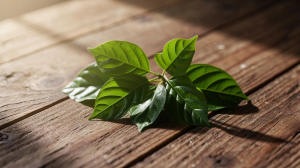
Hirsuta is sold as dried leaf or powdered leaf, sometimes marketed for tea or infusion. Stem and bark material are less commonly referenced in consumer contexts. Hirsuta is less extensively documented in ethnobotanical literature compared to kratom, so standardized preparation methods are not well established.
-
The different plant parts (seed vs. leaf) affect alkaloid content and ratios, so akuamma products and hirsuta products cannot be dose-matched. A gram of seed powder delivers a different alkaloid cocktail than a gram of leaf powder.
-
The alkaloid concentrations and effects can vary widely in commercial products of both plants. Harvest location, plant maturity, drying conditions, and extraction methods all contribute to batch-to-batch inconsistency, making generalized comparisons even harder.
Indole Alkaloids 101: Shared Class, Different Molecules
Before comparing specific compounds, it helps to understand what monoterpene indole alkaloids actually are.
-
Monoterpene indole alkaloids (MIAs) are a broad chemical class built from tryptamine and a molecule called secologanin. They are found in multiple plant families, from periwinkle to coffee relatives.
-
Both Picralima nitida (akuamma) and Mitragyna hirsuta produce MIAs, but the specific structures, names, and pharmacological properties differ significantly. Sharing an alkaloid class is like two animals sharing a phylum-it tells you something about deep ancestry, not about behavior.
-
Lab data from one species cannot be copied onto another just because both produce indole alkaloids. Each molecule has unique receptor binding, metabolism, and effects on relevant tissues.
-
In akuamma, terms like “akuamma alkaloids” refer to a defined group of seed alkaloids, while in hirsuta, alkaloids carry different naming patterns tied to Mitragyna chemistry-names like mitraphylline or rhynchophylline that do not appear in Picralima nitida.
Akuamma Alkaloids: Names, Structures, and Terminology
Is akuamma one compound or many? The answer matters for understanding research claims.
-
“Akuamma alkaloids” usually refers to indole alkaloids isolated from Picralima nitida seeds, including akuammine, akuammidine, pseudo-akuammigine, akuammicine, akuammiline, and akuammigine. These six akuamma alkaloids are the most frequently cited in pharmacological characterization studies. The seeds contain several alkaloids, including akuammine and pseudoakuammigine, as their most abundant constituents.
-
These alkaloids are structurally related but not identical; each has its own profile across central nervous system targets. Akuammine, for example, differs from akuammicine in both structure and receptor preference. Some also feature a methyl ester group that influences their binding characteristics.
-
Laboratory work on akuamma alkaloids often focuses on a single purified alkaloid-an isolated compound like akuammine or pseudo-akuammigine-rather than crude seed powder. This matters because when researchers describe akuamma alkaloids interact with opioid receptors, they typically mean isolated yields of individual molecules tested in controlled assays, not what happens when someone chews a whole seed.
-
When labels say “standardized akuamma alkaloids,” they rarely specify the exact alkaloid ratio unless supported by detailed lab testing such as chromatography B methods. Without a certificate of analysis, the buyer has little way to verify what ratio of several compounds is actually present.
What Is Known About Akuamma and Opioid Receptors?
This is where the search query “does akuamma affect opioid receptors” meets actual data-and where nuance is critical.
-
Several akuamma alkaloids have been tested at human mu opioid receptor and kappa-opioid receptor targets in vitro. The results show weak agonist or mixed activity compared to classical opioid analgesics. Akuamma alkaloids interact with the mu-opioid receptor (μOR), but akuammine and pseudo-akuammigine are weak μOR agonists with potencies reported around 2.6 to 5.2 μM-orders of magnitude weaker than morphine.
-
Akuammicine shows stronger affinity at the kappa-opioid receptor, with a reported binding value around 89 nM. But kappa activity carries its own distinct behavioral effects, including potential for dysphoria, which is quite different from the mu-receptor–driven analgesia most people associate with “opioid effects.”
-
In cell-based assays, akuamma alkaloids generally produce modest cAMP inhibition, a laboratory marker that measures how strongly a compound triggers opioid-receptor–linked signaling pathways. This receptor activity is far weaker than that of morphine, fentanyl, or kratom’s 7-hydroxymitragynine (7 OH). Research shows akuamma’s analgesic effects are limited, and a 2021 study published in preclinical models found that akuamma alkaloids produced minimal pain relief in animal studies, often only at high parenteral doses.
-
These cAMP inhibition and receptor binding values are laboratory markers. They cannot directly predict pain relief, addiction risk, or “strength” in humans. Animal experiments using hot-plate or tail-flick tests confirmed limited analgesic effectiveness, reinforcing that the opioid receptor activity of akuamma alkaloids is substantially weaker than that of kratom alkaloids or standard opioid medications.
Hirsuta Alkaloids: Distinct from Both Akuamma and Kratom
Mitragyna hirsuta has its own chemical story, and it is a much shorter one than either kratom’s or akuamma’s.
-
Mitragyna hirsuta leaf contains its own indole alkaloids, including oxindole alkaloids like mitraphylline, isomitraphylline, rhynchophylline, isorhynchophylline, and hirsutin. These belong to different structural scaffolds than akuamma’s alkaloids or kratom’s primary compounds.
-
Published data on hirsuta’s alkaloid composition are limited compared to kratom. Hirsuta lacks significant levels of mitragynine, a key alkaloid in kratom, and metabolomics profiling studies confirm that 7-hydroxymitragynine is also absent or below detection limits in authenticated hirsuta samples.
-
Most hirsuta alkaloids have not undergone rigorous pharmacological characterization for opioid receptor activity. Early chemical studies from the 1960s identified the alkaloids, but modern functional assays measuring binding affinity, G-protein signaling, or beta-arrestin recruitment at human opioid receptors are scarce.
-
No hirsuta alkaloid should be assumed equivalent to akuammine, pseudo-akuammigine, 7 OH, mitragynine pseudoindoxyl, or any other specific compound from a different species. Different alkaloids mean different receptor activity, different metabolism, and different risks.
Akuamma vs. Hirsuta: Avoiding Chemical Equivalence Assumptions
One of the most common mistakes in online discussions is treating these two botanicals as interchangeable alternatives. Here is why that logic fails.
-
While both plants contain indole alkaloids, no evidence supports treating any akuamma alkaloid as chemically interchangeable with any hirsuta alkaloid. The chemical profiles of akuamma and hirsuta differ significantly from each other and from kratom.
-
Phrases like “akuamma stronger” or “hirsuta stronger” are misleading without specifying which molecule, which assay, which dose, and what outcome is being measured. A compound can be “stronger” at one receptor subtype while being irrelevant at another.
-
Even within akuamma, individual alkaloids differ in their pharmacological properties. Comparing an isolated alkaloid from one plant to crude leaf or seed from another is scientifically unsound-it mixes variables in a way that no controlled study would accept.
-
Product marketing sometimes blurs these distinctions to create an illusion of equivalence. Responsible writing keeps botanical identity and chemical identity separate, and readers benefit from that clarity.
Does Akuamma Affect Opioid Receptors More Than Hirsuta?
This is the question many searchers really want answered. The honest answer is: we cannot say with confidence.
-
Akuamma has documented yet relatively weak mu- and kappa-opioid receptor activity in cell assays, including cAMP inhibition and binding displacement. Akuamma’s opioid receptor activity is weaker than kratom’s based on published comparisons. Meanwhile, comparable receptor data for hirsuta are sparse or preliminary.
-
Because Mitragyna hirsuta has not been systematically profiled across opioid receptors using modern functional readouts, there is no reliable basis to say it is more or less “opioid-active” than akuamma. The absence of data is not the same as the absence of activity.
-
Cross-study comparisons-different species, different cell lines, different assay conditions-cannot support a precise potency ranking between these two botanicals. Even within akuamma research, potency values vary depending on the laboratory and methodology.
-
Any online claims about akuamma or hirsuta being “just like an opioid” or “opioid-free” oversimplify complex, incomplete science. Neither label is accurate for either plant based on current evidence. Akuamma contains alkaloids that interact with opioid receptors, but that interaction is mild by pharmacological standards. For hirsuta, we simply do not have enough data to characterize its position on that spectrum.
Akuamma, Kratom, and Hirsuta: Clarifying the Triangle
These three plants often appear together in online discussions, usually in misleading ways. Here is how to think about them more carefully.
-
Kratom (Mitragyna speciosa) leaf contains kratom alkaloids like mitragynine and 7 OH that have clearer mu opioid receptor activity profiles than either akuamma or hirsuta. Kratom comes from Mitragyna speciosa leaves, and it produces stronger opioid-like effects than akuamma based on receptor data and animal models.
-
Both plants are often marketed as alternatives for kratom. Akuamma is frequently positioned online as a possible way to “replace kratom,” while hirsuta is often framed as a “kratom cousin.” Both framings risk suggesting unproven equivalence. Akuamma does not contain kratom’s primary alkaloids (mitragynine, 7 OH), and neither does hirsuta.
-
The idea that someone could have akuamma replace kratom or use hirsuta as a seamless substitute ignores differences in alkaloid profile, potency, receptor selectivity, and metabolic pathways. These are different plants producing different molecules that act on the body in different ways.
-
Using one botanically distinct plant to step down from another is not supported by clinical evidence and may complicate underlying dependence patterns rather than resolve them.
Is Akuamma Addictive? What About Hirsuta?
The question of whether akuamma is addictive does not have a simple yes-or-no answer, and the same goes for hirsuta.
-
Akuamma’s opioid receptor activity suggests a theoretical dependence potential, but human data on akuamma-specific addiction or kratom withdrawal patterns tied to akuamma use are very limited. No controlled studies in humans have measured the dependence potential of akuamma seeds or isolated alkaloids.
-
Mitragyna hirsuta has even less research on dependence, making it impossible to categorize as addictive or nonaddictive based on current literature. Both plants have limited clinical research on their safety and effectiveness.
-
Any substance used regularly for mood, pain management, or sleep-botanical or otherwise-can contribute to problematic patterns if used frequently or in escalating doses. This principle applies to psychoactive drugs broadly, not just to scheduled substances.
-
Readers concerned about their use of kratom, akuamma, or hirsuta should speak with a clinician rather than relying on anecdotes or product reviews. Dependence is shaped by dose, frequency, individual biology, and context-none of which vendor testimonials can account for.
Experimental Akuamma Derivatives vs. Natural Akuamma Seed
Some of the most eye-catching numbers in akuamma research come from lab-created compounds, not from the seeds you can buy.
-
Medicinal chemistry studies have created experimental derivatives of pseudo-akuammigine and related molecules, sometimes achieving increased potency at the mu opioid receptor of approximately 70-fold through modifications like N1 substitutions. A 2023 study published these findings, demonstrating that a chemically modified derivative of an akuamma alkaloid showed dramatically increased receptor potency compared to its parent compound.
-
These modified akuamma alkaloids and experimental derivatives are not the same as natural akuamma seed or standard supplements. They are laboratory tools created to probe receptor biology and explore structure-activity relationships. They are not available as approved therapies, and none have undergone clinical trials.
-
Enhanced potency in opioid receptor assays and animal experiments does not imply that normal akuamma products are potent opioids. The parent compounds-the ones actually present in seeds-remain weak partial agonist candidates at best. Research has not established akuamma as a safe treatment for opioid withdrawal, whether in natural or modified form.
-
Conflating lab-only compounds with commercial botanical products when discussing safety, efficacy, or addiction risk is a common error. An isolated compound tested in a Petri dish is fundamentally different from a capsule of ground seed powder.
Could Akuamma or Hirsuta Be Used for Addiction Treatment?
Neither plant is an established addiction treatment, despite what some online vendors imply.
-
No controlled clinical trials support akuamma or hirsuta as evidence-based treatments for opioid use disorder, kratom withdrawal, or 7 OH dependence. No clinical evidence supports akuamma as a treatment for opioid withdrawal, and the same holds for hirsuta.
-
Addiction treatment generally refers to structured care using behavioral therapies and, when appropriate, FDA approved medications such as buprenorphine, methadone, or naltrexone. These opioid medications have undergone extensive clinical evaluation, including dose–response studies and long-term safety monitoring. Medical detox and residential treatment programs use these tools within supervised frameworks.
-
Replacing one opioid active substance with another poorly studied botanical is not the same as medically supervised tapering or medication-assisted treatment. It can mask symptoms without addressing underlying dependence, potentially prolonging the cycle.
-
Readers exploring recovery options should prioritize clinicians and programs experienced with substance use disorders. Self-directed botanical substitution, however well-intentioned, is not a substitute for medical history review and evidence-based care.
“Akuamma Stronger” and Other Common Search Phrases Explained
Search queries often frame these plants in competitive terms. Here is what those phrases actually mean-and do not mean.
-
The phrase “akuamma stronger” can refer to different things depending on context: subjective effect, receptor potency in a specific assay, side-effect burden, or perceived intensity. None of these meanings are defined consistently online, and vendors use whichever interpretation sells best.
-
Akuamma alkaloids show weaker mu opioid receptor activity than many prescription opioids and than 7 OH in laboratory studies. But “weaker at one receptor in one assay” does not translate into a simple dosage comparison. Other opioids and even other akuamma alkaloids may interact with additional receptors or pathways not captured in a single test.
-
Comparable potency data for hirsuta are too limited to support headlines such as “hirsuta stronger than kratom” or “hirsuta weaker than akuamma.” Without systematic pharmacological characterization under identical conditions, these rankings are speculation.
-
Treat dramatic potency claims with skepticism, especially when they are tied directly to sales pitches or unverified anecdotes. Behavioral effects reported by users online reflect many variables beyond receptor binding, including expectation, dose, co-ingested substances, and individual variation.
How to Interpret “Akuamma Affects Opioid Receptors” Responsibly
The statement “akuamma affect opioid receptors” is technically accurate but easily misread. Here is how to parse it.
-
Saying akuamma affect opioid receptors means that some isolated alkaloids-tested individually, often as a purified alkaloid-can bind to and activate or modulate opioid receptors in controlled lab tests. It does not mean that eating akuamma seeds produces effects comparable to taking morphine or even kratom.
-
Such receptor activity does not guarantee clinically meaningful pain relief, nor does it define real-world addiction risk on its own. The gap between receptor binding data and what happens in a living human body is vast, involving absorption, metabolism, blood-brain barrier penetration, and competition with endogenous opioids.
-
Other targets beyond opioid receptors may also contribute to any overall effect profile. Natural products often interact with multiple receptor systems-adrenergic, serotonergic, or otherwise-making it reductive to describe akuamma solely through an opioid lens.
-
Readers should not equate receptor buzzwords with medical equivalence to morphine, kratom, or opioid analgesics approved by the Food and Drug Administration. Receptor binding is one data point in a much larger picture.
Regulation, FDA-Approved Medications, and Where Botanicals Fit
The regulatory landscape around botanical alternatives is often misunderstood.
-
Akuamma and hirsuta products, when sold as dietary supplements or raw plant material, are not evaluated by the FDA for safety or efficacy before marketing. Neither akuamma nor hirsuta has FDA approval for medical use, whether for chronic pain, opioid withdrawal, or any other condition.
-
Contrast this with FDA approved medications for pain or addiction, which have undergone clinical trials, dose–response evaluation, post-market surveillance, and manufacturing standards. These are fundamentally different from loosely regulated natural products.
-
Absence from controlled-substances schedules does not mean a plant is endorsed by the FDA or risk-free. Legal availability is a regulatory fact, not a safety endorsement.
-
Consumers should treat botanical alternatives as unproven tools rather than replacements for properly prescribed medications or medically supervised treatment. This applies to akuamma, hirsuta, and any other plant discussed in pain management or use disorder contexts.
Shopping Guidance and the Role of Poppy Lotus
Poppy Lotus is referenced here to illustrate general principles of careful botanical shopping, not to promote specific akuamma or hirsuta inventory. These products are not currently offered by Poppy Lotus.
-
When considering any botanical, look for vendors who share independent lab testing covering identity confirmation, alkaloid content where applicable, and contaminant screening (heavy metals, microbial load, pesticides).
-
Avoid interpreting marketing terms like “opioid-free” or “non-addictive” as guarantees, especially when not backed by data, regulatory review, or related resources that cite peer-reviewed research.
-
Be wary of vendors who describe akuamma products or hirsuta products using clinical language (e.g., “treats pain,” “cures withdrawal”) without disclaimers. Responsible vendors distinguish traditional use claims from therapeutic claims.
-
If you are interested in botanicals for wellness or curiosity, still discuss use with healthcare providers, particularly if you take prescription medicines or have a medical history involving substance use issues.
Practical Safety Considerations for Akuamma and Hirsuta
Safety cannot be assumed just because something grows in the ground. Here are practical points to keep in mind.
-
Do not assume that “natural” equals safe. Dose, frequency, and individual health status all influence risk. Akuamma has not been established as safe for chronic pain or withdrawal management, and hirsuta’s safety profile is even less characterized.
-
Avoid combining akuamma or hirsuta with central nervous system depressants such as benzodiazepines, alcohol, or other opioids without medical oversight. Stacking compounds that affect overlapping receptor systems increases unpredictable risk.
-
Product labels may not disclose all constituents or accurate alkaloid levels. Independent certificates of analysis are important where available. Some products sold as hirsuta have reportedly tested positive for mitragynine, suggesting possible adulteration or mislabeling.
-
Anyone experiencing unusual symptoms-chest pain, severe sedation, confusion, or signs of withdrawal when stopping-should seek prompt medical attention rather than adjusting botanical doses independently.

How to Talk With Your Clinician About Akuamma and Hirsuta
If you are considering or already using either of these plants, your doctor can only help if they know what you are taking.
-
Bring product packaging or online printouts to medical appointments so clinicians can see exact ingredients and suggested servings. This removes guesswork and helps them look up potential interactions.
-
Be honest about reasons for use-pain, sleep, curiosity, managing kratom or opioid withdrawal-so healthcare providers can offer safer alternatives where appropriate. Shame-free disclosure leads to better care.
-
Ask specific questions about drug–supplement interactions, liver and kidney considerations, and how to monitor for side effects. Your clinician may also help you evaluate whether you are dealing with underlying dependence issues.
-
Clinicians may not know every alkaloid by name, but they can still evaluate overall risk and suggest safer options, including non-botanical treatments or referrals to specialists in pain management or addiction treatment.
Summary: Key Differences Between Akuamma and Hirsuta
To describe akuamma and establish akuamma as distinct from hirsuta, the evidence points consistently in one direction: these are different plants with different chemistry and different (often incomplete) bodies of research.
-
Akuamma refers to seeds from Picralima nitida with a defined set of akuamma alkaloids that have been partially characterized at opioid receptors. Laboratory studies from institutions including Purdue University and others have contributed to this body of work, but findings remain preclinical.
-
Hirsuta refers to Mitragyna hirsuta leaves, with distinct indole alkaloids and much less published data on opioid receptor pharmacology or clinical effects. It is not a mini-kratom, and it is not an African seed in leaf form.
-
Neither plant has been validated as a safe, reliable kratom replacement or as an addiction treatment. FDA approved medications remain the standard of care for opioid use disorder, and neither akuamma nor hirsuta meets the evidentiary threshold required to treat pain or withdrawal responsibly.
-
Informed, cautious decision-making requires open communication with healthcare providers and healthy skepticism toward unverified potency or cure-all claims. The science is still early, and acting ahead of the science carries real risk.
If you are weighing botanical options or struggling with kratom or opioid use, the most important step you can take is a conversation with a qualified clinician-not a purchase.
Frequently Asked Questions
Are akuamma and hirsuta related plants?
Akuamma comes from Picralima nitida (family Apocynaceae) in West Africa, while hirsuta comes from Mitragyna hirsuta (family Rubiaceae) in Southeast Asia. They are not close botanical relatives. They simply both produce indole alkaloids, a trait shared by many unrelated plant families across the globe.
Does hirsuta contain the same alkaloids as kratom or akuamma?
Mitragyna hirsuta does not contain the main kratom alkaloids mitragynine or 7 OH, and it does not contain akuammine or other named akuamma alkaloids from Picralima nitida. Hirsuta has its own alkaloid profile-including oxindole alkaloids like mitraphylline and rhynchophylline-and current research is too limited to fully map or equate it with kratom or akuamma chemistry. Any vendor claiming otherwise should be asked for third-party lab data to support the claim.
Can akuamma or hirsuta safely replace kratom for withdrawal?
No clinical trials support akuamma or hirsuta as safe, effective treatments for kratom or opioid withdrawal. Switching from one poorly studied botanical to another can mask or prolong dependence without addressing underlying issues. Neither plant’s safety profile has been established through the kind of rigorous human testing required for addiction treatment. Readers struggling to taper or stop kratom should seek medical advice and consider evidence-based options-such as buprenorphine or naltrexone under clinical supervision-rather than self-directed botanical substitution.
Are akuamma and hirsuta legal, and does legality mean they are approved by the FDA?
Legal status varies by country and region and can change. In many jurisdictions, akuamma and hirsuta are available for purchase because they are not explicitly scheduled. However, a botanical’s availability or lack of scheduling does not mean the Food and Drug Administration has approved it as safe or effective for any medical use. Legal and approved are two entirely different categories, and consumers should not conflate them.
How should I evaluate online claims about akuamma or hirsuta products?
For current product options, browse the Poppy Lotus shop.
Look for vendors that share independent lab testing for identity and contaminants and that avoid promising to cure pain, anxiety, or addiction. Treat phrases like “non-addictive opioid alternative” or “proven kratom replacement” as red flags when not backed by clinical data from published, peer-reviewed sources. Cross-check product claims with neutral resources-university databases, PubMed, or government health sites-and involve healthcare providers in decisions about using these botanicals, especially alongside other medications or in the context of ongoing substance use concerns.