Functional Mushrooms
Mushroom Gummies: How to Compare the Labels
How to compare mushroom gummy labels: species names, fruiting body vs mycelium, per-gummy vs per-pack amounts, blends, and brand statements.
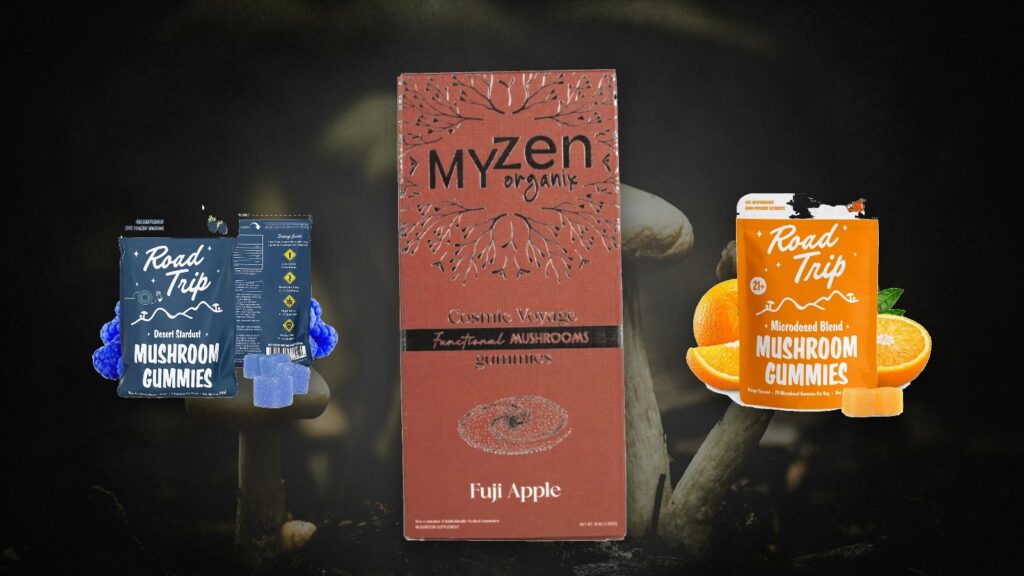
The mushroom gummies aisle has exploded. Between functional blends for focus, Amanita products promising a “legal trip,” and dozens of mushroom gummy brands competing for your attention, figuring out what you’re actually swallowing takes more than a quick glance at the packaging. This guide will teach you how to read mushroom gummies ingredients line by line, compare blends across brands, and make decisions grounded in facts rather than marketing hype.
Key Takeaways
Most mushroom gummies sold as dietary supplements in 2026 contain legal functional mushrooms like Lion’s Mane, Reishi, and Cordyceps. They contain no psilocybin or psilocin and are not designed to cause hallucinations. Some Amanita muscaria products use different active compounds with a distinct legal status.
Reading a mushroom-gummy label means checking serving size, total mushroom milligrams, extract ratios, the list of mushroom species, and any added nootropics or botanicals. Active ingredients in gummies can vary widely by brand.
Extract quality, heavy-metals testing, and transparent Certificates of Analysis matter enormously for safety, because mushrooms naturally concentrate heavy metals from soil.
Format matters: infused gummies distribute active compounds more evenly than coated gummies or chocolate bars, which affects consistent dosing and bioavailability.
When you’re ready to put these skills to work, explore the mushroom-gummy range at Poppy & Lotus to see transparent ingredient panels and clear serving information in practice.
-
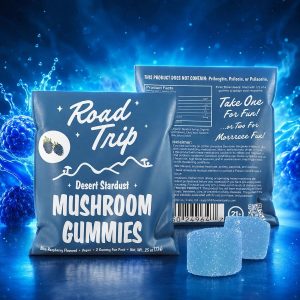
 $7.99Up to 10% offView options This product has multiple variants. The options may be chosen on the product page
-
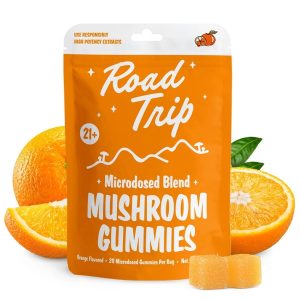
 $9.99View options This product has multiple variants. The options may be chosen on the product page
-
 $34.99View options This product has multiple variants. The options may be chosen on the product page
-
What Are Mushroom Gummies, Exactly? (And What They Are Not)
Mushroom gummies are chewy dietary supplements that deliver mushroom extract or powdered mushroom in a convenient, flavored format. They are not magic mushroom edibles containing psilocybin, and understanding that distinction is the first step toward reading any label intelligently.
In 2026, three main categories sit on shelves. First, functional blends built around non-psychoactive mushroom species like Lion’s Mane, Reishi, Cordyceps, and Chaga, designed for focus, calm, or immune support. Second, “legal magic” mood blends that typically use a nootropic mushroom blend or Amanita muscaria extract rather than controlled psychedelics. Third, products containing psilocybin, which remains a Schedule I substance under federal law and cannot be legally sold as over-the-counter consumer products.
Functional mushroom supplements are not strictly evaluated by the FDA before reaching the market-they’re regulated like other dietary supplements under DSHEA, not like controlled substances. Functional mushroom gummies contain no psilocybin or psilocin. Many mushroom gummies are sold legally due to non-scheduled ingredients, and functional gummies support focus and immune health without psychoactive effects. Functional mushrooms are typically non-psychoactive and do not contain psilocybin.
Labels often emphasize flavor, mood claims, and packaging claims over substance. This article will teach you to look past all of that. Poppy & Lotus approaches mushroom gummies as clear, transparent dietary supplements, not mystery “trip” products.
Decoding the Ingredient Panel: Active Ingredients vs Everything Else
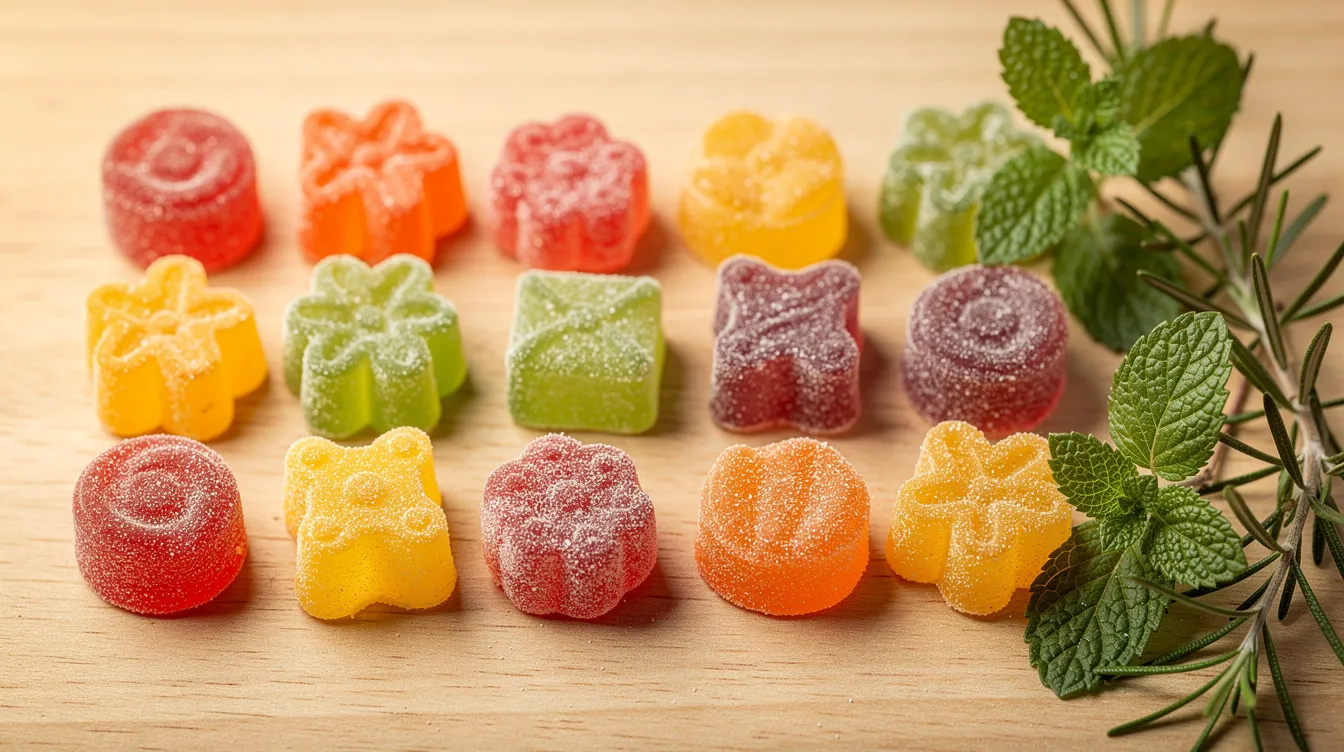
Every supplement label separates active ingredients (mushroom extracts, nootropic botanicals) from the gummy base (sweeteners, fibers, flavors, colors). Knowing which section matters for wellness versus which section matters for taste will save you from confusion.
The active ingredients panel should list each mushroom species by scientific name and form. Look for entries like: Lion’s Mane (Hericium erinaceus) fruiting-body dual extract (10:1), 500 mg per serving, standardized to ≥25% beta-glucans. The fruiting body of mushrooms typically contains higher concentrations of active compounds compared to mycelium, so that detail matters. Many mushroom gummies may also include vitamins and adaptogenic herbs to enhance their effects, such as L-theanine, vitamin B6, or 5-HTP.
The “other ingredients” list covers the gummy base: pectin or gelatin, tapioca syrup, cane sugar, natural flavors, citric acid. Sweeteners in mushroom gummies may include cane sugar, tapioca syrup, or alternatives such as stevia. These affect texture, shelf life, and sugar load-not nootropic function.
The red flag? Labels that say “proprietary mushroom blend” or “magic mushroom complex” without naming individual mushroom species or disclosing per-species amounts. A proprietary nootropic blend that hides everything behind a single total-mg number makes honest comparison impossible.
The Big Players: Common Mushrooms You’ll See on Gummy Labels
Think of this as your field guide to the mushroom names that appear most often on supplement facts panels.
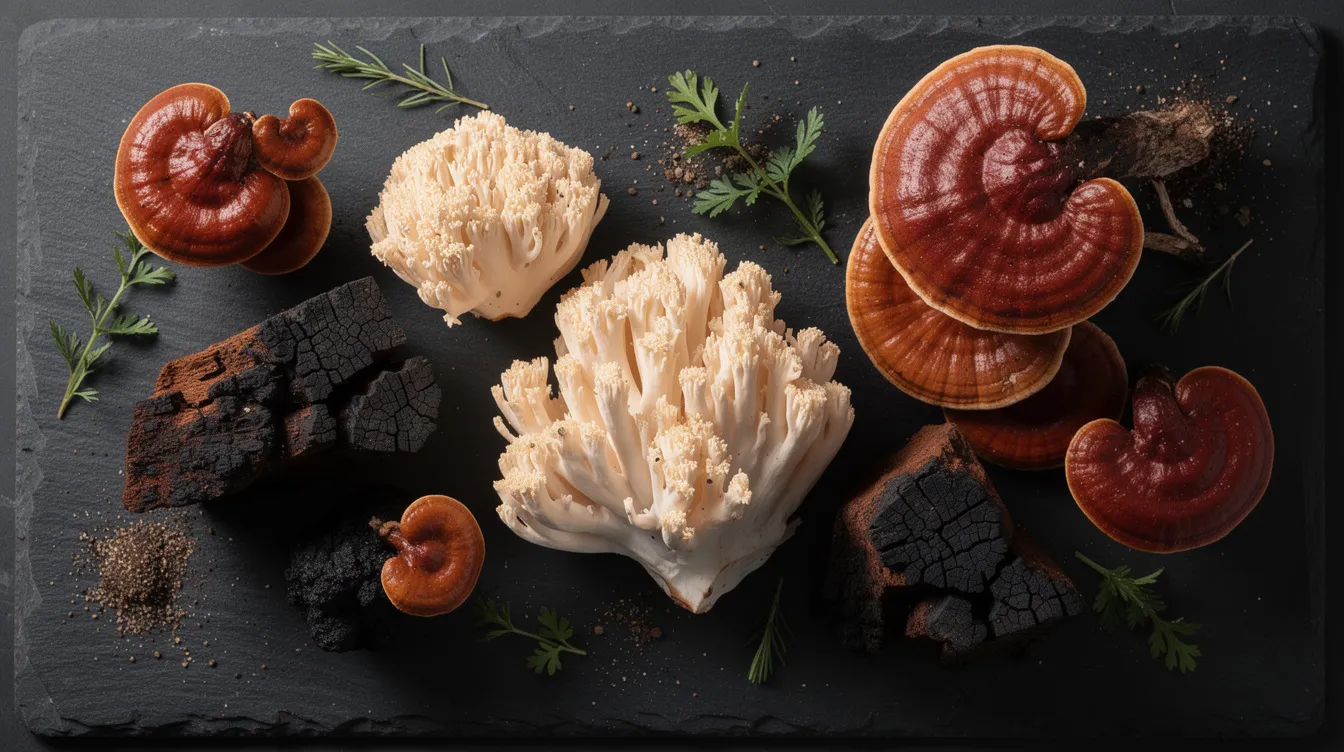
Lion’s Mane (Hericium erinaceus): Lion’s Mane is associated with cognitive health and memory support. Labels usually show fruiting-body extract with a ratio like 10:1 and standardization to beta-glucans. Key compounds include hericenones and erinacines, which may stimulate nerve growth factor.
Reishi (Ganoderma lucidum): Reishi is known for promoting relaxation and supporting immune function. Look for dual-extraction methods and triterpene standardization (≥5%).
Cordyceps (C. militaris): Cordyceps is linked to improved cellular energy and physical stamina. Often listed with adenosine-analog compounds like cordycepin.
Chaga (Inonotus obliquus): Chaga is used for its antioxidant properties and immune support, rich in polysaccharides and phenolics.
Turkey Tail (Trametes versicolor): Turkey Tail is recognized for its benefits to gut health and immune modulation, containing well-researched β-glucans (PSK/PSP).
Shiitake (Lentinula edodes): Contains lentinan and eritadenine; bridges culinary and wellness categories.
The potential health benefits of mushroom gummies vary depending on the mushroom species and extract quality. Beta-glucans from mushrooms may help regulate immune responses and support gut health across several of these species.
Some mood-focused products marketed as the best magic mushroom gummies combine multiple species into one proprietary blend. When exact per-species amounts aren’t disclosed, check the total blend mg and ingredient order (listed by quantity, highest first) to estimate whether each species is present in a meaningful dose.
Poppy & Lotus formulations lean on well-researched species like Lion’s Mane and Reishi. Compare those labels against whatever gummies you’re currently taking.
Amanita muscaria and “Magic” Branding: Ingredients, Active Compounds, and Legal Status
Amanita muscaria-the classic red-and-white toadstool-is legally distinct from psilocybin mushrooms. Many 2026 magic mushroom gummies actually use Amanita or nootropic blends rather than psilocybin. Understanding the question of whether magic mushroom gummies are legal requires knowing which compounds are inside.
The key active compounds in Amanita muscaria are muscimol (a GABA-A receptor agonist and the primary psychoactive after processing) and ibotenic acid (neurotoxic, partly converted to muscimol during drying). Muscimol is derived from Amanita muscaria mushrooms. Meanwhile, psilocybin is a hallucinogenic compound from Psilocybe mushrooms-an entirely different species and legal category.
A well-labeled Amanita muscaria gummy should clearly name Amanita muscaria, state muscimol content in mg per serving, disclose ibotenic acid levels, and describe the extraction method. “Amanita extract 1,000 mg” alone tells you almost nothing about what active compounds you’re consuming.
Legally: psilocybin is a Schedule I substance under federal law with no currently accepted medical use at the federal level. Psilocybin-containing products are illegal to sell in the U.S. as supplements. Amanita muscaria is legal in 49 states, except Louisiana, and muscimol is not federally scheduled-but some states restrict Amanita products.
Here’s where it gets dangerous. In December 2024, the Food and Drug Administration declared Amanita muscaria and its constituents unapproved as food additives. A 2024 CDC investigation examining five brands of Amanita-labeled gummies found that three contained undisclosed psilocybin or psilocin. In 2024, 180 emergency cases were reported from mushroom gummies. Some mushroom gummies contain undisclosed synthetic psychoactive compounds, and many gummies contain synthetic tryptamines that never appear on the label. Mislabeling of mushroom gummies can lead to unexpected effects, and legal availability of mushroom gummies does not ensure safety. These are the unknown compounds and other substances you cannot see from packaging alone.
Public health concerns around these products are not theoretical. Researchers in pharmaceutical sciences and medical toxicology have documented adverse events tied to undisclosed ingredients in products sold at smoke shops and retail shops.
Functional Nootropic Blends vs “Best Magic Mushroom Gummies” for Mood
Functional mushroom gummies and psychoactive mood gummies serve different purposes. Functional gummies often include Lion’s Mane and Reishi extracts for cognitive function, mental clarity, and immune support. Psychoactive gummies aim to alter mood and perception-often through muscimol from Amanita muscaria.
Both categories should still list active compounds and total mushroom mg per serving. “Magic” branding alone tells you nothing about what’s actually inside. Psilocybin-containing products are illegal to sell in the U.S. as supplements, so any product implying a magic mushroom experience while sitting on a store shelf deserves scrutiny.
Here’s how transparent vs vague labels compare:
A transparent functional label reads: “Lion’s Mane (Hericium erinaceus) fruiting-body dual extract 10:1, 500 mg, ≥25% beta-glucans; Reishi (Ganoderma lucidum) water extract 20:1, 250 mg, ≥5% triterpenes.”
A vague mood-gummy label reads: “Legal Mushroom Blend (1,000 mg): Amanita & other mushrooms; magic mood formula. Proprietary mushroom complex. Natural flavors.”
Poppy & Lotus sits on the functional side-emphasizing clarity, day-to-day usability, and label transparency. Use the same critical checklist whether you’re looking at functional blends or products marketed for mood. Treating depression or other mental health conditions is a medical matter, not a gummy-label promise. Consult a healthcare professional before relying on any supplement for well being tied to a clinical diagnosis.
Reading Serving Sizes, Milligrams, and Extract Ratios Without Getting Lost
Front-of-pack claims like “2,000 mg per serving!” can be misleading unless you know whether that refers to raw powder, concentrated mushroom extract, or total blend weight including non-mushroom fillers. The high potency claim on packaging means nothing without context.
Start by locating “Serving Size” and “Servings Per Container.” A serving might be 1 gummy, 2 gummies, or even half a gummy. If the label says 500 mg per serving and the serving is 2 gummies, each gummy delivers 250 mg.
Extract ratios translate concentration. A 10:1 Lion’s Mane extract means 10 grams of dried mushroom were concentrated into 1 gram of extract. So 500 mg of a 10:1 extract is roughly equivalent to 5 grams of dried fruiting body. A 2025 randomized clinical trial used 3 grams of Lion’s Mane fruiting-body extract to measure cognitive and mood effects in young adults-useful as a benchmark.
For Amanita products specifically, microdosing typically involves 0.1–0.5 mg of muscimol. Onset time for gummies is typically 30–90 minutes, effects usually last 4–8 hours after consumption, and you should avoid redosing before 90 minutes have passed.
To compare brands fairly: mg per gummy × gummies per suggested serving × number of servings per day. Then check whether that number represents raw powder or standardized extract. When you look at Poppy & Lotus gummies, apply this same process-verifying that serving size, extract ratios, and mushroom species all align with your goals.
Extract Quality, Heavy Metals, and Why Testing Matters So Much
Mushrooms naturally bioaccumulate heavy metals from soil-lead, cadmium, arsenic, mercury. This makes extract quality and third party lab testing more critical for mushroom supplements than for many other dietary supplements.
Extract quality comes down to several factors:
Starting material: fruiting-body extracts vs grain-based mycelium (which may include substrate filler and lower bioactive levels)
Extraction method: hot-water pulls beta-glucans and polysaccharides; alcohol retrieves triterpenes; dual extraction captures both
Standardization: specific percentages of active compounds (e.g., ≥25% beta-glucans, ≥5% triterpenes)
Mushroom gummies should be third-party lab tested for identity, potency, and contaminants. A trustworthy Certificate of Analysis tests for potency of active compounds, heavy metals, residual solvents, pesticides, and microbials-with batch numbers matching the package. Current good manufacturing practices should govern the entire production chain.
Certain unregulated mushroom gummies may contain hidden psychoactive substances or contaminants. A 2025 Oregon State University analysis published in JAMA Network Open found that products claiming Amanita muscaria extract had no detectable muscimol or ibotenic acid but did contain psilocybin, psilocin, and other adulterants. Researchers from the Linus Pauling Institute and the American Medical Association–affiliated journals have raised alarms. High resolution mass spectrometry is now the standard analytical method for detecting synthetic tryptamines and undisclosed ingredients in these consumer products.
Favor brands like Poppy & Lotus that publish up-to-date COAs and make it easy to verify both active ingredients and the absence of contaminants.

Infused Gummies vs Coated Gummies vs Chocolate Bars
Format determines how evenly active compounds distribute across each piece and how reliably each serving matches the label.
Infused gummies have mushroom extract mixed uniformly into the gummy slurry before molding. This produces consistent dosing from piece to piece and supports accurate microdosing. Each gummy contains roughly the same amount of active compound.
Coated gummies receive extract dusted or sprayed onto the surface after forming. This creates “hot” pieces (heavy coating) and “cold” pieces (barely any), making precise dosing unreliable even if the batch average matches the label.
Chocolate bars can be pleasant but are more heat-sensitive. Store them away from direct sunlight or warm environments, and note that breaking into precise doses is harder unless the bar is scored. Uneven mixing during production can also affect potency distribution.
Poppy & Lotus gummies use an infused format designed for consistent active-ingredient distribution, supporting the kind of accurate serving information that makes daily supplementation predictable.
Flavor, Sweeteners, and Texture: What Non-Active Ingredients Tell You
Flavor and sweetener choices influence sugar load, dietary suitability, and how effectively the formula masks earthy mushroom notes-not the nootropic effect.
Common gummy-base ingredients and what they do:
Pectin → vegan, softer chew
Gelatin → animal-derived, firmer texture
Tapioca syrup / cane sugar → sweetness, body weight considerations for sugar-conscious consumers
Citric or malic acid → tartness, shelf life stability
Natural flavors → taste masking
Plant based ingredients (fruit/vegetable colorants) → clean-label appeal
Stronger, higher-potency gummies with concentrated dual extracts tend to lean on bold, sour flavors-berry, mango, citrus-to balance bitterness. Sugar-free alternatives using stevia or monk fruit reduce caloric load but may cause digestive discomfort in sensitive users.
Poppy & Lotus balances taste with responsible sweetener choices. Read not just the mushroom section but the full ingredient list before buying.
Safety, Interactions, and Choosing the Right Potency for You
Even legal mushroom gummies are still bioactive dietary supplements. Potential risks associated with mushroom gummies include digestive discomfort and interactions with medications, particularly immunosuppressants, anticoagulants, or sedatives. Mushroom gummies can trigger anxiety or panic in some users, especially with Amanita-derived products or when stacked with stimulants.
General best practices:
Start with half a gummy for new users, then increase to the labeled serving if tolerated
Avoid stacking multiple high-potency products, especially those targeting the same pathways (e.g., multiple GABA-agonist blends or serotonin receptors modulators)
Consult a healthcare professional if pregnant, nursing, or on prescription meds-especially SSRIs, MAOIs, or sedatives
Products making claims about treating depression or other mental health conditions are overstepping what dietary supplements can legally promise, even if they reference an accepted medical framework
“High potency” on packaging may refer to total blend mg, not higher levels of the same brand’s active compounds. Cross-check that claim against species, extract type, and COA data. A strong dose of one extract may be a moderate dose of another depending on standardization.
Keep a simple log (time taken, serving size, perceived effects, whether taken on an empty stomach or with food) for the first 1–2 weeks. Poppy & Lotus designs serving guidance around gradual titration and clear labeling so users can adjust within a safe, predictable range. If you experience adverse effects, reduce serving or discontinue and speak with a medical professional.
How to Compare Five Brands Side by Side (Using Any Gummies, Including Poppy & Lotus)
Instead of chasing marketing hype about the best magic mushroom gummies, apply a five-point comparison checklist to any mushroom gummy brands you’re considering:
Clarity of mushroom species and active ingredients: Does the label name each species, specify fruiting body vs mycelium, and list per-species mg?
Extract quality and ratios: Water, alcohol, or dual extraction? What ratio? Standardized to which compounds?
COA depth and transparency: Can you find a batch-matched COA online? Does it test for potency, heavy metals, pesticides, and microbials? Does an independent lab perform the testing?
Value per active mg: Divide price by total mg of standardized extract per container-not by number of gummies or total “blend” weight.
Suitability to personal goals: Focus? Calm? Immunity? Gentle mood support? Match species and compounds to your objective.
Red flags to watch for: no COA available, no species names listed, unrealistic potency claims, mixing Amanita muscaria with vague “other psychoactives,” products from unknown sources at smoke shops, or any mention of controlled substances without proper licensing. Reputable brands will ensure safety through transparent labeling, accessible COAs, and quality control at every production stage.
Apply this same checklist to the Poppy & Lotus mushroom-gummy line. It’s a practical way to verify that the ingredients and serving info align with everything you’ve learned here.
Frequently Asked Questions About Mushroom-Gummy Ingredients
Do mushroom gummies contain psilocybin or make you hallucinate?
Mainstream wellness-oriented mushroom gummies in 2026, including those from Poppy & Lotus, do not contain psilocybin or psilocin and are not designed to cause hallucinations. Legal mushroom gummies contain no psilocybin or psilocin. If a product did contain psilocybin, it would need to comply with controlled-substance laws-psilocybin is a Schedule I substance under federal law-and would not be sold as an over-the-counter dietary supplement in most jurisdictions. Check labels for explicit mention of psilocybin or psilocin (which should raise immediate legal and safety questions) versus functional mushrooms like Lion’s Mane, Reishi, and Cordyceps.
What’s the difference between whole mushroom powder and extract on the label?
Whole mushroom powder is simply dried and milled mushroom, usually requiring higher mg amounts to match the potency of concentrated extracts. An extract (often labeled with a ratio like 10:1) concentrates active compounds, so smaller mg numbers can still deliver a strong dose. Favor products that specify whether they use fruiting-body extracts, extract ratios, and standardization levels so you can compare potency accurately across brands. Do mushroom gummies work at lower milligrams? They can-if those milligrams represent a concentrated, standardized extract rather than raw powder.
How can I tell if a “proprietary blend” is under-dosed?
Proprietary blends must list total mg but not per-ingredient amounts, which makes it possible to sprinkle tiny amounts of popular mushrooms purely for marketing. Look at total blend mg, the position of ingredients in the blend list (higher position usually means more), and any referenced clinical studies to judge whether amounts seem realistic. Prefer brands like Poppy & Lotus that either avoid opaque blends or clearly disclose per-mushroom amounts where feasible.
Are mushroom gummies safe to take with other supplements or caffeine?
Many people combine mushroom gummies with multivitamins or moderate caffeine without issues. However, interactions can occur-especially with products that add extra stimulants or calming botanicals. Avoid stacking multiple high-stim or strong-calming supplements without consulting a healthcare practitioner, particularly if you have cardiovascular, mood, or sleep concerns. Start new combinations gradually and monitor for changes in heart rate, sleep quality, or anxiety levels. Severe illness or unexpected reactions warrant immediate medical attention.
How long should I take mushroom gummies before deciding if they work for me?
Some users notice subtle effects-focus, calm, stress resilience-within a few days, but many clinical studies on functional mushrooms observe measurable changes over 4–8 weeks of consistent daily use. Try a single product at the labeled serving for at least 3–4 weeks, logging how you feel, before deciding to increase, decrease, or switch. Use this time frame when evaluating any Poppy & Lotus mushroom gummy, treating it like a structured dietary supplement trial rather than a one-time test. The health benefits of consistent use tend to compound over time, and body weight, metabolism, and individual biochemistry all influence response speed.