Guides
How to Evaluate an Online Botanical Retailer’s Product Transparency, Shipping Policies, and Customer Support
Key Takeaways Check product labels and photos first. A trustworthy retailer shows clear, unfiltered images of actual product labels – including Latin botanical names, plant parts used, batch numbers, and serving sizes – rather than generic stock photos. Look for independent lab reports. Batch-specific Certificates of Analysis (COAs) covering identity, heavy metals, and microbial testing…

Key Takeaways
Check product labels and photos first. A trustworthy retailer shows clear, unfiltered images of actual product labels – including Latin botanical names, plant parts used, batch numbers, and serving sizes – rather than generic stock photos.
Look for independent lab reports. Batch-specific Certificates of Analysis (COAs) covering identity, heavy metals, and microbial testing are the strongest proof that what’s on the label is actually in the bottle.
Read the shipping and returns fine print. Specific delivery windows, carrier names, free-shipping thresholds, and step-by-step return instructions signal a retailer that takes logistics as seriously as sourcing.
Test customer support before you buy. Send a pre-purchase question about an ingredient, batch, or allergen. The speed, detail, and honesty of the reply tells you more than any marketing copy ever will.
Use a simple scoring system. Evaluate at least two or three retailers side by side on five criteria – labels, sourcing, testing, shipping clarity, and support – so your purchase decision is based on evidence, not impulse.
Introduction: Why Due Diligence Matters for Herbal E‑Commerce Retailers
Since roughly 2020, consumer demand for herbal and botanical products online has surged. Pandemic-era disruptions to brick-and-mortar retail stores pushed millions of shoppers toward e commerce retailers in the wellness space, and many never went back. The convenience is obvious: a wider selection, home delivery, and the ability to compare brands in minutes. But this growth has outpaced regulatory oversight.
Product transparency is essential for evaluating botanical retailers – and for good reason. Botanicals encompass consumables and live organisms, from dried herbs to liquid extracts to live plants. When something is meant to be ingested, the stakes of mislabeling or contamination go well beyond a disappointing purchase. A DNA-based global survey of 5,957 herbal products across 37 countries found that about 27% of herbal products were adulterated or mislabeled, meaning 73% of herbal products analyzed were authentic – a majority, but not an overwhelming one. That gap is exactly why a quick due-diligence check matters.
This article gives you a practical, retailer-level checklist to evaluate product transparency, shipping policies, and customer support before you place an order. Think of it as a 10-minute screening you can run on any online botanical store. No chemistry degree required.

Step 1: Start With the Product Page – Are Labels and Photos Trustworthy?
The product page is your first handshake with a retailer. If it’s vague, blurry, or inconsistent, treat it the way you’d treat a handshake from someone who won’t look you in the eye.
Here’s what a solid product page for herbal products should include:
Clear product title stating the herb name, form (capsule, tincture, loose tea, powder), and size or count.
Strength or concentration – for example, “500 mg per capsule” or “1:4 tincture ratio.”
Price per unit or per serving, not just per bottle, so you can compare value across brands.
Batch or production details where relevant – at minimum a lot number visible on the label.
Multiple photos from different angles, including at least one shot of the full label.
Inspect product photos for authenticity rather than stock images. Accurate photographs should show the actual product instead of generic images. If every product in a store uses the same softly lit stock photo of a lavender field, that’s not transparency – it’s decoration.
Zoom in on label photos and compare them to the text description on the page. If the photo says “600 mg” but the description says “500 mg,” something is wrong – and it’s not just a typo.
Product Labels: What to Look for Before You Add to Cart
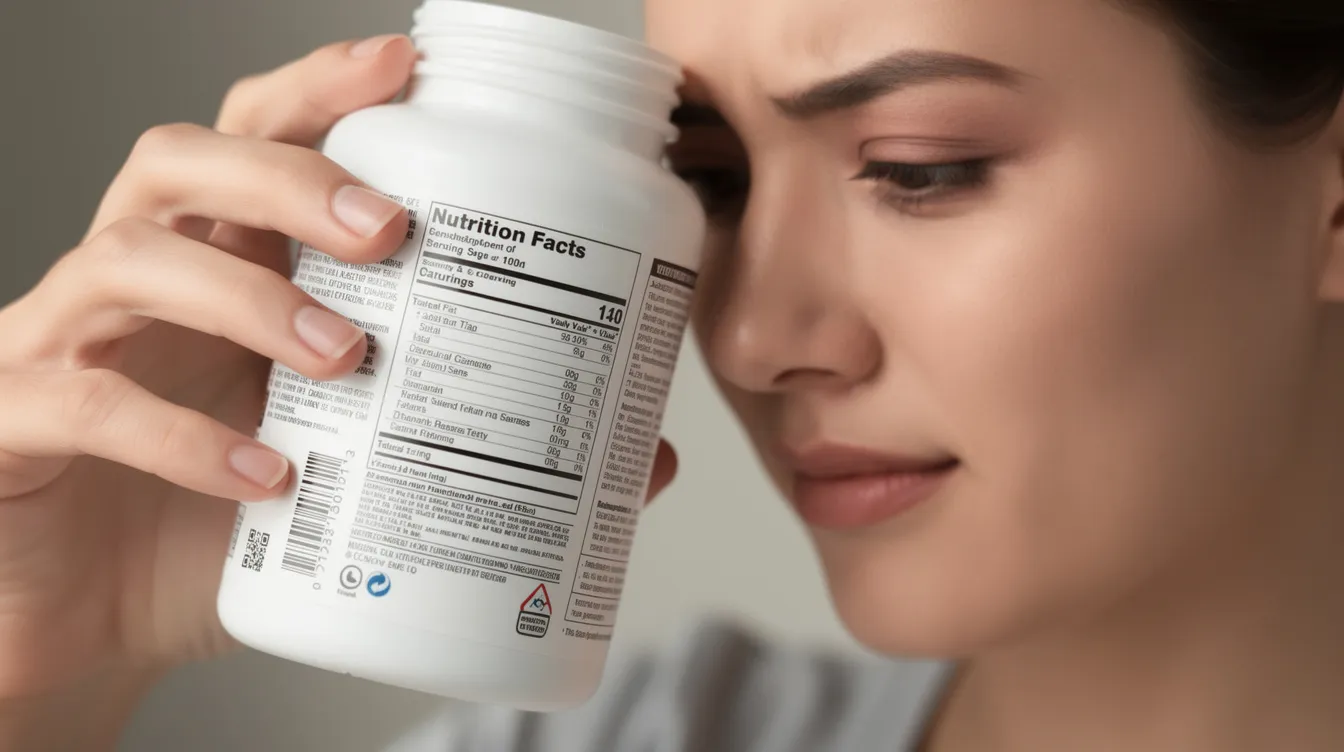
Product labels are the single most information-dense element on any herbal product page. Here’s what should be visible either in photos or the text description:
Supplement Facts or Nutrition Facts panel (depending on how the product is classified), including daily serving size and amount per serving.
Full ingredient list – active herbal ingredients separated from non-herbal ones like capsule shells, fillers, sweeteners, or solvents such as alcohol or glycerin.
Warnings and storage instructions – especially for heat-sensitive or light-sensitive botanical preparations.
Manufacturer or distributor name and address – this is a legal requirement on finished product labels in the U.S.
Check if botanical products include scientific names alongside common names. A product labeled simply “echinacea” is less transparent than one specifying Echinacea purpurea (aerial parts). Different species and other parts of the same plant can have entirely different compound profiles. Detailed product descriptions should include dimensions and intended uses so customers know exactly what they’re buying.
Additionally, watch for the phrase “proprietary blend.” While sometimes legally permissible, it hides individual ingredient amounts and makes assessing safety – especially herb-drug interactions or cumulative dosing – extremely difficult. Consumers prefer specificity, and the best brands deliver it.
Ingredient Sourcing and Origin: Can You Trace Where Herbs Come From?
Origin matters because the same species grown in different soils, climates, and agricultural environments can vary dramatically in potency, heavy metal content, and pesticide residues. A reputable botanical retailer provides clear details on sourcing and origin.
What to look for:
Country or region of origin for key botanicals, stated on the product page or label – for example, “ashwagandha root sourced from Rajasthan, India.”
Growing method – farmed, wildcrafted (harvested from wild populations), or greenhouse-grown. Each comes with different sustainability and quality implications.
Supplier relationships – does the company mention working with specific farms, cooperatives, or contract growers? Detailed sourcing information signals accountability in herbal retailers and shows the brand knows its value chain.
Harvesting practices or seasons – herbs harvested at different times of year can have different active compound levels. This detail is a strong trust signal, though not every retailer will have it.
Sourcing stories should line up with what appears on individual product labels and photos, not just marketing copy on a blog page. If the About page claims “farm-to-bottle from Oregon” but the label says “Product of China,” that inconsistency deserves a question to customer support before you purchase.
USDA Organic and Other Certifications: How to Verify Claims
Organic and similar certifications are regulated claims, not casual marketing descriptors. When used correctly, they’re among the most powerful transparency signals a retailer can offer.
The USDA Organic seal means the product – or its certified ingredients – has been verified by a USDA-accredited certifier. That certifier audits farms, processors, and handlers to confirm compliance with organic standards, which prohibit certain synthetic pesticides, herbicides, and fertilizers. Organic certification ensures traceability of herbal products back through the supply chain, and organic certification ensures traceability of herbal product origins across the entire value chain.
How to cross-check claims:
If a retailer claims USDA Organic, the seal or specific wording should appear on product labels in photos, not just in ad copy or a banner image.
A certifier name or code should be listed on the label – for example, “Certified Organic by QAI” or similar. If it’s missing, the claim is weaker.
Be specific about scope. A credible retailer might say “certified organic herb, non-organic capsule” rather than implying the entire finished product is organic when only the raw botanical is certified.
Other common signals include Non-GMO Project Verified, Fair Trade, kosher, and vegan certifications. Each has its own verification body and scope. Verify that products include information on quality standards and certifications, and don’t take a logo at face value without confirming it lines up with the label.
Third-Party Testing and Certificates of Analysis (COAs)
If labels tell you what a retailer claims is in the product, third-party lab reports verify product safety and authenticity. A Certificate of Analysis is the receipt that proves the testing actually happened.
Why it matters: studies using chemical methods authenticated 2,386 herbal products across 37 countries, and found that roughly 27% of herbal products are adulterated globally. When microscopic methods were used, the adulteration rate climbed to 41%. Adulteration rates also vary by region – 37% in the UK and 31% in Italy in some samples. The numbers are uneven by herb, too: a review of 2,995 samples of five popular herbs found ginkgo leaf adulterated at ~56.7%, black cohosh at ~42.2%, echinacea at ~28.5%, elderberry at ~17.1%, and turmeric at ~16.5%.
Look for batch-specific Certificates of Analysis for herbal products. Here’s what a reliable COA should show:
Test date – recent, not years old.
Batch or lot number – matching the product you’re considering or receiving.
Analytes tested – identity verification, heavy metals (lead, cadmium, arsenic, mercury), microbial contamination (Salmonella, E. coli), and sometimes pesticide residues or solvent residues.
Numeric results and pass/fail – not just “passed” but actual measured values compared to specification limits.
Lab name and contact information – an independent, identifiable laboratory.
Trustworthy e commerce retailers often publish COAs in a “lab results” tab, a documents section, or will email them on request. If a retailer has no testing data at all, that’s a transparency gap. If the COA is undated, generic, or obviously recycled from a different lot, that’s worse.
Be wary of a COA that doesn’t include a lot number or that covers a date range long before the product’s listed manufacturing date. A real COA is specific to a batch, not a blanket claim.
Checking for Regulatory Compliance and Disclaimers
In the U.S., herbal products are usually sold as dietary supplements or food – not drugs. This means they’re subject to labeling requirements but not pre-market approval. As a consumer, you can use compliance signals to quickly gauge how seriously a retailer takes the rules.
What to check:
Required disclaimers. If a product page includes a structure or function claim (e.g., “supports immune health”), it must also display the disclaimer: “This statement has not been evaluated by the FDA. This product is not intended to diagnose, treat, cure, or prevent any disease.” Many retailers comply on the physical label but skip it online.
Disease-cure claims are illegal without drug approval. A study of 51 U.S. Ayurvedic supplements found that roughly 38% of online listings contained disease claims, compared to only 8% of physical labels. Over 60% of those products had at least one labeling violation overall.
Exaggerated language. Product pages or blogs attached to a store that promise to “cure diabetes” or “eliminate cancer” are not just irresponsible – they indicate poor compliance and low transparency.
Basic company details. Validate a seller’s legitimacy by checking for a verifiable business name and address, which should appear on the product label and often in the site footer or policy pages.
Responsible brands comply with these rules not because they’re fun, but because following them is the minimum standard for selling ingestible products.
Authenticity Signals: Batch Numbers, Dates, and Lot-Specific Info
Lot tracking isn’t glamorous, but it’s the backbone of quality control, recalls, and customer safety. Without it, there’s no way to trace a problem product back to its source.
What to look for:
Batch or lot numbers visible on the label in product photos. If photos deliberately blur or crop this data, that’s a reason to question the retailer.
Clear expiration or best-by dates. Dried herbs and extracts degrade over time – potency, flavor, and safety all change. You deserve to know when that clock runs out.
Manufactured-on or harvest dates – less common but increasingly offered by high-transparency brands.
Lot-based lookup tools. Some retailers allow customers to enter a lot number from the bottle or bag on the website and pull up batch-specific test data. This is one of the strongest trust signals in herbal e commerce.
If a retailer’s photos show every product with the same label shot – no lot number, no date, no variation between batches – that suggests a single photo was reused across production runs, which undermines the whole point of batch tracking.
Evaluating Product Descriptions: Are Benefits and Risks Presented Honestly?
Credible stores explain traditional uses and emerging research without overstating cures or hiding contraindications. The tone and balance of a description reveal a lot about a retailer’s integrity and herb-specific expertise.
What to look for:
Safety notes. Does the description mention common contraindications – pregnancy, nursing, medication interactions, allergies? If a product page for St. John’s wort doesn’t mention its well-documented interactions with SSRIs, the retailer is either careless or evasive.
Realistic benefit language. Phrases like “traditionally used to support” or “preliminary research suggests” are more honest than “clinically proven to cure.” The difference matters legally and ethically.
Differentiation between traditional use, historical context, and modern clinical evidence. Even at a high level, a retailer that separates these categories shows real knowledge of its herbs.
Originality. Copy-pasted or obviously generic descriptions across dozens of herbal products are a sign of low effort and possible lack of expertise. If the same paragraph appears on ashwagandha, rhodiola, and holy basil pages, someone isn’t paying attention.
Retailer Background: About Page, Mission, and Herbal Expertise
You’re trusting this company with products you plan to ingest. The About page is where you determine whether that trust is warranted.
What to look for:
Founding year and history. How long has this retailer been in the market?
Named team members. Who is behind the brand – herbalists, naturopaths, pharmacists, hobbyists? Any stated training in herbalism, nutrition, or botanical sciences adds credibility.
Sourcing philosophy and quality standards. Genuine botanical retailers often describe how they select suppliers, test or approve new products, and what standards guide their operations.
Physical location. A verifiable address, not just a P.O. box, combined with named ownership, signals a businesses that stands behind its products.
Vague or anonymous ownership, no physical location, and no named team members can be warning signs – especially when combined with aggressive health claims and a web presence that prioritizes sales over education.
Reading Customer Reviews With a Critical Eye
Reviews are one transparency signal among many, not the only deciding factor. Use them strategically.
Look for specifics. Reviews mentioning taste, aroma, visible plant quality, packaging condition, or delivery speed carry more weight than “Great product!” repeated fifty times.
Watch for red flags. Many near-identical short reviews, sudden rating spikes in a narrow date range, or reviews that describe a product not sold by the retailer are signs of manipulation.
Read the critical reviews. Researching independent customer reviews can reveal common complaints – recurring issues with broken seals, wrong items, or slow shipping tell you about a retailer’s real operations.
Check retailer responses. How a company responds to criticism reveals how customer support actually behaves under stress. Defensive or dismissive replies are a warning.
Review a retailer’s customer feedback on independent platforms before purchasing – not just on the retailer’s own website, where negative reviews may be filtered or removed.
Shipping Policies: How to Find and Interpret the Fine Print
Shipping policies are part of overall transparency for e commerce retailers and should be easy to find – typically in the footer, a dedicated help page, or at checkout. If you have to search for five minutes, that’s already a data point.
Retailers should clearly state shipping methods and delivery windows. Here’s what a solid policy covers:
Carriers used – USPS, UPS, FedEx, DHL, or regional carriers. This matters because carrier choice affects speed, tracking quality, and handling conditions.
Handling time – for example, “orders ship within 1–2 business days.” This is separate from transit time, and many shoppers confuse them.
Estimated transit windows by region – domestic standard, expedited, and international, each with realistic ranges.
Cutoff times – “orders placed before 2 PM EST ship same day” gives you far more confidence than “fast shipping.”
Order tracking must be easy to find on the retailer’s website. If the retailer provides tracking numbers but buries them in obscure account settings, that’s friction customers shouldn’t have to deal with.
Ensure shipping policies account for extreme weather conditions. Botanical products – especially liquid extracts, live plants, and heat-sensitive preparations – can degrade in transit during summer heat or winter freezes. The best retailers mention seasonal packaging adjustments (insulation, cold packs) or shipping schedule changes.
For international buyers, look for details on customs responsibilities, duties, and which herbal products cannot legally ship to certain countries or specific U.S. states due to agricultural regulations. Retailers often adjust shipping policies based on product sales data and seasonal demand, so check that the policy page reflects current operations, not last year’s terms.
Free Shipping, Thresholds, and Promotional Offers
Free shipping is a popular promotional strategy among retailers, and research consistently shows that 49% of shoppers prefer free shipping when making purchase decisions. But free isn’t always free – the cost is built in somewhere, and for herbal products, the tradeoffs can affect what arrives at your door.
What to check:
Minimum order thresholds. Most e commerce retailers set a minimum – for example, free shipping on orders over $50. Know what it is before you load up your cart with items you don’t need just to hit the number.
Domestic only or worldwide? Free shipping often applies domestically only. International orders typically have separate cost structures.
Category exclusions. Some retailers exclude heavy items (bulk teas, roots, bags of raw botanicals), refrigerated products, or live plants – which are perishable and require careful shipping – from free shipping offers.
Impact on packaging. Overly aggressive free shipping on very low-priced items may push a retailer to cut corners on packaging or carrier choice. Shipping costs significantly impact retailers’ pricing strategies, and if the numbers don’t add up, the savings often come out of protective packaging.
Consider total landed cost and value, not just chasing free shipping – especially for fragile or heat-sensitive botanical products. A product that arrives degraded because it spent five extra days in a slow carrier saves you nothing.
Packaging Quality and Sustainability Claims
Good packaging does two jobs: it protects the product, and it reflects the retailer’s values. Both are visible to an attentive buyer.
What to look for in product photos and descriptions:
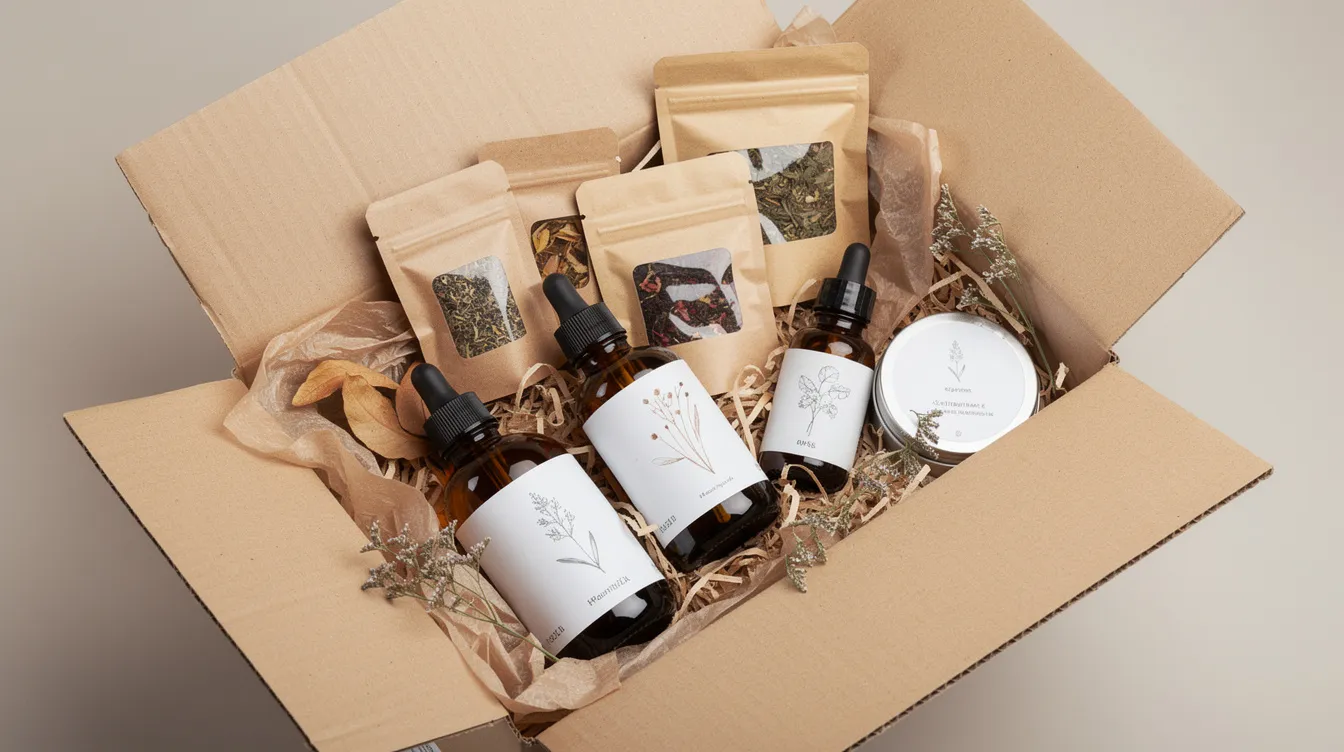
Amber or opaque glass for light-sensitive extracts and tinctures. Clear glass looks pretty on Instagram but accelerates degradation of many compounds.
Resealable pouches with moisture barriers for dried herbs. According to AHPA’s GACP-GMP guidance, dried botanical materials must be protected from humidity, light, and oxygen – desiccant packs and proper barrier materials are part of this.
Tamper-evident seals. If you receive a product without one, especially capsules or powders, that’s a concern.
Appropriate secondary packaging. Shipping containers should be clean, food-safe, and avoid co-storage with hazardous materials.
For sustainability, check whether the store explains its use of recyclable or biodegradable materials with specifics – “100% post-consumer recycled cardboard” is concrete. “Eco-friendly” without details is marketing, not sustainability. Some consumers in the market for textiles and clothing have learned to spot greenwashing; the same critical eye applies to botanical packaging. See if what customers report in reviews matches the company’s sustainability claims.
Returns, Refunds, and Quality Guarantees
Fair returns and refund policies are part of overall trustworthiness for botanical e commerce retailers. Transparent return policies enhance consumer confidence in purchases, while vague guarantees erode it.
A clear policy should cover:
Time window – for example, “returns accepted within 30 days of delivery.” Open-ended policies sound generous but often come with hidden restrictions.
Eligibility rules – which items qualify? Typically unopened products, with exceptions for damaged or incorrect orders. Clear refund policies should include terms for damaged or incorrect orders specifically.
Who pays return shipping – customer-paid, prepaid label, or conditional (free for defective items, customer-paid for preference returns).
Step-by-step instructions – how to initiate a return, where to ship it, and estimated refund timelines. This should be accessible in the site footer or help center, not buried three clicks deep.
Legitimate sellers outline clear dead-on-arrival policies for live plants – a category where damage in transit is common and buyers need to know the process upfront.
“Satisfaction guarantees” need specific terms to mean anything. If the guarantee is broad but the rules are extremely restrictive or buried in fine print, that undermines the trust it’s supposed to build.
Customer Support Channels: Can You Reach a Real Person?
Reachable support is especially important for products that affect health and wellness. If you have a question about an ingredient interaction or an allergic reaction, the ability to reach someone knowledgeable quickly isn’t a luxury – it’s a necessity.
Good customer support should be accessible and knowledgeable about products. What to look for:
Multiple channels. Responsive customer service options include email, phone, and messaging – a clearly listed email address and web form at minimum, with a phone number or live chat as a strong bonus.
Business hours posted for live support, with expected response times for email (e.g., “within 24 hours on business days”).
Ingredient or usage clarification. Many retailers offer some way to get herb-specific guidance – without providing medical diagnoses – and this service should be described on-site. Customer support should provide clear consultation scheduling options when available.
Absence of contact info is a red flag. If the only option is a generic anonymous form with no name, no phone, and no response time commitment, treat this cautiously – especially in combination with other issues.
Testing Support Responsiveness Before You Buy
Don’t just read the support page – use it. Test customer support before purchasing by asking specific questions about products. Send a simple pre-purchase question about a batch number, an ingredient’s origin, allergen info, or shipping policies for your region.
Here’s what to evaluate in the reply:
Response time. Stores should respond quickly to product or ingredient inquiries – within one to two business days at most. Same-day responses are a strong signal.
Clarity and substance. Does the reply reference concrete product data – COAs, product labels, lot numbers – or does it recite canned sales language? Specific answers indicate a team that knows its inventory.
Honesty. An honest “I don’t know, but I will find out and get back to you” – followed by actual follow-up with sourced information – is better than a confident but vague dodge.
Professionalism. Unprofessional tone, evasive answers, or pressure tactics (“buy now before it sells out!”) are cues to reconsider that retailer.
This one step – a five-minute email before your first order – can save you hours of frustration and potentially real health risk down the line.
Data Privacy, Security, and Account Transparency
Buyers of herbal products should care how their personal and order data are handled in e commerce. Health-related purchases can reveal sensitive information about conditions, interests, and habits.
What to check:
HTTPS encryption. Look for the lock icon in the browser bar. If the website doesn’t have it, don’t enter payment information.
Clear privacy policy. It should specify how the retailer collects, stores, and uses data – particularly health-related purchase data. Does it share data with third parties for marketing?
Account features. Can you review past orders, download invoices, see subscription terms clearly, and cancel auto-ship programs without calling a phone number during limited hours?
No dark patterns. Transparent retailers avoid pre-checked subscription boxes, hidden fees that appear only at checkout, and auto-opt-in email lists. If a company makes it easy to buy but impossible to cancel, that tells you everything about its priorities.
Red Flags: When to Avoid an Online Botanical Retailer
Some warning signs should end your evaluation immediately. No amount of low price or attractive branding compensates for these:
Missing or blurry product labels – if you can’t read the label in the photo, the retailer doesn’t want you to.
No ingredient list whatsoever on the product page or in photos.
No physical business address listed anywhere on the website or product label.
No shipping or returns policy – or policies that consist entirely of one vague sentence.
Unrealistic health claims promising cures for serious diseases like cancer, diabetes, or Alzheimer’s – these are illegal without drug approval and signal a retailer that ignores regulation.
No third-party testing info of any kind – no COAs, no “lab tested” claim, no quality section.
Contradictory information between label photos and text descriptions – different strengths, different ingredient lists, different brand names.
Aggressive urgency marketing – countdown timers on every product, “only 2 left!” on items that never actually sell out, and fake scarcity tactics across the entire store.
It is better to walk away and find another retailer than to gamble on a non-transparent source for ingestible botanicals. Your health is not a clearance bin.

Building Your Own Retailer Due-Diligence Checklist
Here’s a reusable checklist you can print, bookmark, or save to your phone. Use a scoring system to objectively evaluate botanical retailers – give each item a pass or fail, then tally up. Run through it in under ten minutes before placing your first order with any new retailer.
Product Transparency
☐ Product page includes full common and Latin botanical names, plant part, and form
☐ Label photos are clear, unfiltered, and show Supplement Facts or ingredient panels
☐ Label photos match the text description (strength, size, ingredients)
☐ Country or region of origin is disclosed for key botanicals
☐ USDA Organic or other certifications are verifiable (seal on label, certifier named)
☐ COAs are available – batch-specific, dated, with named lab
☐ Batch or lot numbers and expiration dates are visible on labels
☐ No illegal disease-cure claims on product pages or attached blogs
☐ Required FDA disclaimer present for structure/function claims
Shipping and Returns
☐ Shipping policies are easy to find and specify carriers, handling times, and transit windows
☐ Free-shipping thresholds and exclusions are stated clearly
☐ Extreme weather or seasonal packaging measures are mentioned for sensitive items
☐ Order tracking is provided and easy to access
☐ Return policy specifies time window, eligible items, and who pays return shipping
☐ Refund and exchange process has clear step-by-step instructions
Customer Support
☐ At least two contact methods are listed (email + phone, chat, or form)
☐ Business hours and expected response times are posted
☐ Pre-purchase question receives a specific, helpful response within two business days
☐ Staff can communicate product-specific details (ingredients, sourcing, testing)
☐ Retailer responds professionally to critical reviews
Comparing Multiple Herbal E‑Commerce Retailers Side by Side
The most efficient way to determine which retailer deserves your business is to compare at least two or three on the same product type – for example, chamomile tea, ashwagandha extract, or elderberry syrup.
Ready to put your checklist to work? Shop Nine Mile Botanicals at Poppy Lotus, including Ashwagandha Root Extract and Turmeric 4:1 capsules. Explore the listings to compare botanical names, extract details, amounts per capsule, and bottle counts before choosing.
Here’s a simple method:
Create a comparison grid with 3–5 criteria columns: labels and photos, sourcing transparency, testing or COAs, shipping clarity, and support responsiveness.
Score each retailer on a 1–3 scale for each column. A “1” means the information is missing or vague; a “3” means it’s specific and verifiable.
Total the scores. The retailer with the highest score across all categories is your strongest candidate – not necessarily the cheapest, but the most transparent.
Higher price combined with strong transparency often offers better value than the absolute lowest cost with poor information. A $12 bottle of turmeric capsules with a verifiable COA, lot number, named certifier, and clear shipping terms is a better purchase than a $6 bottle from a retailer that provides none of these.
Long-term herbal users benefit from building loyalty with retailers that consistently score high on transparency and service, rather than switching solely based on promotions. Consistency in quality over time matters more than a one-time discount.
How Expectations Differ Across Marketplaces vs. Independent Sites
The experience of buying herbal products varies significantly depending on whether you shop through a large online marketplace or directly from a brand or specialist retailer.
Key differences:
Marketplace listings may be created by third-party sellers. Confirm who actually ships the product and whose policies apply – the platform’s or the individual seller’s. The marketplace brand lends credibility, but the seller behind the listing is the one controlling product quality, storage, and packaging.
Independent botanical retailers typically provide richer sourcing stories, lab data, and educational content on their own e commerce sites. They control the entire customer experience from product page to delivery.
Commingled inventory. Some marketplaces pool inventory from multiple sellers under one listing. This means the product you receive may not come from the seller you chose – a real concern when authenticity and storage conditions matter.
Seller reputation vs. platform reputation. Always check the individual seller’s ratings, return history, and how long they’ve been active. A five-star marketplace with a two-star seller inside it doesn’t average out to a good experience.
Whether the commerce happens on a massive platform or a small specialist website, the same checklist applies. The difference is that independent stores often make it easier to find the answers.
Putting It All Together: Making Confident Botanical Purchases Online
The three pillars of assessing any online botanical retailer are product transparency, clear shipping policies, and reachable customer support. None of them alone is sufficient – but together, they give you a reliable picture of whether a retailer takes its products and its customers seriously.
Even a quick 5–10 minute review of labels, policies, and support channels can dramatically reduce the risk of poor-quality or misrepresented herbal products. You don’t need to become a regulatory expert or a botanical chemist. You just need to look for the signals described in this guide and walk away when they’re missing.
Bookmark or print your checklist. Use it every time you consider a new herbal e commerce retailer. Over time, you’ll develop an instinct for which brands and stores achieve the standard you expect – and which ones are selling confidence they haven’t earned.
Becoming an informed herbal consumer means supporting retailers that invest in honesty, safety, and service. That interest in doing things right is exactly what moves the entire market toward higher standards for everyone.
Frequently Asked Questions
How often should I re-evaluate an herbal retailer I already use?
Do a quick review at least once a year. Specifically, revisit your checklist whenever you notice major changes – new ownership, redesigned labels, reformulated products, or shifts in shipping and returns policies. Retailers evolve, and a brand that scored well two years ago may have cut corners since then. If you notice a lot number format change, a new distributor name on the label, or a suddenly different website layout, those are prompts to run through your checklist again rather than assuming everything is the same.
What if the online product label photo doesn’t match what I receive?
Compare the batch number, ingredient list, and strength on the received product against the photos and description from the product page. If they don’t match, contact customer support immediately with photos of both the listing and the delivered product. Request clarification – it may be a simple label update, or it may indicate a substitution. If the retailer can’t explain the discrepancy, request a return. Consistent mismatches across multiple orders are a reason to switch retailers entirely. Document everything for your records.
Is it safe to buy herbal products from international e commerce retailers?
It can be, but extra diligence is required. Check import rules for your country – some botanicals are restricted by agricultural or customs agencies. Evaluate shipping times and storage conditions in transit: a package sitting in a hot distribution warehouse for two weeks can degrade volatile oils and compromise microbial safety. Confirm that labels, testing, and certifications meet or exceed your home country’s standards. Some international sellers provide excellent quality and transparency; others operate in markets with less regulatory oversight. Apply the same checklist you’d use domestically, and treat any missing information as a higher-risk gap.
How can I tell if a “USDA Organic” claim is legitimate online?
Look for the USDA Organic seal on the actual product label in photos – not just in a marketing banner or product description. The label should also list a certifier name or code (e.g., “Certified Organic by Oregon Tilth”). If the description says “organic” but the label photo doesn’t show the seal or certifier, the claim may apply to only some ingredients – or may not be verified at all. When in doubt, contact the retailer and ask for the certifier’s name. You can then verify that certifier’s accreditation through the USDA’s organic integrity database.
What should I do if a retailer refuses to answer basic product transparency questions?
Treat refusal or evasiveness as a major red flag. A retailer that won’t share a COA, confirm an ingredient’s origin, or clarify a label discrepancy is a retailer that either doesn’t have the information or doesn’t want you to have it – neither scenario inspires confidence for ingestible products. Document the interaction (save emails or chat logs), and take your business to a retailer that welcomes informed questions and provides concrete information. There are enough transparent sellers in the market that you never need to settle for one that won’t answer a straightforward question.