Kratom
Kratom Capsules vs Powder: Key Differences, Effects, and Costs
Choosing between kratom capsules and kratom powder is one of the first decisions new users face – and one that experienced users revisit regularly. Both formats come from the same plant, but they deliver noticeably different day-to-day experiences in terms of taste, onset speed, cost, and convenience. This side by side comparison breaks down what…
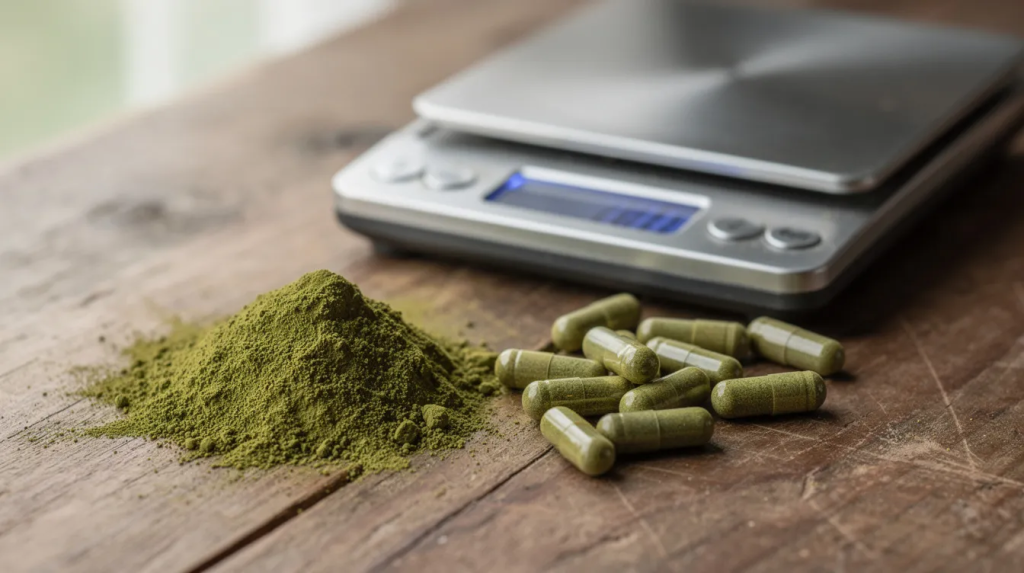
Choosing between kratom capsules and kratom powder is one of the first decisions new users face – and one that experienced users revisit regularly. Both formats come from the same plant, but they deliver noticeably different day-to-day experiences in terms of taste, onset speed, cost, and convenience. This side by side comparison breaks down what actually matters so you can pick the kratom form that fits your life.
Key Takeaways
-
Kratom capsules and kratom powder usually contain the same ground kratom leaf from Mitragyna speciosa. The difference is delivery format, not chemistry.
-
Kratom powder absorbs faster (effects felt in roughly 10 to 30 minutes) and powder costs 30% to 50% less per gram than capsules.
-
Capsules offer pre-measured servings, skip the bitter taste entirely, and are far more portable and discreet than loose powder.
-
Kratom capsules are not inherently weaker than kratom powder. Any perceived difference usually comes from a slower onset while the capsule shell dissolves, not from less kratom inside.
-
Many experienced users keep both kratom formats on hand – powder at home, capsules for travel or busy days.
-
When you’re ready to compare lab-tested kratom products, you can explore options at Poppy Lotus.
What’s the Real Difference Between Kratom Capsules and Kratom Powder?
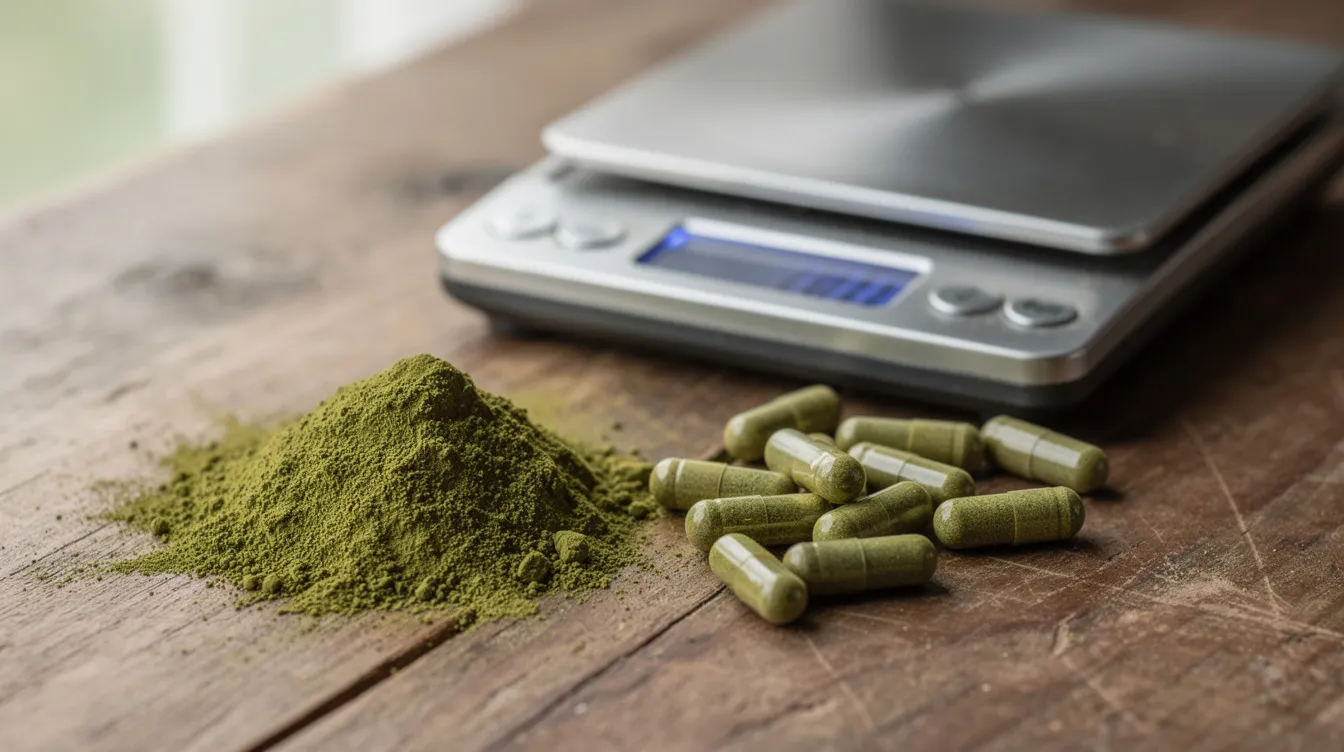
Kratom capsules are pre filled capsules containing powdered kratom leaf, while kratom powder is the same ground kratom leaf sold loose, typically in resealable bags. In the vast majority of cases, the powder inside a capsule is identical to the loose powder from the same vendor and batch.
The key differences come down to delivery format: convenience, taste, onset time, and cost – not the basic kratom chemistry. One capsule holds a fixed amount of plant material. Loose powder lets you measure freely. Neither format changes the alkaloid content of the leaf itself.
A common misconception is that kratom capsules are weaker than powder. When comparing kratom capsules vs powder of the same leaf material, capsules simply take longer to kick in because the shell must dissolve first. Consider this quick example: 2 grams of kratom powder stirred into a glass delivers the same dose as four 500 mg kratom capsules. Same kratom, different experience.
Kratom Powder: How It’s Made and Why People Use It
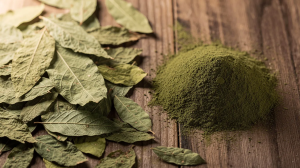
Kratom powder is dried, finely ground leaf from Mitragyna speciosa, a tropical tree native to Southeast Asia. It’s the most traditional form of kratom, used for well over a century. Production is straightforward: kratom leaves are harvested, dried (sun or shade), then milled into a fine powder with minimal processing.
This powdered kratom leaf is the base material for nearly every other kratom product – including capsules, extracts, and enhanced blends. People choose kratom powder for several reasons:
-
Consumption flexibility. You can use the toss and wash technique, mix it into orange juice or a smoothie, or try brewing tea.
-
Strain variety. Kratom powder offers a wider variety of strains (red, green, white veins; regional names like Maeng Da or Bali) than capsules, because many vendors don’t encapsulate every strain.
-
Bulk sizing. Powder is sold from small bottles to kilo bags, making it attractive for anyone who uses kratom regularly.
Typical serving ranges people discuss fall between 2 and 5 grams of leaf powder per use, though this varies widely by individual.
Kratom Capsules: What They Are and How They’re Filled
Kratom capsules are pre-measured servings of kratom leaf powder – or, less commonly, kratom extract – packed inside gelatin capsules or plant-based (vegetarian) shells. Most ordinary capsules contain plain powdered leaf, so the alkaloid profile matches the same powder sold loose by the same brand.
Each kratom capsule typically contains 0.5 to 1 gram of powder, depending on capsule size (commonly 00 or 0) and brand. Always check the product label for exact milligrams rather than assuming a standard fill weight.
The kratom form here is simply capsule form versus loose powder. The kratom itself can still be standard leaf or a concentrated extract – and that distinction matters far more for potency than whether it comes in a shell.
Capsule shell materials differ:
-
Gelatin – dissolves relatively quickly in stomach acid.
-
Vegetarian (cellulose or pullulan) – may take slightly longer to break down.
In both cases, the shell dissolves in your stomach before the kratom inside can begin absorbing, which creates a delay compared with powder.
Are Kratom Capsules Weaker Than Kratom Powder?
Kratom capsules are not inherently weaker than kratom powder when both contain the same plain leaf material and the total grams are equal. This is one of the most persistent misconceptions in the kratom community.
Why do many people report capsules as “weaker”?
-
Slower onset. The capsule shell must dissolve before any alkaloids reach your system – that delay alone makes the experience feel gentler at first.
-
Smoother ramp-up. Because absorption is more gradual, the peak can feel less pronounced even though the total dose is the same.
-
Underestimating capsule count. If one capsule contains 0.6 g, it takes about 4 capsules to match a 2.4 g powder serving. Users who take only 2 or 3 capsules aren’t matching their usual dose.
There is, however, a real potency difference between plain-leaf capsules and capsules filled with kratom extract. Extract-based products can concentrate alkaloids 5 to 50 times relative to native leaf, making them significantly more potent milligram-for-milligram.
Always read serving information and ingredient lists rather than judging by capsule count alone. Potency is about the powder inside, not the capsule format itself.
Onset and Duration: Capsules vs Powder in Real Use
Both kratom capsules and kratom powder deliver the same active alkaloids – primarily mitragynine and 7-hydroxymitragynine – but the delivery format changes how quickly they’re absorbed.
|
Factor |
Kratom Powder |
Kratom Capsules |
|---|---|---|
|
Typical onset |
10–30 minutes |
30–60 minutes |
|
Why |
Direct contact with stomach |
Shell must dissolve first |
|
Peak feel |
More immediate |
Smoother, more gradual |
|
Duration |
~3–4 hours |
~3–4 hours (may feel slightly longer) |
Kratom powder absorbs faster than capsules, with effects often felt within 10 to 30 minutes on an empty stomach. Taking kratom powder on an empty stomach speeds up absorption further. Capsules typically take 30 to 45 minutes – sometimes up to 60 – for effects to begin because of the time needed for shell dissolution.
Powder’s faster onset can feel “stronger” or more immediate, even when the total alkaloid dose is identical. Duration of effects is usually similar for the same total dose, though capsules can sometimes feel slightly longer and smoother because absorption is spread out.
Avoid “stacking” extra capsules too quickly. Wait at least 45 to 60 minutes before considering additional servings to prevent overshooting as multiple capsule doses overlap.
Cost and Value: Why Powder Is Usually Cheaper
Kratom powder almost always costs less per gram than kratom capsules. The reason is simple: capsules require extra processing – encapsulation labor, capsule shells, and additional packaging – that powder doesn’t.
Here’s a concrete illustration: a 250 g bag of kratom powder costs about $45, while 100 capsules (at roughly 0.5 g each, totaling 50 g) cost approximately $25. That means capsules effectively double your cost per serving compared to loose powder.
More broadly, capsules typically carry a 30% to 50% price premium over powder. Some vendors charge even more for small bottles of capsules, pushing the gap to 2× or higher per gram.
Over months of regular use, this price gap adds up substantially, making kratom powder the more economical choice and a more cost effective option for frequent users. Buying kratom powder in bulk offers better value than capsules at any quantity.
The cost difference is about delivery format, not quality – assuming powder and capsules come from the same vendor and batch. Many users buy bulk powder as their main kratom format and reserve kratom capsules for situations where convenience justifies the higher price.

Taste, Convenience, and Lifestyle Fit
The taste of kratom powder is bitter and earthy – a strong earthy flavor that some users never fully tolerate – while capsules mask this taste entirely. If flavor sensitivity is a dealbreaker, capsules solve the problem immediately.
Common strategies for managing powder taste include:
-
Mixing into orange juice or citrus smoothies
-
Stirring into hot coffee or lightly sweetened tea
-
The toss and wash technique (placing powder on the tongue and chasing with liquid)
-
Making tea by brewing tea with the powder and straining it
Capsules offer clear lifestyle advantages: easy to carry in small bottles, quick to swallow with water, more discreet in public or at work, and far less messy than handling loose powder. Kratom capsules are more portable and discreet than powder in virtually every setting.
When does powder fit better? Home use with time to prepare drinks, interest in blending different strains, and situations where precise, flexible serving adjustment matters. Many people choose kratom powder specifically because they want that control over their daily routine.
Honestly assess your tolerance for taste and your daily schedule, then pick the kratom format that matches your reality rather than an ideal version of your routine.
Dose Control, Measuring, and “Capsules vs” Flexibility
Both kratom capsules and kratom powder can be used responsibly, but they offer different types of control.
Capsules shine for simplicity. Kratom capsules provide precise serving sizes for easier dosing – each capsule is labeled with a fixed amount, making “2 or 4 capsules” an easy habit to track. Kratom capsules require no measuring or preparation, which appeals to people who want repeatable, no-fuss dosing.
Powder wins on granularity. Kratom powder provides more granular control. Users can adjust in small increments – fractions of a gram – with a digital scale, blend multiple strains, or tailor larger servings precisely.
A few practical notes:
-
Volume-based measuring (teaspoons, scoops) is less accurate than weight-based measuring because grind density varies between batches and vendors.
-
A small digital scale (0.1 g precision) costs under $15 and is worth it for any powder user seeking consistency.
-
Capsules vs powder isn’t about one being safer by default. Safety depends on understanding how much kratom you’re taking, reading labels, and avoiding rapid dose escalation regardless of kratom format.
Where Do Kratom Extracts Fit In? (Capsules and Powder)
Kratom extract products are a separate category from plain leaf. Extracts are concentrated preparations with higher alkaloid density per gram – sometimes 5 to 50 times more potent than native leaf. The alkaloid content in standard leaf powder typically falls in the 2–5% range, while extracts can push far beyond that.
Kratom extract capsules can look identical to ordinary kratom capsules, and extract powder may appear similar to plain ground kratom leaf. Labels may mention “extract,” ratios like 10:1, or specific mitragynine milligrams – but not always clearly.
Key distinction: “capsules vs powder” is a delivery discussion, while “plain leaf vs concentrated extract” is about potency, tolerance risk, and dependence. Keep these concepts separate.
If you’re switching from leaf powder or plain-leaf capsules to a strong kratom extract, start with substantially smaller amounts. Always review ingredient lists and any available lab data to confirm whether a product is plain leaf or an extract. Never assume milligram numbers are directly comparable between these different kratom formats.
How to Choose: Matching Kratom Form to Your Priorities
There’s no universally “best” kratom form. The right choice depends on your budget, taste tolerance, and daily routine. Personal preference drives this decision more than any objective ranking.
Choose kratom powder if you value:
-
Lowest cost per gram
-
Faster onset and faster absorption
-
Maximum flexibility and strain variety
-
Control over serving size in small increments
Choose kratom capsules if you prioritize:
-
Convenience and no preparation
-
Discreet use at work or while traveling
-
No earthy flavor whatsoever
-
Simpler dose tracking with pre measured servings
Hybrid approach: Many users keep bulk powder at home for primary use and a small bottle of kratom capsules for travel, busy workdays, or situations where mixing drinks isn’t practical. This delivers the same effect from the same plant material while adapting to different circumstances.
When you’re ready to compare lab-tested kratom products and formats side by side, Poppy Lotus is a good place to browse your options.
Buying Any Kratom Format: Quality, Testing, and Labels
Product quality, proper testing, and clear labeling matter far more for safety than the choice between capsules vs powder.
What to look for on labels:
-
Strain or product name
-
Total weight and serving size
-
Whether it’s plain leaf or kratom extract
-
Manufacturer or brand details
What to demand from vendors:
-
Third-party lab testing (Certificates of Analysis) for contaminants like heavy metals and microbes
-
Alkaloid profile information, including mitragynine levels, when available
-
Clear labeling that distinguishes plain leaf from extract
Be cautious with vague labels like “extra strong” or “enhanced” when no specifics about extract content or alkaloid amounts are provided. Kratom products can carry risks of contamination and inaccurate labeling.
A few broader safety reminders: kratom is not approved as a safe or effective dietary supplement or medicine according to health agencies. Kratom use can lead to dependence and withdrawal symptoms due to its interaction with opioid receptors. If you have a medical condition or health condition, or are taking medications with potential interactions, consult a healthcare professional before using any kratom product. Responsible sourcing and careful reading of packaging apply to both kratom capsules and kratom powder equally.
FAQ
Here are answers to common kratom capsules vs powder questions not fully covered above.
How many kratom capsules equal one teaspoon of powder?
One level teaspoon of kratom powder often weighs around 2 to 2.5 grams, though this varies with grind density and humidity. If each capsule contains 0.6 g, it takes about 3 to 4 capsules to equal one teaspoon. Rather than relying on generic scoop assumptions, check the actual milligrams listed on your capsule label and use a small digital scale to weigh your powder for accurate comparison.
Can I open kratom capsules and use the powder inside?
Yes. Most standard kratom capsules can be gently twisted or pulled apart, letting you pour the powder inside into a drink or tea for faster absorption. Doing this doesn’t change the total amount of kratom – it simply turns a capsule product back into loose kratom powder in practice. If you plan to do this regularly, buying loose powder directly is usually more cost effective. You can also make your own capsules at home with a capsule filling machine and bulk powder.
Do kratom capsules or powder last longer on the shelf?
When stored properly – in airtight containers, away from heat, light, and moisture – both kratom powder and kratom capsules retain quality for many months and enjoy a longer shelf life than improperly stored product in either format. Capsules offer a modest advantage by shielding powder from air and humidity, but storage conditions matter more than format. Discard any kratom that develops off odors, visible mold, or significant color changes, regardless of form.
Is one kratom form better for beginners?
Many beginners find kratom capsules easier because they avoid the taste and simplify serving decisions with labeled, pre measured amounts. It is generally recommended that newcomers start with a format that reduces dosing confusion. Some still prefer powder for its lower price and faster onset, especially if they already own a scale. Either way, start at the lower end of commonly discussed serving ranges, wait to feel full effects, and only adjust slowly over time. Both kratom powder and capsules can cause side effects such as nausea and dizziness, particularly at higher amounts.
Can I switch back and forth between kratom capsules and powder?
Switching formats is common, but always calculate serving sizes in grams of kratom – not by number of capsules or spoonfuls. Track your total daily intake when changing formats, and allow a few days to notice how onset, intensity, and duration feel different. Before matching a new product to your previous dose, double-check whether it’s plain kratom leaf or a kratom extract, since the same capsule count or powder weight can deliver very different alkaloid loads.