
How Do Akuamma Seeds, Powder, Capsules, and Extracts Differ?
· Updated

Commercial akuamma products are available in various forms including whole seeds, powder, capsules, and extracts. Each form involves a different level of processing, and that processing changes what you’re actually taking. Understanding how akuamma seeds, powder, capsules, and extracts differ is essential before making decisions about purchasing or using any of these products-especially because none of them have been validated in human clinical trials for pain, withdrawal, or any medical condition.
This guide breaks down each format, explains what extract labels actually mean, and walks through the evidence gaps that every consumer should understand.
Key Takeaways
-
An akuamma seed is the raw, dried seed of Picralima nitida, a tree native to West and Central Africa. Akuamma powder is simply ground seed. Akuamma capsules and akuamma tablets are finished dosage forms that may contain powder, extract, or multi-botanical blends.
-
An akuamma extract is not a single thing: different solvents, ratios (e.g., 10:1, 20:1), and processes pull out different akuamma alkaloids and other compounds. Two products with the same ratio claim can have very different alkaloid profiles.
-
Extract ratios, net weight of plant material, and named akuamma alkaloids like akuammine are not interchangeable measures of strength. They should never be treated as direct dose-conversion tools.
-
All akuamma products are experimental in humans. Akuamma is not FDA approved and lacks sufficient clinical data for long-term safety. No akuamma format is a proven treatment for pain relief, opioid withdrawal, or addiction treatment.
-
Akuamma’s alkaloid content can lead to variable effects due to natural differences in seed composition, harvest conditions, and processing, making batch-specific lab testing the only reliable way to know what’s in a product.
What Is Meant by “Akuamma Seed” Versus “Akuamma Products”?
Akuamma is a West African tree whose seeds are used for managing pain, fever, and inflammation. More precisely, the plant is Picralima nitida, a tree native to both West and Central Africa, and its dried seeds are the part used in traditional medicine and modern supplements. Akuamma is traditionally used for treating gastrointestinal issues in addition to pain and fever, and has a long history in West Africa as a remedy for other ailments including malaria.
When people say “akuamma seeds,” they usually mean whole, dried seeds sold in bulk. “Akuamma products” is the broader umbrella term covering powders, capsules, tablets, and various akuamma extract formats-each one processed differently from the original seed material.
Research papers typically work with authenticated seed powder as starting material, carefully sourced and identified by botanists. Retail akuamma products, on the other hand, can vary widely in composition, labeling accuracy, and processing methods. It’s a mistake to assume findings from isolated akuamma alkaloids or lab-grade extracts automatically apply to any commercial akuamma product you find online.
Whole Akuamma Seeds: Picralima Nitida at the Start
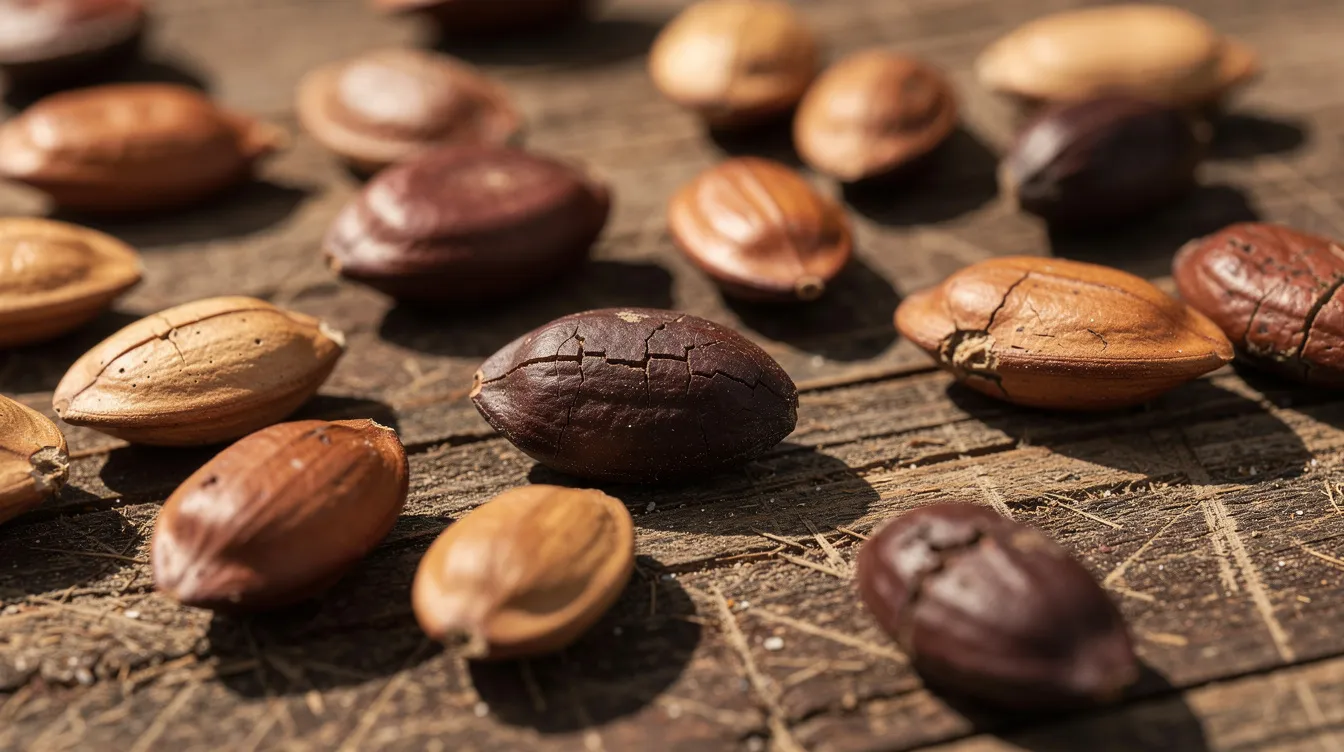
Whole akuamma seed is the least processed form and the source material for every other akuamma product type. These seeds are the starting material from which powders are milled and extracts are drawn.
Physically, the seeds are flattened and oval, roughly 2.5–4.5 cm long, with a tan-to-brown color. They develop inside the fruit follicles of Picralima nitida and are typically harvested, cleaned, and air-dried before sale.
Akuamma seeds have a long history in West Africa, especially Ghana, Nigeria, and Côte d’Ivoire. Traditional akuamma seed use there often involved crushing or powdering seeds and preparing bitter decoctions for fever, pain, or gastrointestinal complaints. Some traditional preparations involved chewing the seeds directly-though the taste is profoundly bitter. Modern clinical evidence for these traditional medicine applications is largely absent.
Whole akuamma seeds are the least processed form and have an intensely bitter taste. One advantage of buying whole seeds is visual identification: you can inspect shape, color, and texture, which reduces certain mislabeling risks compared to anonymous loose powder or capsules.
However, the chemical makeup of whole seeds is not fixed. Total alkaloid content in mature akuamma seeds ranges from roughly 3.5–4.8% by dry weight, according to botanical databases. Tree genetics, harvest season, drying conditions, and storage all influence the naturally occurring alkaloids in any given batch. Even at the whole-seed level, what you get varies.
Akuamma Seed Powder: Ground Whole Seed
Akuamma seed powder is ground whole seed, retaining all its components-alkaloids, fatty materials, fiber, tannins, and other phytochemicals. Unless the label states otherwise, akuamma seed powder has undergone no selective extraction or enrichment.
Most pharmacology and pharmacokinetic studies from 2021 through 2025 used authenticated akuamma seed powder as the starting material for their experiments. For example, a 2021 study isolated 472 mg of akuammine from 250 g of seed powder, putting akuammine content at roughly 0.19% of that batch. These isolated yields give us reference points, but they’re specific to that particular batch and extraction method.
Grinding does not inherently change the alkaloid profile of the seed. It mainly improves handling, mixing, and encapsulation. The extreme bitterness of the plant remains fully intact in powder form.
A good akuamma seed powder label should list Picralima nitida as the scientific name, identify the plant part as “seed,” state that it is 100% seed powder, and include lot or batch numbers. Without these details, you’re guessing.
Visually, beige or brown powders are hard to distinguish from one another. Powder alone cannot verify that it is genuine akuamma seed or confirm any particular akuamma alkaloid content. Lab testing is the only reliable checkpoint.
Akuamma Seed Extracts: How They’re Made
An akuamma extract means seed material has been processed with a solvent to concentrate some compounds and leave others behind. Extracts are made by soaking seeds in solvents to concentrate compounds, then filtering and drying the result.
The standard extraction steps look roughly like this:
-
Select dried akuamma seed powder
-
Choose a solvent (water, ethanol, methanol, mixed organic solvents, etc.)
-
Soak or percolate the powder in that solvent
-
Filter out solid plant material
-
Concentrate the solution by evaporation to produce a thicker liquid extract or dry powder
Akuamma alkaloids are isolated using a specific extraction protocol, and solvent choice strongly determines which alkaloids-akuammine, akuammicine, pseudo-akuammigine, and others-end up in the finished extract. Different solvents yield different alkaloid profiles in akuamma extracts. A water-based seed extract may miss poorly water-soluble alkaloids, while an ethanol or methanol extract may capture them. These are not interchangeable products.
Studies comparing aqueous versus ethanolic akuamma extracts have demonstrated divergent pharmacological activity in animal and cell models. One lab’s aqueous akuamma extract and another’s ethanol extract behave differently at every level-binding, absorption, toxicity.
Commercial akuamma extract labels often omit solvent details entirely. Without that information, it is impossible to infer which compounds were preferentially concentrated.
Interpreting Akuamma Extract Ratios (10:1, 20:1, Etc.)
Extract ratios like 10:1 indicate the amount of raw seed used per unit of final extract. A 20:1 ratio means 20 kg of seed material was used to produce 1 kg of finished extract. That is a manufacturing descriptor, not a potency measurement.
Extraction ratios like 10x or 20x indicate starting material used, not potency. Two 20:1 akuamma extracts from different manufacturers can have very different akuammine or pseudo-akuammigine levels depending on seed source, solvent type, extraction temperature, and drying process. The ratio claim on the label tells you nothing about which alkaloids were enriched or in what quantity.
This is the central caution of this article: do not treat extract ratio, total plant weight, and named akuamma alkaloids as interchangeable measures of strength or dosage.
Any claim such as “this 20:1 equals 20 times the akuamma alkaloids of seed powder” is scientifically unsupported unless accompanied by lab data on specific compounds from that exact batch. Extraction methods affect the potency and composition of akuamma products in ways that a simple ratio cannot capture.
What to look for instead: batch-specific certificates of analysis (COAs) reporting actual alkaloid measurements for the akuamma product lot you are purchasing. If a vendor can’t provide one, that’s a red flag.
Akuamma Capsules: What’s Actually Inside?
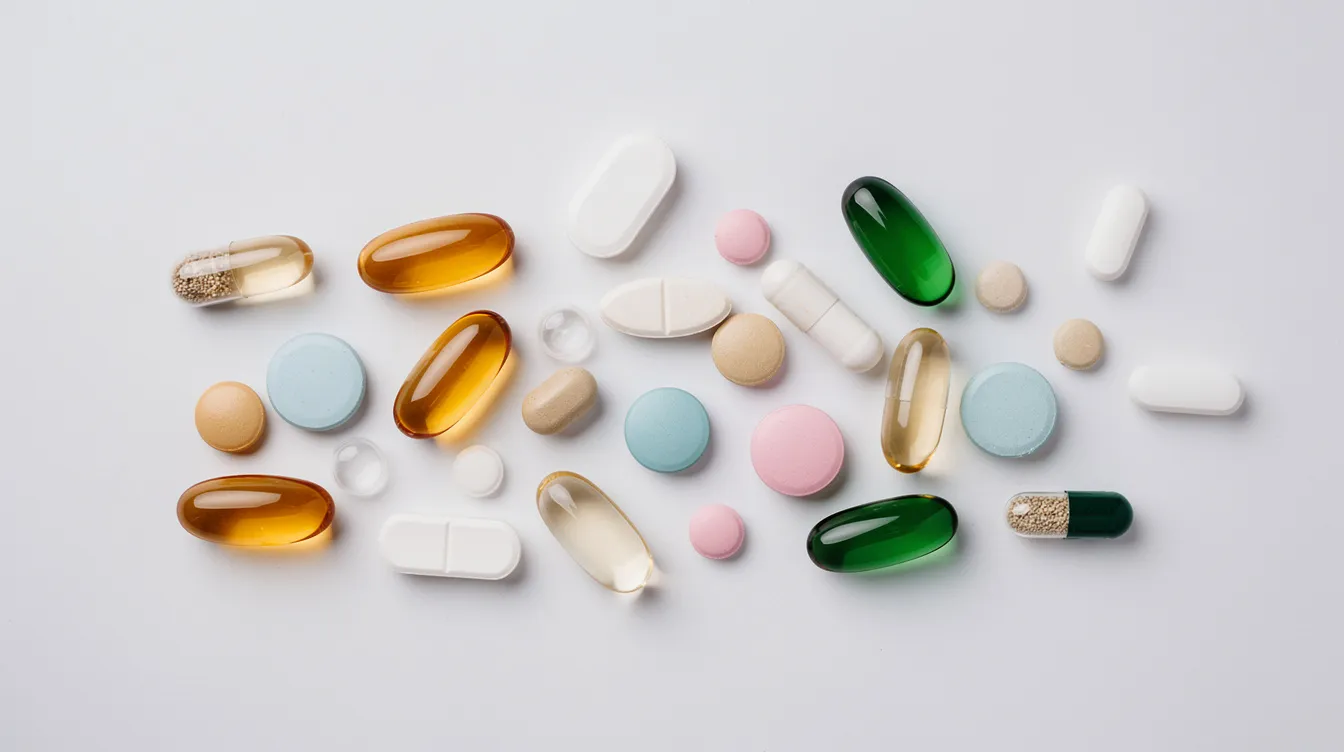
Akuamma capsules refer to a dosage form-gelatin or plant-based shells-and say nothing by themselves about what is inside. Capsules contain pre-measured doses of ground akuamma powder and mask the bitter taste, making them a popular format. But a capsule can also contain a concentrated akuamma extract, or a blend of akuamma with other botanicals and excipients.
Akuamma capsules contain powder or extract sealed in a gelatin shell. Labels should specify whether the contents are “seed powder,” “seed extract 10:1” or similar, plus the exact amount per capsule (e.g., 500 mg powder or 100 mg extract), and list all other ingredients such as flow agents, fillers, or added herbs.
Capsules hide visual clues that might otherwise expose adulteration. In some investigations, products sold as pure akuamma capsules have been found to contain kratom alkaloids or other substances not listed on the label. This underscores the need for ingredient transparency and third-party testing.
If you are comparing akuamma products from different vendors, the milligram number on a capsule label is meaningless without knowing whether it refers to seed powder or a concentrated extract-and which extract process was used.
Akuamma Tablets: Often Blends, Not Just Seed
Akuamma tablets are compressed solids made from dry powders and binders. They are frequently marketed as “pain relief” or “sleep support” blends, containing akuamma alongside other botanicals and compounds.
The total milligram amount printed on a tablet label typically refers to the whole blend, not just the akuamma seed or akuamma extract component. For example, one commercially available product lists 151 mg per tablet-but that is the total blend weight, with only a fraction being akuamma.
When evaluating akuamma tablets, check the supplement facts panel:
-
Confirm whether akuamma is present as seed powder or extract
-
Identify the actual milligrams attributed specifically to the akuamma component
-
Look for other ingredients such as binders, disintegrants, black pepper extract, or bioavailability enhancers
These additions change how the product behaves compared to plain akuamma powder. Treat tablets as multi-ingredient formulations rather than as interchangeable substitutes for single-ingredient akuamma capsules or powder.
Comparing Akuamma Seeds, Seed Powder, Capsules, and Extracts at a Glance
Understanding how akuamma seeds, powder, capsules, and extracts differ comes down to processing level, transparency, and what the label can actually tell you. Here is a concise comparison:
|
Feature |
Whole Seeds |
Powder |
Capsules |
Extracts |
|---|---|---|---|---|
|
Processing level |
Minimal (dried only) |
Ground/milled |
Encapsulated powder or extract |
Solvent-processed, concentrated |
|
Visual identification |
Yes (shape, color) |
Difficult (generic powder) |
Hidden inside shell |
Usually a powder or liquid |
|
Taste |
Extremely bitter |
Extremely bitter |
Masked by shell |
Varies; often bitter |
|
Dosing flexibility |
Low (must weigh/crush) |
Moderate (scale needed) |
Pre-measured per capsule |
Variable; depends on ratio |
|
Typical label info |
Weight, species |
Species, plant part, weight |
Contents, mg per capsule |
Ratio, sometimes solvent |
|
Alkaloid profile |
Full seed chemistry |
Full seed chemistry |
Depends on contents |
Altered by solvent/process |
Whole seeds and powder reflect full-seed chemistry, meaning they contain every naturally occurring alkaloid and non-alkaloid compound present in that seed batch. Capsules and tablets are dosage forms-containers whose contents must be specified. Extracts are selectively enriched versions whose chemistry depends on process choices.
No format has clinically validated dosing. The differences are practical-taste, convenience, concentration-rather than evidence-based therapeutic superiority. A 500 mg seed powder capsule and a 50 mg 20:1 extract capsule are not dose-equivalent just because someone applied a multiplier.
How Akuamma Alkaloids Behave in Different Product Forms
The major alkaloids in akuamma-akuammine, akuammicine, akuammidine, pseudo-akuammigine, akuammiline, and picraline-are monoterpene indole alkaloids. These are the key pharmacologically active constituents studied in laboratory studies on Picralima nitida.
The alkaloids in akuamma include akuammine, pseudo-akuammigine, and akuammicine, each with different effects on opioid receptors. In whole seed and plain akuamma powder, these alkaloids coexist with fats, fiber, tannins, and other minor compounds. That full matrix can influence how alkaloids are absorbed in the body.
Extracts can change alkaloid ratios dramatically. Some solvent systems pull more of certain akuamma alkaloids while leaving others behind along with sugars, fats, or tannins. A finished extract may be enriched in one alkaloid and depleted in another compared to the original seed powder.
Dose comparisons like “X mg extract equals Y grams of seed” are rough process-based estimates. They do not guarantee the same exposure to specific akuamma alkaloids in humans. A 2025 pharmacokinetic study in rats showed that only akuammine achieved significant systemic exposure after oral dosing of ground seed suspension, with half-lives as short as 13.5 minutes in liver microsomes. Other alkaloids were poorly absorbed or rapidly metabolized.
Lab figures reporting isolated compound potency-such as binding affinities at the mu opioid receptor-apply to purified compounds under controlled conditions, not to a scoop of mixed akuamma powder or a commercial capsule.
How Does Akuamma Affect Opioid Receptors Compared With Kratom?
Both akuamma seed and kratom leaf produce monoterpene indole alkaloids, but they come from different plants with distinct chemistry. Akuamma comes from Picralima nitida in central Africa, while kratom (Mitragyna speciosa) is native to Southeast Asia. Despite sometimes being grouped together, their principal compounds differ substantially in structure and potency.
Several akuamma alkaloids interact with mu, kappa, and delta opioid receptors in cell assays, but with much weaker opioid receptor activity than kratom’s main compounds. Akuammine and pseudoakuammigine are weak μOR agonists, with binding affinities in the micromolar range (Ki ~0.3–0.6 μM). Akuamma’s opioid receptor activity is weaker than kratom’s, whose key alkaloids like mitragynine and 7-hydroxymitragynine show considerably higher potency at opioid receptors.
Akuamma’s major alkaloid, akuammine, is less potent than kratom’s primary alkaloids. Kratom produces stronger opioid-like effects than akuamma across both animal models and receptor binding assays. Akuamma alkaloids show limited pain-relieving activity in studies, with effects that are inconsistent, often requiring high doses via subcutaneous injection, and sometimes absent entirely when given orally.
Asking whether akuamma is “stronger than kratom” is misleading without specifying the form (seed powder versus standardized extract) and the outcome being measured (receptor binding versus perceived pain management). No clinical evidence supports akuamma as a safe kratom alternative.
Akuamma is often discussed as a kratom alternative in online communities. But there are no reliable data to convert kratom doses into akuamma seed, akuamma extract, or akuamma capsules doses. Switching from kratom products to akuamma products as a do-it-yourself kratom withdrawal strategy without medical supervision carries unquantified risks, since neither plant has an approved withdrawal protocol.

Why “Akuamma Addictive?” Is the Wrong Starting Question
Is akuamma addictive? The honest answer is that the evidence for akuamma’s addiction or dependence potential is far thinner than for classical opioids or kratom, making confident claims in either direction-“nonaddictive” or “highly addictive”-premature. Insufficient human data exists on akuamma’s addiction potential.
Akuamma alkaloids interact weakly with mu-opioid receptors, which suggests lower theoretical risk compared to potent opioid agonists or even kratom alkaloids. But human data are too sparse to define an “akuamma dependence profile.” Weak receptor activity does not automatically mean zero risk-especially if someone escalates doses or uses concentrated extract forms.
Addiction risk depends on behavior and context at least as much as on pharmacology: frequency of use, dose escalation, mixing with other psychoactive drugs, and individual vulnerability all matter. Labeling akuamma seeds, akuamma powder, or akuamma extract capsules as “safe for addiction treatment” or “nonaddictive” goes far beyond what the current research supports.
If you are using akuamma products in the context of opioid, kratom, or substance use more broadly, discuss this openly with healthcare or addiction treatment providers rather than relying on marketing claims.
Reading an Akuamma Product Label: Seeds, Powder, Capsules, Extracts
Reading labels for akuamma products requires checking specific fields-and knowing when information is missing.
Key fields to verify on any akuamma label:
-
Scientific name: Picralima nitida
-
Plant part: Seed (not leaf, bark, or root)
-
Format: Whole seed, powder, extract
-
If extract: Ratio (e.g., 10:1) and ideally solvent used
-
For capsules and tablets: Whether contents are “akuamma seed powder,” “akuamma seed extract 10:1,” or a blend, plus exact milligrams of each active plant ingredient per unit
-
Lot or batch number
Red flags include:
-
Missing lot numbers
-
Vague proportional language like “proprietary blend” with no breakdown
-
Claims about specific akuamma alkaloid percentages without a testing method or lab name
-
Labels that list only total net weight without specifying extract versus powder
The concentration and effectiveness of akuamma products can vary significantly between batches and brands. Any stated alkaloid numbers should come from recent, lot-specific lab testing-not from figures copied out of older research papers on an isolated compound.
Why Lab Testing and COAs Matter for Akuamma Products
Mislabeling is not hypothetical. Investigations have documented cases where alleged akuamma products contained kratom alkaloids or unrelated substances. Without testing, any akuamma related substance could be hiding in a product.
A useful certificate of analysis (COA) should include:
-
Product name and description
-
Lot or batch number
-
Test date
-
Lab name and accreditation
-
Methods used (e.g., HPLC, LC-MS)
-
A list of analytes with their measured levels or “not detected” status-including both expected akuamma alkaloids and common adulterants like mitragynine or mitragynine pseudoindoxyl
Extract ratios like 20:1 are not substitutes for analytical testing. Two extracts with the same claimed ratio can have radically different alkaloid profiles depending on seed batch, solvent, and processing conditions.
Always match the COA to the exact lot printed on your akuamma capsules, tablets, or powder. A generic or outdated lab report from a different batch tells you nothing about the product in your hands.

Practical Considerations When Choosing a Format
There is no clinically established or standardized dose for akuamma seeds, powder, capsules, or extracts as of mid-2020s literature. Every serving suggestion you see on a product label is the vendor’s own recommendation, not an evidence-based prescription.
Taste and convenience push many people toward capsules and tablets. Raw akuamma seed and loose powder are extremely bitter-unpleasant enough to deter consistent use for some people. Capsules solve that problem but add a layer of opacity between you and the product.
Powders and whole seeds may appeal to those who want the least-processed form and full control over serving size, despite dosing imprecision. Scales help, but natural variation in alkaloid content means that even precise weighing doesn’t guarantee consistent exposure.
Extracts and concentrated akuamma capsules enable smaller pill sizes but demand more care in interpreting label claims. A higher concentration per milligram can mean increased potency of the extracted compounds-but also increased uncertainty if the product isn’t well-tested.
Product choice should be grounded in safety (testing, clear labeling) and personal preference, not in unsupported assumptions that any format is clinically proven for pain or withdrawal.
Akuamma and Addiction Treatment: What the Evidence Does and Doesn’t Say
No akuamma product-seed, powder, capsules, tablets, or extract-has been approved by the Food and Drug Administration for addiction treatment or opioid withdrawal management. Like any botanical sold as a supplement, its label should carry the standard line that it is not intended to diagnose, treat, cure, or prevent any disease. Limited clinical evidence exists to establish the efficacy of akuamma in humans for pain relief, let alone for withdrawal or dependence.
Preclinical research on akuamma alkaloids does explore opioid receptor pharmacology. Researchers in medicinal chemistry have explored modified akuamma alkaloids, finding that structural modifications can achieve increased potency in lab assays. For example, N-1-phenethyl pseudoakuammigine has 70-fold greater μOR potency than pseudoakuammigine itself-a finding relevant to drug design but not to commercial supplement use. These are studies of an isolated compound in controlled conditions, exploring signaling bias and G protein-coupled receptor pathways such as cAMP inhibition, not dosing guides for natural products.
Some people experiment with akuamma kratom substitutions-swapping kratom products for akuamma capsules-based on online anecdotes, not controlled research. Over 90 Americans die daily from opioid overdoses, and the urgency of the opioid crisis understandably drives people to seek alternatives. But the gap between seeking and finding a proven solution is wide.
Evidence-based addiction treatment typically involves clinical assessment and, when indicated, medications such as buprenorphine, methadone, or naltrexone alongside psychosocial support. These are not perfect, but they are studied. Untested botanicals are not equivalent substitutes, regardless of marketing language.
If you are considering any akuamma product in the context of substance use, involve qualified clinicians rather than self-managing withdrawal based on product marketing.
Safety and Unanswered Questions Across Akuamma Formats
Most akuamma safety data come from animals and cell assays using specific extracts, not from long-term human trials on commercial akuamma seed, powder, capsules, or tablets.
At least one 2019 rodent study found dose-dependent toxicity and potential teratogenic effects with an aqueous akuamma seed extract. “Natural” does not mean risk-free. The study examined whole-plant seed extracts, not purified alkaloid fractions, and the results have not been replicated in humans.
Reported side effects of akuamma include nausea, dizziness, and changes in alertness. These reports come largely from anecdotal accounts and limited preclinical work. Systemic exposure to akuamma alkaloids can differ by format: whole-seed powder may yield lower blood levels than a concentrated extract at the same nominal weight, but exact relationships are not characterized in people. Additional research is needed across every format.
Interactions with medications and other botanicals are insufficiently studied. Vendors cannot reliably predict all risks, especially for people with liver, kidney, or cardiovascular conditions. There is no human data establishing safe use during pregnancy or breastfeeding.
Treat all akuamma products as experimental supplements for adults. Avoid use in pregnancy, breastfeeding, and serious medical conditions unless a clinician explicitly advises otherwise.

Talking With Your Clinician About Akuamma Products
You do not need to know every chemical name-akuamma alkaloids, pseudo-akuammigine, monoterpene indole alkaloids-before bringing up akuamma with a healthcare provider.
Practical steps for a productive conversation:
-
Bring actual product packaging or clear photos so clinicians can see whether the item is whole seed, powder, capsules, tablets, or an akuamma extract with a given ratio
-
Report honestly how often you use the product, approximate amounts, and reasons for use (pain, sleep, self-directed substance use management)
-
Mention any side effects you’ve noticed-nausea, dizziness, sedation, mood changes
-
Ask about potential interactions with any prescribed medicines, and consult your prescriber before you add anything new
Clinicians may be unfamiliar with akuamma specifically, but they can still evaluate risks: opioid effects at receptor level, liver enzyme interactions, cardiovascular considerations. The pharmacology of compounds that interact with opioid receptors is well understood even when the specific plant is not.
Disclosing supplement use supports safer health outcomes and does not automatically commit you to any particular addiction treatment program or medication. It simply gives your provider better information to work with.
FAQ
Is akuamma seed powder the same as an akuamma extract labeled 10:1 or 20:1?
No. Akuamma seed powder is simply ground seed retaining all original components. An extract labeled 10:1 or 20:1 has been processed with a solvent to concentrate some compounds and remove others. The ratio describes a manufacturing relationship-how much seed material was used to produce the extract-and does not guarantee a specific percentage of akuammine or any other alkaloid. Swapping gram-for-gram between powder and extract based solely on the ratio, without laboratory studies and professional guidance, is not supported by science.
Do akuamma capsules work the same way as chewing whole akuamma seeds?
Capsules containing plain seed powder deliver a similar overall alkaloid mix to seeds, but with different onset because the gelatin or plant-based shell must dissolve first. Capsules filled with extracts or blends can behave very differently from whole seeds, depending on concentration, solvent used, and added ingredients. Without product-specific studies in humans, no one can say they “work the same”-only that they share a botanical origin from the same plant.
Can I use akuamma instead of prescription opioids or kratom for pain?
No akuamma form-seed, powder, capsules, or extract-has been proven to safely replace prescription opioids or kratom in controlled clinical studies. Research shows limited pain-relieving activity from akuamma alkaloids, and animal and cell studies on opioid receptor activity have not translated into dosing guidance or confirmed pain management benefits in people. Any decisions about changing or replacing pain medicines should be made with a healthcare provider, not solely on the basis of supplement marketing.
Does a higher akuamma extract ratio mean a higher risk of dependence?
Dependence risk has not been quantified for any akuamma format. A higher ratio can increase exposure to all extracted compounds per milligram of product, but human data on dependence or withdrawal from akuamma are extremely limited. A ratio claim is a manufacturing metric, not a risk score. If you choose to use extracts, cautious and time-limited experimentation is prudent, and consulting a clinician becomes especially important when use becomes frequent or hard to reduce.
How can I tell if an akuamma product contains kratom or other undeclared substances?
Check for a recent, lot-specific certificate of analysis from an independent lab that lists tests for kratom alkaloids such as mitragynine and 7-hydroxymitragynine, as well as for the expected akuamma alkaloids. Avoid products that lack lab documentation, rely on vague marketing language, or list implausible combinations of claims like “legal opioid replacement” with no data. Before you purchase, ask the seller for COAs and choose vendors willing to provide detailed, lot-matched testing reports over those who refuse or offer only generic documentation. A trustworthy product will show its work.
These statements have not been evaluated by the Food and Drug Administration. Products sold on this site are not intended to diagnose, treat, cure or prevent any disease. You must be 21 or older to purchase from this website. These products are not intended for children or for pregnant or nursing women. Consult a physician before use, especially if you have a medical condition or take prescription medication. All trademarks and copyrights are the property of their respective owners. By using this site, you agree to our Privacy Policy and Terms & Conditions. Void where prohibited by law.
Best Sellers
 In stock
 In stock
 In stock
Wingz Botanical Blend Tablets
From $22.99
 In stock
Keep Reading
All of Poppy 101 Akuamma vs Blue Lotus: Origins, Alkaloids, Uses, and Research LimitsAkuamma (Picralima nitida) and blue lotus (Nymphaea caerulea) are different plants from different plant families with distinct traditional roles and pharmacology. They…
 Akuamma and Kratom Together: What We Really Know (and Don’t Know) About Combining ThemBoth akuamma and kratom contain alkaloids that affect opioid receptors, and a growing number of people report taking them together for pain…
 Akuamma vs 7-Hydroxymitragynine: How They Compare for Pain Relief and Opioid WithdrawalAkuamma and 7-hydroxymitragynine come from two different plants, act on opioid receptors at very different strengths, and carry distinct risk profiles. This…
 Akuamma vs Kanna: Alkaloids, Effects, and Evidence ComparedAkuamma and kanna are two botanicals that keep showing up in the same online conversations, supplement stacks, and “kratom alternative” products. Despite…