Akuamma
Akuamma vs Blue Lotus: Origins, Alkaloids, Uses, and Research Limits
Key Takeaways Akuamma (Picralima nitida) and blue lotus (Nymphaea caerulea) are different plants from different plant families with distinct traditional roles and pharmacology. They are not interchangeable substitutes. Akuamma’s main alkaloids are monoterpene indole alkaloids that interact with opioid receptors, but current data do not confirm strong or reliable pain relief in humans, nor validated…

Key Takeaways
Akuamma (Picralima nitida) and blue lotus (Nymphaea caerulea) are different plants from different plant families with distinct traditional roles and pharmacology. They are not interchangeable substitutes.
Akuamma’s main alkaloids are monoterpene indole alkaloids that interact with opioid receptors, but current data do not confirm strong or reliable pain relief in humans, nor validated use for opioid withdrawal or opioid use disorder.
Blue lotus contains aporphine-type alkaloids like nuciferine that act on dopamine and serotonin pathways, with limited modern safety and efficacy data and wide variability in commercial product content.
Neither herb replaces FDA approved medications for chronic pain or opioid use disorder. Both should be viewed as incompletely studied botanicals rather than clinically proven treatments.
Anyone dealing with chronic pain, opioid withdrawal, or use disorder should consult a clinician before relying on either plant.
Introduction: Why Compare Akuamma and Blue Lotus?
People searching “akuamma vs blue lotus” today are typically exploring botanical alternatives beyond kratom-looking for natural options for pain relief, sleep, or mood support. The comparison makes sense on the surface: both are non-prescription plant products sold online with bold marketing claims. But what does the actual research say about each one?
This article compares identity, preparations, active alkaloids, and research limits for both plants. It does not imply that akuamma and blue lotus produce equivalent opioid effects or that either is suitable to replace medical care. The information here reflects evidence available through 2024–2026 research, and regulations and evidence can change over time. This content is educational, not medical advice.

Botanical Identities: Two Very Different Plants
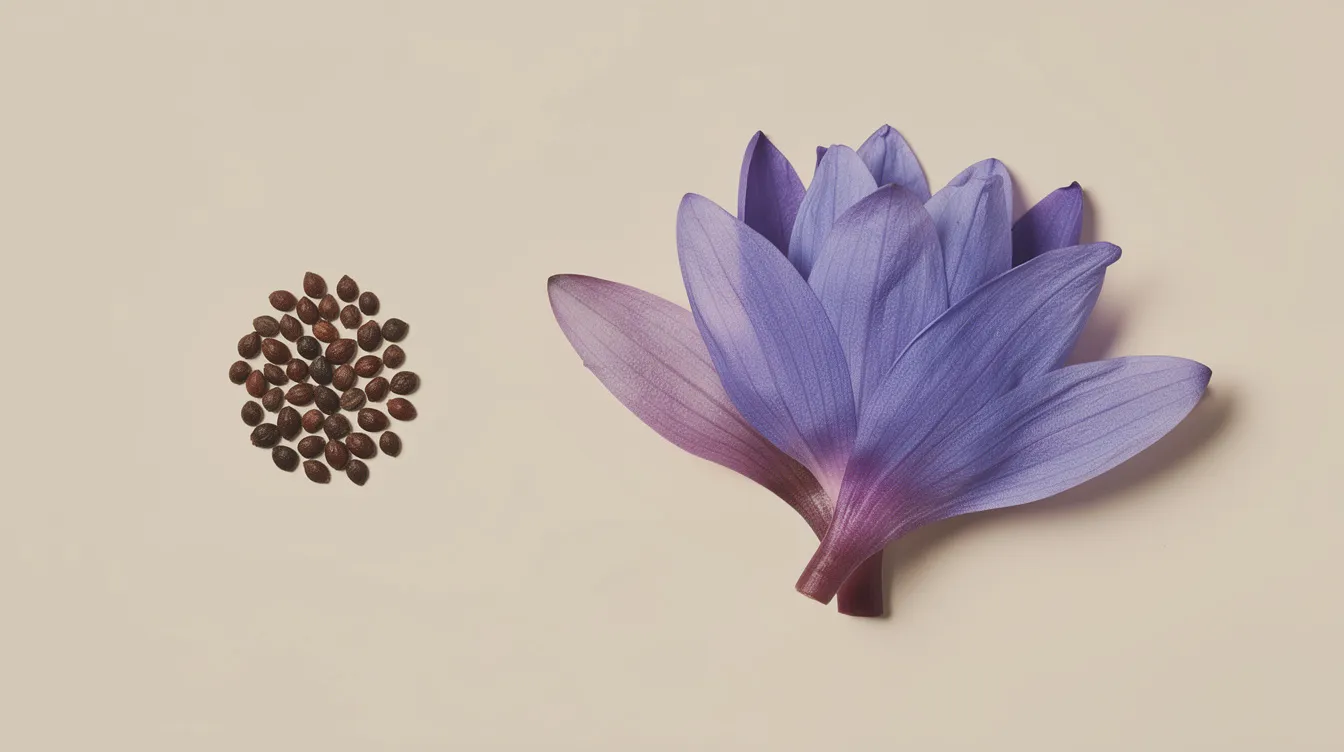
To describe akuamma accurately, you need to start with the tree it comes from. Akuamma comes from Picralima nitida seeds in West Africa, a tree in the Apocynaceae (dogbane) family native to countries like Ghana, Nigeria, and Cameroon. The botanical description centers on its large fruit pods, each containing multiple bitter seeds that serve as the traditional medicinal part.
Blue lotus refers mainly to Nymphaea caerulea, an aquatic flowering plant in the Nymphaeaceae family. Blue lotus is native to Egypt and parts of Asia, historically associated with the Nile region and used in ancient rituals and medicine. The flowers-specifically petals and stamens-are the parts traditionally gathered and prepared.
These are genuinely different plants from different plant families, occupying different continents, different ecosystems, and different roles in their respective cultures. Geography, plant family, and used part all diverge:
Akuamma: West/Central African tree, Apocynaceae family, dried seeds
Blue lotus: North African/Asian aquatic lily, Nymphaeaceae family, flower petals and stamens
Being in the same general category of “herbal product” does not mean the same effect.
Traditional Uses and Cultural Context
Akuamma has been used for centuries in West African herbal medicine. Akuamma seeds are traditionally used for pain relief, with traditional preparation involving crushing seeds into a decoction. Beyond pain management, traditional uses include treating fever and malaria, and akuamma is used for gastrointestinal complaints and dysentery. Akuamma is primarily utilized for pain management and anti-inflammatory effects in ethnobotanical records-but these are observational reports from traditional medicine, not results from controlled clinical trials.
Blue lotus has deep historical roots in ancient Egyptian art and texts, where it appears in depictions of religious ceremonies, funerary rites, and aristocratic leisure. Blue lotus is primarily used for relaxation and mild euphoria, often soaked in wine or brewed as tea. Historical interpretations suggest it may have supported sleep or enhanced dreaming, though these claims are not substantiated by modern clinical data.
These traditions emerged independently and served different cultural purposes. Akuamma’s traditional use centered on bodily ailments; blue lotus leaned more toward psycho-spiritual and mood-related practices.
Performing traditional practices with akuamma and blue lotus does not guarantee safety or efficacy in modern usage. Historical use is suggestive, not confirmatory.
Plant Parts, Preparations, and Modern Product Types
An akuamma seed is intensely bitter, which is why most modern akuamma product forms involve encapsulation. Today you’ll find whole seeds, coarse seed powder, capsules with ground seed, and concentrated extract preparations. Standardized extracts that aim to enrich specific alkaloids exist but are uncommon outside research settings. There is almost no data on how these preparations behave pharmacokinetically in humans.
Blue lotus is commonly consumed as tea or smoked, affecting its psychoactive properties depending on route and preparation. Common forms include dried petals for tea or smoking blends, resins and concentrated extracts, tinctures, and products marketed as “blue lotus” blended botanicals. Some products are even formulated as vaping liquids.
The extraction method and plant parts used strongly influence which alkaloids and how much of them end up in a finished product. This variability makes one-to-one comparisons between any given akuamma product and any given blue lotus product nearly impossible without laboratory testing.
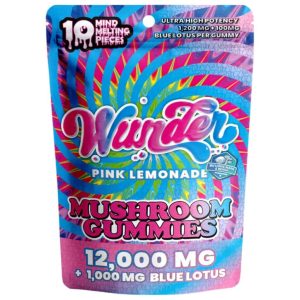
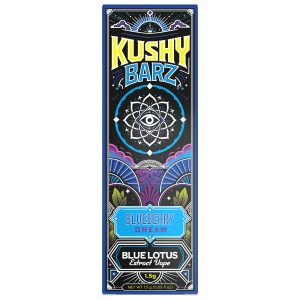
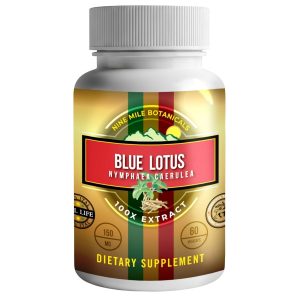
Exploring the blue lotus side of the comparison? Shop blue lotus products at Poppy Lotus, including Nine Mile Botanicals Blue Lotus Extract 100:1 60 Capsules, Wunder Pink Lemonade+Blue Lotus gummies, and the Kushy Barz Blue Lotus Disposable 1.5g. Browse the formats below and compare each product’s listed ingredients.
-
 Price range: $5.89 through $29.99View options This product has multiple variants. The options may be chosen on the product page
-
 $27.99View options This product has multiple variants. The options may be chosen on the product page

Main Alkaloids and Receptor Targets
Akuamma contains several indole alkaloids including akuammine and akuammicine, as well as akuammine and pseudoakuammigine among several compounds identified in the seeds. These are classified as monoterpene indole alkaloids, a chemical class with documented activity at opioid receptors. Specifically:
Akuammine has a mu opioid receptor Ki of 0.30 µM
Akuammicine shows potent kappa-opioid receptor activity (~0.2 µM binding)
Several akuamma alkaloids also show some engagement at delta opioid receptors
Receptor screening studies confirm that akuamma alkaloids interact with opioid receptors, triggering G-protein-mediated intracellular signaling. However, akuamma’s compounds show only partial agonist behavior at these receptors, and efficacy at typical oral doses remains questionable.
Blue lotus acts on dopamine and serotonin pathways through its active compounds. Its key alkaloids are aporphine-type, particularly nuciferine, which displays antagonism at serotonin 5-HT2A/2B/2C receptors, partial agonist activity at dopamine receptors (D2, D5), and dopamine receptor activity affecting the dopamine transporter. Actual apomorphine content in typical products is uncertain and often low or undetectable based on analytical chemistry of authentic Nymphaea caerulea samples.
Although both plants contain active alkaloids, they belong to different chemical classes and engage different primary receptor systems. Akuamma’s alkaloids target opioid receptors; blue lotus’s alkaloids act on dopaminergic and serotonergic pathways. Their subjective effects and risks therefore differ meaningfully.
Opioid Receptor Activity, Pain Relief, and Misconceptions
The fact that some akuamma alkaloids show opioid receptor activity has fueled online speculation that akuamma can deliver meaningful pain relief or even replicate opioid effects. The reality is more complex.
Akuamma alkaloids interact with opioid receptors but have weak effects. In animal models tested in 2021, natural akuamma alkaloids showed only minimal and inconsistent antinociceptive effects via subcutaneous dosing, and virtually none via oral administration. This matters enormously for real-world akuamma seed use, where oral consumption is the norm. Akuamma’s opioid receptor activity is weaker than traditional opioids by a wide margin.
How does this compare to kratom? Kratom is derived from Mitragyna speciosa leaves in Southeast Asia, and kratom’s primary alkaloid is mitragynine, which is more potent at mu opioid receptor sites. Research shows akuamma’s opioid receptor activity is weaker than kratom’s. Can akuamma replace kratom for pain or kratom withdrawal management? There is no clinical evidence that akuamma treats kratom withdrawal, and no clinical evidence supports akuamma as a treatment for kratom withdrawal.
Blue lotus does not primarily act via opioid receptors. User reports of blue lotus center on relaxation, mild sedation, or altered dreaming-not classic opioid effects such as pronounced analgesia or respiratory depression.
It is misleading to claim akuamma is “akuamma stronger” than kratom, prescription opioids, or blue lotus for pain relief. Human potency comparisons across these different plants simply are not established. Akuamma alkaloids can interact with opioid receptors in humans, but interaction does not equal clinical efficacy.
Experimental Derivatives and Talk of Increased Potency
In the field of medicinal chemistry, researchers have gone beyond natural akuamma alkaloids to create something more potent in the lab. A 2023 study found modified akuamma alkaloids with increased potency at the mu opioid receptor. Specifically, chemists added a phenethyl group to pseudoakuammigine, producing a chemically modified derivative with approximately 70-fold increased receptor potency compared to the parent compound.
These experimental derivatives are lab molecules. They are not present in natural seed powders or typical commercial akuamma products. Their antinociceptive effects in animal experiments showed measurable analgesia in thermal pain assays, but this does not prove clinical utility in humans.
A similar modification logic exists elsewhere in natural products research-kratom’s 7 OH (7-hydroxymitragynine) is an example of a naturally occurring but minor alkaloid with outsized receptor potency. But modified akuamma alkaloids with increased potency are strictly laboratory creations. Claims that any akuamma product on the market contains such potent analogs are unsupported unless explicitly and verifiably formulated with isolated compound derivatives.
This section matters because online discussions sometimes conflate the potency of experimental derivatives with the potency of raw seed products. They are not the same thing.
Current Evidence on Safety, Dependence, and Use Disorder Risks
Both akuamma and blue lotus lack significant human clinical trials for established benefits. Both plants have limited clinical data on their safety and effectiveness in humans, and this gap shapes every safety statement that can honestly be made.
Akuamma safety concerns:
A 2019 study reported an LD50 of 707.107 mg/kg for akuamma seed extract in animal models, suggesting moderate acute toxicity
Limited human data exists on akuamma’s safety and effectiveness
Common side effects of akuamma can include nausea, dizziness, and dry mouth
Akuamma’s interaction with opioids may heighten risks when combined with alcohol or other sedating substances
No established withdrawal protocol exists for akuamma use
Blue lotus safety concerns:
Blue lotus products can be contaminated with synthetic substances or heavy metals
Common side effects of blue lotus can include sedation, dizziness, and anxiety
Analytical studies show many commercial products labeled as blue lotus contain negligible or no detectable nuciferine or apomorphine
Combining blue lotus with antidepressants, antipsychotics, or psychoactive drugs could pose risks due to its serotonergic and dopaminergic actions
Is akuamma addictive? A 2026 web based survey of botanical users found no akuamma-related substance use disorder cases among respondents, though survey data are inherently limited by selection and recall bias. Claims of “non-addictive” or “safe replacement” remain premature for both plants, since absence of evidence is not evidence of absence when it comes to underlying dependence risk.
For anyone experiencing opioid withdrawal or dealing with opioid use disorder, these are serious medical conditions. Medical detox and residential treatment programs using evidence-based protocols remain the standard of care.
Regulatory Status and FDA-Approved Treatments
As of late 2026, akuamma is not federally restricted in the United States and is akuamma legal at the federal level, though state and local laws may vary. Blue lotus similarly sits outside U.S. federal controlled substance schedules. Neither akuamma nor blue lotus is approved by the FDA for medical use. The Food and Drug Administration has not evaluated either plant’s alkaloid content for safety or efficacy.
Commercial products are typically sold as dietary supplements or incense, subject to different oversight than prescription drugs. Unscheduled status does not equal safety.
In contrast, FDA approved medications for opioid use disorder include:
Buprenorphine (a partial agonist at mu opioid receptors)
Methadone (a full mu opioid agonist used in supervised settings)
Extended-release naltrexone (an opioid antagonist)
These medicines-not experimental botanicals-form the clinically proven, evidence-based backbone of addiction treatment for opioid withdrawal and OUD. Anyone considering akuamma or blue lotus for these purposes should discuss their medical history and evidence-based options with clinicians.

Comparing User Motives: Why People Choose Akuamma vs Blue Lotus
People turn to akuamma for different reasons than they turn to blue lotus, and understanding these motives matters for evaluating whether a comparison is even meaningful.
Common akuamma motives:
Curiosity about kratom alternatives or non-kratom botanical options
Interest in natural pain management after reading about opioid receptor activity
Exploring options to reduce dependence on other opioids or kratom
Online discussions about mild opioid effects from akuamma seed
Common blue lotus motives:
Perceived relaxation, dream enhancement, or meditative use
Ritual or spiritual interest inspired by ancient Egyptian traditions
Gentle evening tea or tincture for mood or sleep
Not typically sought for analgesia or opioid withdrawal
Because motivations differ-pain relief and opioid-like effects versus mood and dream experiences-comparing these plants as if they serve the same role can be misleading. Neither plant should be approached as a stand-in for prescribed analgesics or structured treatment programs, especially when symptoms involve opioid withdrawal, chronic pain, or significant use disorder.
Choosing and Using Products: Practical but Cautious Guidance
If you decide to explore either botanical, approach the process with the same caution you’d apply to any opioid active substance or under-studied psychoactive product:
Verify identity: Check for lot-matched third-party lab testing and clear species identification (e.g., confirmed Nymphaea caerulea, not a mislabeled lily)
Read labels carefully: Look for transparent ingredient lists, alkaloid content quantification where available, and honest labeling
Start low: Begin with small amounts of any akuamma product or blue lotus preparation before considering higher doses
Avoid combinations: Do not combine with alcohol, opioids, benzodiazepines, or other sedating substances; watch for behavioral effects that signal problems
Monitor for side effects: Drowsiness, dizziness, GI upset, or neuropsychiatric symptoms like anxiety or derealization should prompt discontinuation
Consult your clinician: This is especially important for people on other medications or managing relevant tissues and organ systems affected by these alkaloids
Dosage guidelines for both herbs come from tradition, marketing, or anecdote-not from large human trials. Shopping decisions should prioritize safety data and honest labeling over marketing claims about pain relief, opioid effects, or guaranteed “non-addictive” properties.
Key Differences at a Glance: Akuamma vs Blue Lotus
Here is a concise comparison recap of the main differences between these two botanicals:
Akuamma (Picralima nitida):
West African tree seeds; Apocynaceae family
Main alkaloids: akuammine, akuammicine, pseudoakuammigine (monoterpene indole alkaloids)
Primary receptor targets: mu opioid and kappa opioid receptors (weak activity)
Traditional use: pain, fever, malaria, GI complaints
Modern interest: speculative pain relief, kratom alternatives
Research status: laboratory studies and animal models only; no human clinical trials; experimental derivatives with increased potency exist but are not in commercial products
Blue Lotus (Nymphaea caerulea):
Egyptian/Asian water lily flowers; Nymphaeaceae family
Main alkaloids: nuciferine, related aporphine compounds (different alkaloids from akuamma)
Primary receptor targets: dopamine and serotonin receptor subtypes
Traditional use: ritual, relaxation, mild euphoria, sleep/dream support
Modern interest: mood modulation, dream work, gentle sedation
Research status: similarly limited systematic research; isolated alkaloids studied in animal models but not in human RCTs; commercial product variability is well-documented
These differences mean akuamma and blue lotus are not interchangeable for pain relief, opioid withdrawal, or any medical indication. Neither is a validated replacement for kratom, prescription opioids, or evidence-based OUD treatment. To establish akuamma or blue lotus as clinically useful would require the kind of rigorous pharmacological characterization and human trial data that simply does not yet exist.
FAQ
Can akuamma or blue lotus safely replace opioids or kratom for pain relief?
Neither akuamma nor blue lotus has sufficient clinical evidence to support replacing prescribed opioids, kratom, or other pain treatments. Akuamma’s opioid receptor activity is weaker than kratom’s and far weaker than prescription opioids. Blue lotus does not primarily act via opioid receptors at all. Substituting either without medical supervision risks uncontrolled chronic pain, unmanaged withdrawal, or dangerous interactions with other medications.
Is akuamma stronger than blue lotus or other botanicals for opioid-like effects?
No controlled human studies directly compare “strength” across these plants. While six akuamma alkaloids have been characterized for receptor binding and several compounds show measurable mu opioid activity in laboratory studies, their real-world analgesic impact appears modest at best-and blue lotus is not primarily an opioid active substance. Online claims about relative strength are not supported by pharmacological characterization in human subjects.
Can blue lotus or akuamma help with opioid withdrawal or opioid use disorder?
There is no validated protocol using either plant for opioid withdrawal or opioid use disorder. FDA approved medications-buprenorphine, methadone, and naltrexone-plus structured addiction treatment remain the standard approach backed by evidence. Self-treating withdrawal with unproven botanicals can delay effective care and increase risk.
Are there known interactions between these plants and medications?
Because akuamma alkaloids interact with opioid receptors and blue lotus influences dopamine and serotonin receptors, both may theoretically interact with pain medicines, psychiatric psychoactive drugs, or sedatives. Akuamma combined with other opioids or alcohol could heighten respiratory depression risk. Blue lotus combined with antidepressants or antipsychotics could affect serotonergic or dopaminergic signaling unpredictably. Always inform your clinicians about any supplement use.
How should someone decide whether to try akuamma or blue lotus at all?
Start by clarifying your personal goals: are you seeking relaxation, or are you trying to manage pain? Review your current medications for potential interactions. If you are managing any health condition-especially chronic pain, opioid withdrawal, or a mental health condition-consult a clinician first. Research the specific product for third-party testing and accurate labeling of alkaloid content. If you proceed, start with the lowest reasonable amount, avoid combining with other sedating substances, and stop use and seek help if adverse effects or problematic patterns of use appear.