Hirsuta
How Does Mitragyna Hirsuta Differ From Mitragyna Javanica?
Key Takeaways Mitragyna hirsuta and Mitragyna javanica are two distinct Mitragyna species related to Mitragyna speciosa (kratom), but they differ in appearance, chemistry, and how researchers discuss their effects. Both plants belong to the same genus yet have different dominant alkaloids: mitraphylline is commonly associated with M. hirsuta, while mitrajavine and related indole alkaloids are…

Key Takeaways
Mitragyna hirsuta and Mitragyna javanica are two distinct Mitragyna species related to Mitragyna speciosa (kratom), but they differ in appearance, chemistry, and how researchers discuss their effects.
Both plants belong to the same genus yet have different dominant alkaloids: mitraphylline is commonly associated with M. hirsuta, while mitrajavine and related indole alkaloids are linked to M. javanica. Mitragyna javanica contains mitrajavine, not mitragynine.
Current evidence is limited and does not justify assuming that either species is equivalent to kratom or to each other. Clinical human trials on both M. hirsuta and M. javanica are extremely limited, and most available data come from small lab studies, traditional reports, and anecdotal accounts.
Both species are marketed as legal alternatives to kratom, and both Mitragyna hirsuta and Mitragyna javanica are legal in all 50 states. Leaf material from both species is typically sold as dried, ground plant material intended for botanical, ethnobotanical, or research use rather than as approved medical products.
Species verification, transparent alkaloid terminology, and checking local regulations before purchasing or researching these botanicals remain essential steps for any buyer.
Introduction: Two Lesser-Known Mitragyna Species
Mitragyna hirsuta and Mitragyna javanica are tropical trees native to Southeast Asia, both members of the Rubiaceae (coffee) family and closely related to Mitragyna speciosa. Neither has been studied as extensively as kratom, yet growing demand for alternatives has pushed them into the spotlight.
This article compares M. hirsuta and M. javanica in terms of botany, plant materials, alkaloid terminology, and available scientific evidence-without treating either one as a proven kratom equivalent. Many online sources loosely market them as “legal kratom alternatives,” but the focus here is on factual differences rather than marketing claims.

Taxonomy & Botanical Classification Within Mitragyna Species
All three plants-Mitragyna hirsuta, Mitragyna javanica, and Mitragyna speciosa-belong to the genus Mitragyna, but they are separate species with distinguishable traits. Mitragyna hirsuta and Mitragyna javanica belong to the Rubiaceae family alongside kratom, coffee, and hundreds of other tropical genera.
Mitragyna hirsuta (often called “kra thom khok” in Thailand) is a recognized species native to mainland Southeast Asia.
Mitragyna javanica (linked to Java and surrounding areas) is another accepted species in the genus.
Mitragyna speciosa is the better-known species commonly called kratom.
As of early 2026, multiple Mitragyna species (including M. hirsuta, M. inermis, M. parvifolia, M. rotundifolia) are accepted in botanical literature, but only M. speciosa is classified as a narcotic under Thailand’s legal framework. DNA barcoding research using the nuclear ribosomal ITS region reliably distinguishes M. speciosa from allied species-interspecific divergence averages around 1.7%, while intraspecific divergence stays very low-confirming that hirsuta and javanica are identifiable as distinct taxonomic entities.
Geographic Origin, Habitat & Traditional Context
Both M. hirsuta and M. javanica are native to tropical Southeast Asia but occupy somewhat different ecological and cultural niches.
Mitragyna javanica is associated with lowland forests across Java, Thailand, Cambodia, Laos, and Vietnam, typically growing in swampy or moist soils along riverbanks. Historical references describe its use in rural communities as a mild traditional herb. Mitragyna javanica is traditionally used for mild stimulation and relaxation, though documented ethnobotanical data are thinner than for kratom.
Mitragyna hirsuta grows throughout Thailand and neighboring countries. It has been used when kratom was unavailable or legally restricted. Traditional reports indicate that Mitragyna hirsuta is associated with mild muscle relaxant and anti-inflammatory properties, that it has been traditionally used to combat fatigue, and that Mitragyna hirsuta is used in Southeast Asia to promote reproductive or general wellness-including, as one recent study documents, lactation support.
Compared with Mitragyna speciosa, both plants have far fewer clinical or ethnographic studies. Much of what is claimed online is extrapolated or anecdotal rather than grounded in peer-reviewed history.
Plant Morphology & Leaf Material Differences
Although both species can look broadly similar to nonspecialists, botanists identify them using features like hairiness, leaf shape, and venation-details that matter when sourcing correct plant materials.
Mitragyna hirsuta: The name “hirsuta” refers to hairiness. Leaves and young twigs typically display fine hairs (pubescence). Leaves are generally oval to elliptic, arranged oppositely on the stem. The tree can reach moderate heights depending on soil and moisture conditions.
Mitragyna javanica: Leaves are usually glabrous or less hairy, sometimes narrower, with a typical Mitragyna venation pattern. It belongs to the same broad morphological type but lacks the pronounced hairiness implied by hirsuta’s name.
Commercial plant materials are usually presented as:
Dried leaf fragments
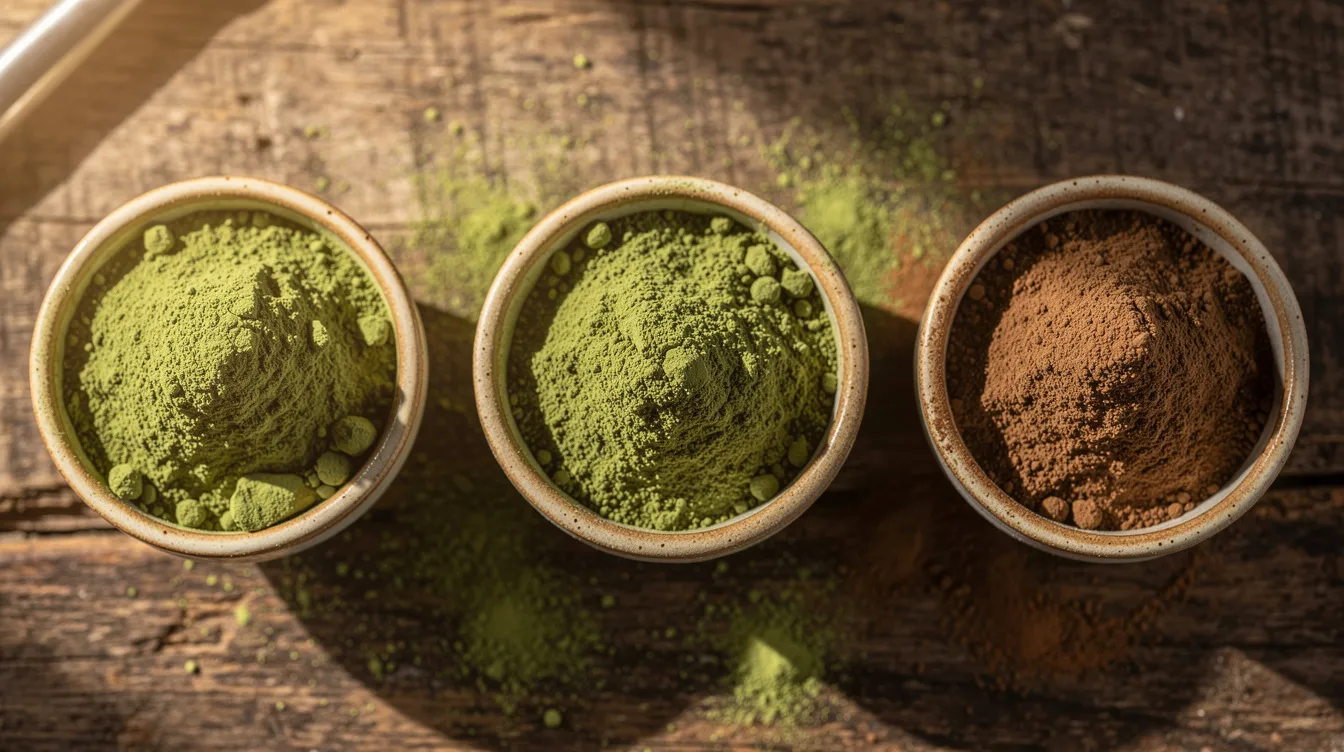
Finely ground powders
Occasionally crushed leaf or tea-cut material
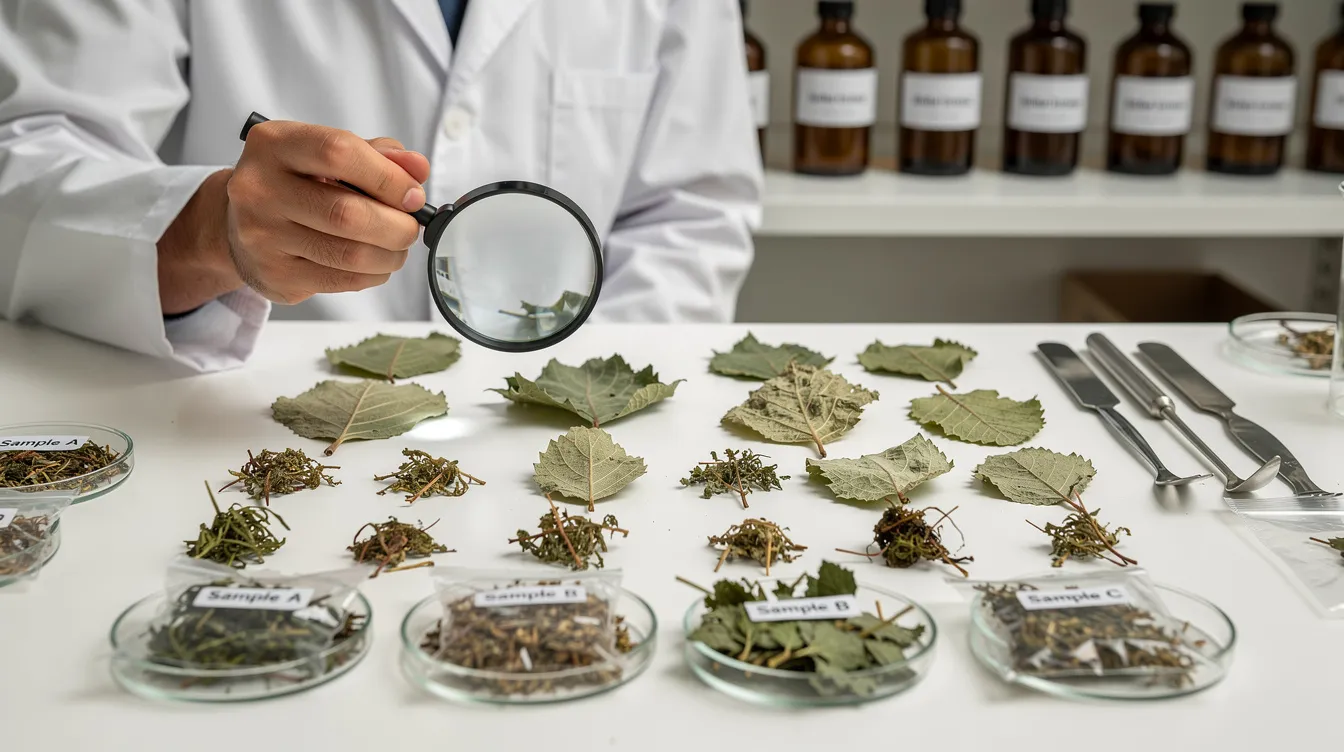
Visual differences largely disappear in finely milled powders, making species-level identification difficult without supply-chain documentation or lab testing. This is a practical concern, since commercial products labeled as Mitragyna hirsuta or Mitragyna javanica may be adulterated with kratom.
Alkaloid Profiles & Terminology (Without Assuming Equivalence)
Mitragyna hirsuta, Mitragyna javanica, and Mitragyna speciosa all contain indole alkaloids, but the specific compounds and their relative abundances differ substantially. These differences mean one species cannot automatically be treated as a stand-in for another. The alkaloid profiles of hirsuta and javanica differ from kratom in fundamental ways.
Mitragyna speciosa is primarily known for mitragynine (often 40–66% of total alkaloids in Thai cultivars) and 7-hydroxymitragynine. These compounds are central to kratom’s pharmacological research and its legal status. A comparative phytochemical study measured mitragynine at approximately 5.27 mg per gram of leaf (ethanol extract) in speciosa.
Mitragyna javanica contains mitrajavine, not mitragynine. Literature and older pharmacognostic works describe mitrajavine as the dominant alkaloid, alongside 3-isoajmalicine and ajmalicine. Mitragyna javanica contains different alkaloids than kratom. Mitragyna javanica’s chemical profile is less thoroughly characterized compared to hirsuta and kratom; mitrajavine has little modern pharmacological evaluation.
Mitragyna hirsuta contains the alkaloid mitraphylline, alongside isomitraphylline, rhynchophylline, and other oxindole compounds. The same comparative study found mitragynine in hirsuta at roughly 0.01–0.04 mg/g-two orders of magnitude lower than in speciosa. Mitraphylline also occurs in other Rubiaceae plants (such as cat’s claw) and has been explored in different research contexts, but this does not translate into approved medical uses for M. hirsuta leaf material.
Critically, available analytical data are sparse, drawn from small sample sets, and may vary by region, harvest, and processing. Online vendor claims about “potency” or one-to-one replacement are not backed by large, controlled human studies.
Available Evidence on Pharmacology & Effects
As of 2026, peer-reviewed research on human use of Mitragyna hirsuta and Mitragyna javanica is minimal. Scientific evidence for the effects of M. hirsuta and M. javanica in humans is very limited. Most evidence comes from in vitro assays, animal models, and anecdotal human reports-not standardized clinical trials.
Mitragyna javanica: Anecdotal reports describe potentially milder, more subtle effects than strong kratom preparations, sometimes characterized as “gentle stimulation” or “light relaxation.” Mitragyna javanica is considered to produce subtler effects than both kratom and hirsuta. These descriptors are subjective. Binding or receptor studies, where available, remain preliminary.
Mitragyna hirsuta: Online commentary often portrays hirsuta as less intense than kratom, though hirsuta offers a unique experience distinct from traditional kratom. Hirsuta provides a distinct body feel compared to kratom. Mitragyna hirsuta has been suggested to possibly offer anti-inflammatory benefits based on preliminary research. A 2025 laboratory study found that M. speciosa extracts produce far higher upregulation in µ-opioid receptor gene expression than M. hirsuta, confirming lower functional activity in that measure.
Safety profiles, interaction risks, and long-term effects for both species remain poorly characterized. Neither species has been evaluated in controlled trials for opioid withdrawal or pain management, and no results from large human studies exist to confirm anecdotal claims. People considering these botanicals need to understand these limitations.
Legal & Regulatory Positioning vs. Kratom
M. hirsuta and M. javanica are often promoted as “legal kratom alternatives” in jurisdictions where Mitragyna speciosa is restricted. Kratom is banned in Thailand under the Narcotic Act of 1979, though that law names only M. speciosa-other Mitragyna species were not listed as narcotic, though broader herbal regulations still apply.
Mitragyna hirsuta is legal in all 50 states, and Mitragyna javanica is also legal in all 50 states, because current kratom-specific statutes typically name Mitragyna speciosa or its alkaloids (mitragynine, 7-hydroxymitragynine).
However, broader “analog,” “novel psychoactive substance,” or food-safety law could potentially be applied; customers must check up-to-date local rules rather than relying on old marketing claims.
Regulatory bodies such as the FDA have not evaluated or approved M. hirsuta or M. javanica as dietary ingredients intended to diagnose, treat, cure, or prevent disease. Any product marketed with such claims risks regulatory scrutiny. Legality does not equal endorsement of safety or efficacy, and state regulations can change-so the advantage of doing your own research before buying cannot be overstated.
Practical Comparison of Plant Materials in the Marketplace
Many retailers now offer Mitragyna hirsuta and Mitragyna javanica alongside kratom products, often sold under labels like “botanical specimens” or “research materials.” Mitragyna hirsuta may be marketed as low-quality kratom by less reputable sellers, adding to buyer confusion.
Typical product formats include dried ground leaf powder sold by weight, occasionally crushed leaf, tea-cut material, or encapsulated powder. Products rarely include added ingredients.
How each species is usually framed:
M. javanica: often described as “kratom-like” but gentler, with a different alkaloid profile. Javanica is considered more potent than hirsuta in many anecdotal comments, though this has not been analyzed in controlled settings.
M. hirsuta: portrayed as a close relative of kratom featuring mitraphylline, frequently described as subtler, with a stimulating yet mild energy profile.
When evaluating product listings, look for clear species labeling (full Latin name), prefer vendors that avoid pharmacological promises, and understand that alkaloid content can vary widely between batches. Absence of standardized assays makes direct cross-product comparison difficult. Neither plant material should be assumed to reproduce kratom’s effects, even if sold in similar packaging.
Looking for hirsuta in a chewable format? Shop Hero Suta Enhanced Super Power Botanical Tablets 1250mg 5pk at Poppy Lotus, or explore the blends below: Kava Suta pairs M. hirsuta with kava extract, while iSuta combines M. hirsuta and Corydalis extracts.
-
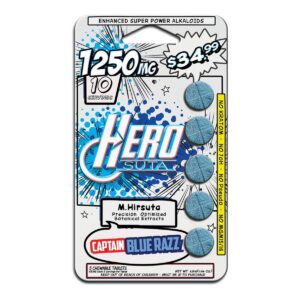 $34.99Up to 10% offView options This product has multiple variants. The options may be chosen on the product page
-
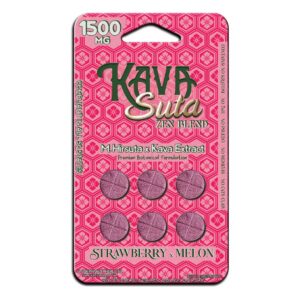 $39.99Up to 10% offView options This product has multiple variants. The options may be chosen on the product page
-
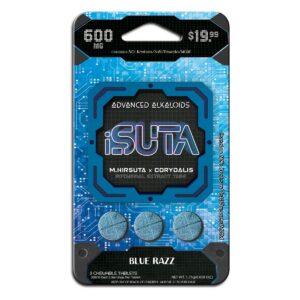 $19.99Up to 10% offView options This product has multiple variants. The options may be chosen on the product page
How Hirsuta & Javanica Compare to Mitragyna Speciosa (Kratom)
Kratom is often the reference point for discussions of other Mitragyna species, but scientific attention has focused predominantly on speciosa-not its relatives.
Factor | M. speciosa (Kratom) | M. javanica | M. hirsuta |
|---|---|---|---|
Dominant alkaloids | Mitragynine, 7-hydroxymitragynine | Mitrajavine | Mitraphylline |
Human study data | Growing (observational, case reports) | Sparse | Sparse |
Reported effect intensity | Moderate to strong | Mild | Mild to subtle |
Regulated as narcotic | Yes (some countries) | No | No |
While some people report using hirsuta or javanica when tapering off kratom or living in a state where kratom is regulated, this practice is self-directed and not supported by controlled clinical trials. Pharmacological non-equivalence means one cannot reliably infer comparable benefits, risks, or interactions. All three are separate Mitragyna species with overlapping but distinct chemistry-responsible discussion avoids calling hirsuta or javanica “the same as kratom,” even if they are sold in similar contexts. Any experience with these botanicals will differ, and findings from kratom research should not be mapped directly onto its relatives.
Safe, Evidence-Respectful Shopping & Research Tips
If you are interested in purchasing or studying these botanicals, caution and critical evaluation of information sources are essential.
Verify species names and plant parts on labels. Vague terms like “Mitragyna blend” or “Mitragyna extract” without species identification should be approached carefully.
Seek vendors who provide basic quality-control data (heavy metals, microbial testing) even if alkaloid quantification is not standardized. Products should be tested by credible third parties.
Treat online effect reports and comments as anecdotal rather than authoritative.
Be wary of products claiming specific medical benefits or exact potency ratios vs. kratom-these claims are not backed by robust evidence.
These materials are generally not evaluated by agencies like the FDA for safety or efficacy. Age restrictions (often 18+ or 21+) and local regulations should be followed strictly.
Consult a qualified healthcare provider before combining any Mitragyna species with medications or other botanicals, given the unknowns around interactions and long-term use.
FAQ
Below are common questions not fully covered in the main comparison, with answers grounded in evidence-based caution.
Is Mitragyna hirsuta stronger or weaker than Mitragyna javanica?
No standardized human study directly compares “strength,” so any ranking is based on user reports. Some anecdotal comments suggest M. javanica feels more pronounced, while others report the opposite. Differences in preparation, dose, and source material make informal comparisons unreliable. The author of any such claim is typically drawing on personal experience, not controlled data.
Can Mitragyna hirsuta or javanica be used to replace kratom safely?
There is no clinical evidence supporting the use of either species as a medically safe or effective replacement for kratom. While some individuals experiment with these plants when reducing kratom intake, this occurs without healthcare supervision or standardized protocols. Anyone considering changes to kratom use should consult a healthcare professional rather than relying on untested substitutions.
Do Mitragyna hirsuta and javanica show up on drug tests?
Routine workplace drug tests typically target specific controlled substances and do not screen for Mitragyna alkaloids. Specialized tests could in principle detect these compounds, but data on real-world testing practices for hirsuta and javanica are limited. If you work in a safety-sensitive job or are under legal supervision, avoid assuming any botanical is “undetectable.”
Are there known interactions with medications?
Formal interaction studies for M. hirsuta and M. javanica are lacking. Because these plants contain bioactive alkaloids, theoretical risks exist for interactions with CNS-active medications, liver-metabolized drugs, or substances affecting blood pressure. Avoid combining Mitragyna species with medications or other psychoactive substances without discussing it with a qualified healthcare provider.
How can I confirm the material I buy is really M. hirsuta or M. javanica?
Accurate identification of finely ground powder is difficult without laboratory methods such as DNA barcoding or detailed alkaloid profiling. Choose vendors who clearly label species, provide origin details, and share third-party testing or species verification where possible. Mislabeling has been documented with Mitragyna species in general, so skepticism and careful vendor selection are sensible steps before adding any new botanical to your collection.