7-OH
7-OH Federal Ban: What the New Rules Really Mean
Key Takeaways The federal 7 OH ban targets concentrated 7-hydroxymitragynine and related semi-synthetic opioids above a specified threshold, not ordinary botanical kratom leaf with natural trace amounts of the alkaloid. The Drug Enforcement Administration used emergency scheduling actions to place high-strength 7-OH products into Schedule I, with the final temporary scheduling order expected to take…
Key Takeaways
The federal 7 OH ban targets concentrated 7-hydroxymitragynine and related semi-synthetic opioids above a specified threshold, not ordinary botanical kratom leaf with natural trace amounts of the alkaloid.
The Drug Enforcement Administration used emergency scheduling actions to place high-strength 7-OH products into Schedule I, with the final temporary scheduling order expected to take effect as early as November 13, 2026.
Federal rules set a nationwide floor, but states like Kansas and Texas already impose stricter bans on 7-OH and kratom products that remain fully in force regardless of federal thresholds.
People currently using 7-OH for pain or opioid addiction self-management should plan tapering and treatment with a healthcare provider before products disappear from legal channels.
The regulatory approach has evolved to specifically target high-potency and chemically enhanced kratom derivatives, not to criminalize traditional kratom use at the federal level.
Introduction: What Is 7-OH and Why Is It Being Banned?
7-Hydroxymitragynine, commonly called 7-OH, is a potent alkaloid derived from the kratom plant. Over the past few years it has shown up in extracts, tablets, pills, and liquid shots sold across gas stations, smoke shops, and convenience store counters nationwide. Over 5 million people in the U.S. have used kratom products in their lifetime, and a growing subset of that market involves concentrated 7-OH formulations that look nothing like traditional leaf.
7-OH acts on the same brain receptors as opioids and can produce euphoria and relaxation similar to opioids, but at much higher potency than what natural kratom delivers. That difference is exactly what caught the attention of the federal government. While whole-leaf kratom contains 7-OH only in trace amounts, typically under 0.05% by weight, laboratory-concentrated and semi-synthetic products can pack milligrams of 7-OH into one pill or a single liquid serving.
The “7-OH federal ban” is not a single overnight action. It is a series of DEA scheduling decisions layered on top of separate state restrictions. This article walks through the Drug Enforcement Administration’s regulatory steps, key dates, what the new rules actually cover, and what remains legal or only state-restricted.
How the DEA Regulates Drugs: Scheduling Basics
The Controlled Substances Act gives the DEA authority to assign drugs and other substances to Schedules I through V based on accepted medical use, potential for abuse, and safety profile. Schedule I classification applies to compounds considered to have a high potential for abuse and no accepted medical use, with strict criminal penalties for possession, sale, or manufacturing. Familiar Schedule I substances include heroin and LSD.
The federal control framework is managed by the Drug Enforcement Administration and the U.S. Department of Health and Human Services. The department of health provides scientific and medical evaluations through Human Services HHS, while the Justice Department oversees the DEA’s legal process and Justice announces updates through the Federal Register.
Critically, emergency scheduling actions allow the DEA to temporarily place harmful substances into Schedule I for up to two years, with a possible one-year extension, while permanent rulemaking proceeds. This fast-track mechanism is what the DEA used for 7-OH and several related compounds rather than waiting years for a purely permanent rule.
Timeline of Federal 7-OH Regulatory Actions
The path to the 7-OH federal ban included proposals, public comment periods, scientific review updates from Health and Human Services, withdrawals, and final emergency scheduling orders. Here is how it unfolded:
Date | Action |
|---|---|
July 6, 2026 | DEA published a notice of intent proposing temporary placement of concentrated 7-OH and three related semi-synthetic opioids (including mitragynine pseudoindoxyl, MGM-15, and MGM-16) into Schedule I, with a 30-day waiting period ending August 5, 2026. |
August 26, 2026 | DEA temporarily placed MGPI, MGM-15, and MGM-16 into Schedule I at any concentration. The DEA’s July 2026 notice on 7-OH itself was not finalized at this stage. |
October 8, 2026 | HHS sent updated scientific findings and a new recommended threshold for 7-OH content to the DEA, refining the scope of the ban. |
October 9–14, 2026 | The Justice Department and DEA announced they would withdraw the original July notice and issue a revised emergency scheduling order with a narrower, threshold-based scope. A new notice was published in the Federal Register on October 14, 2026. |
November 13, 2026 | Earliest effective date for the threshold-based temporary scheduling order covering 7-OH products. |
The temporary emergency scheduling lasts two years from the effective date and may be extended by up to one additional year while permanent scheduling is considered. 7-OH products may become Schedule I drugs by November 13, 2026.
What the Federal 7-OH Ban Actually Covers
The federal action focuses on concentrated forms of 7-hydroxymitragynine, not on ordinary natural kratom leaf. The concentration threshold aims to distinguish concentrated products from traditional kratom. Here are the quantitative limits in the revised federal rule:
Absolute concentration: Products with more than 1 mg of 7-OH per gram (solid) or per milliliter (liquid) fall under Schedule I. Products with over 1 mg of 7-OH per gram will be banned.
Ratio requirement: If the mass of mitragynine divided by the mass of 7-OH (or MGPI, or combined) is less than 100 to 1, the product is controlled, even if absolute amounts are below the concentration ceiling.
Related compounds: MGPI, MGM-15, and MGM-16 are already Schedule I at any concentration, with no threshold exemption.
The rule also covers all isomers, esters, ethers, salts, and derivatives of these substances in all forms.
Being below the threshold does not mean a product is declared safe. It simply falls outside this specific emergency scheduling. The FDA and state agencies can still treat such products as unsafe or adulterated. Federal scheduling applies nationwide but does not cancel stricter state bans on either 7-OH or kratom itself. Unregulated concentrated 7-hydroxymitragynine products are categorized as an emerging public health threat by HHS.
Federal 7-OH Rules vs. State Restrictions
The federal 7-OH ban sets a floor of control, while states can adopt stricter rules on 7-OH, kratom, or both. State-level restrictions on kratom may apply independently of federal regulatory actions.
Kansas: Starting July 1, 2026, Kansas classifies both kratom and 7-OH as Schedule I controlled substances under state law. Botanical kratom is entirely illegal there, regardless of federal thresholds.
Texas: Texas law bans kratom products containing more than 2% 7-OH alkaloids and prohibits synthetic 7-OH altogether. The state attorney general has sued vendors selling products with 7-OH comprising 86–96% of alkaloid content-roughly 50 times the legal limit. Attorney General Todd Blanche and the Justice Department have emphasized that federal actions complement but do not replace these state enforcement efforts.
Overlapping jurisdiction: A product can be legal under federal rules but still illegal under state law. Local law enforcement and state prosecutors drive most real-world cases involving kratom products and dangerous opioids.
Retailers and consumers must comply with the strictest applicable rule. If state and federal standards conflict, the tighter limit usually controls practical risk. Always check your own state statutes and health department advisories.
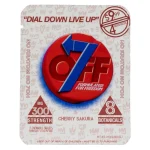
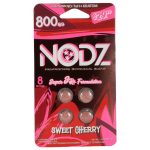
Interested in botanical tablets made without kratom or 7-OH? At Poppy Lotus, you can shop botanical blends including OFF7 300mg Botanical Blend Tablets 2pk, Nodz Botanical Blend Tablets 4pk, and Wingz 1200mg Tablets 6pk. Explore the packs below to compare their listed formulas and formats.
-
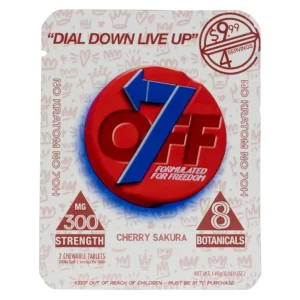 $9.99Up to 10% offView options This product has multiple variants. The options may be chosen on the product page
-
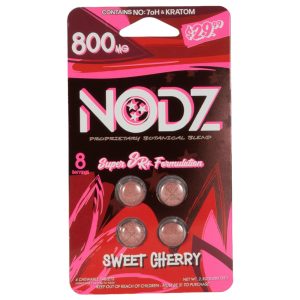 $29.99Up to 10% offView options This product has multiple variants. The options may be chosen on the product page
-
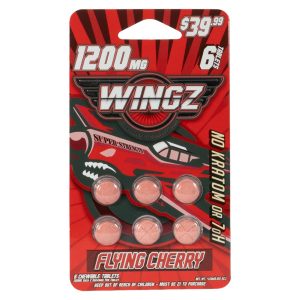 $39.99Up to 10% offView options This product has multiple variants. The options may be chosen on the product page
Clinical and Public Health Context: 7-OH, Kratom, and Opioid Addiction
Regulators are focused on 7-OH because it sits squarely in the broader landscape of dangerous and addictive opioids. Public health and addiction specialists warn of the risks associated with the misuse of high-potency 7-hydroxymitragynine products. The CDC has reported increasing poison control calls and adverse health events related to concentrated kratom products, and 233 deaths associated with kratom were reported from 2015 to 2025. Notably, 62% of kratom-related calls involved users without other drugs in their system, suggesting that kratom use and concentrated 7-OH products alone can cause serious harm.

Concentrated 7-OH products can be substantially more potent than users expect. Lack of standardization and deceptive marketing practices characterize many concentrated kratom products sold in smoke shops and online. Some users with chronic pain, anxiety, or prior opioid addiction turned to 7-OH as a self-treatment alternative, sometimes describing it as life-changing before dependence emerged. 7-OH dependence can cause opioid-type withdrawal symptoms-common symptoms include muscle aches, insomnia, irritability, nausea, and intense cravings similar to withdrawal from heroin or prescription opioids.
Federal agencies have raised concerns about addiction and dependence risks associated with concentrated 7-hydroxymitragynine products. Some public health experts worry that cutting off legal 7-OH access without adequate treatment pathways could push users toward other drugs, including illicit opioids, unless clinics and medication-assisted treatment are scaled up.
What the 7-OH Federal Ban Means for Patients, Clinics, and Retailers
The effective date serves as a practical deadline. Consumers using 7-hydroxymitragynine products face potential withdrawal symptoms upon market removal, and companies producing concentrated 7-hydroxymitragynine products may face significant financial and operational challenges under federal regulations.
Treatment programs may see more patients seeking help for 7-OH, kratom, and mixed opioid dependence once products sold at higher concentrations become scarcer. Substance use disorders involving 7-OH should be treated with the same urgency as any opioid addiction.
Medication options: Buprenorphine helps recover from 7-OH addiction. Medications such as buprenorphine, methadone, and naltrexone are effective for dependence on 7-OH, kratom, heroin, and prescription opioids. Naloxone can reverse opioid overdoses involving 7-OH.
Clinics and prescribers should prepare by updating protocols, educating staff on 7-OH withdrawal, and familiarizing teams with stimulants, benzodiazepines, and other drugs that patients may also be using concurrently.
Retailers must track federal announcements from the Justice Department and DEA. Once a final emergency scheduling order is effective, stocking or selling covered 7-OH products becomes a serious criminal risk. Companies must comply with new federal thresholds to avoid legal repercussions related to 7-hydroxymitragynine. Sellers in stricter states like Kansas or Texas may already be prohibited from carrying any 7-OH-containing products.
Practical Guidance for Current 7-OH and Kratom Users
Many people use 7-OH or kratom to manage pain, mood, or opioid withdrawal and may feel anxious about looming restrictions. Here is what to do now:
Avoid abrupt cessation. If you are a frequent user, do not quit cold turkey. Discuss a tapering plan with a healthcare provider familiar with opioid addiction and kratom pharmacology. A doctor experienced in addiction medicine can help you step down safely.
Watch for signs of dependence. Needing higher concentrations to get the same effect, using to avoid feeling sick, or failing attempts to cut back are all red flags. Seek medical help early-small amounts of 7-OH can still build tolerance over time.
Explore evidence-based treatment. Packard Health Clinic offers opioid use disorder treatment, and the U-M Addiction Treatment Services clinic offers outpatient treatment for people dealing with 7-OH or kratom dependence. FindTreatment.gov helps locate addiction treatment centers nationwide.
Practice harm reduction. Be honest with your clinician about kratom use. Avoid mixing kratom or 7-OH with benzodiazepines, alcohol, or other opioids. Know how to access naloxone in case of overdose.
Plan ahead. Regulatory changes can happen quickly once the DEA announced or Justice announces updates, so planning transitions before the final effective dates reduces the risk of supply shocks and unsafe substitutions.

How to Follow Ongoing Federal and State Regulatory Updates
Federal 7-OH policy is still evolving, and staying informed helps patients, prescribers, and businesses remain compliant and safe.
Watch the Federal Register and DEA website for future emergency scheduling actions, permanent scheduling proposals, and any changes to threshold levels or covered substances.
Check state health department and pharmacy board websites for kratom and 7-OH advisories, law changes, and enforcement priorities.
Clinicians and treatment programs should join professional mailing lists or continuing education programs focused on kratom and emerging synthetic opioids.
Do not rely solely on product marketing claims or social media. Verify legality and safety through official regulatory, medical, or poison control resources. The point is simple: when it comes to intentionally enhanced or concentrated 7-OH products, independent verification matters more than label claims.
Frequently Asked Questions
Is kratom itself banned under federal law because of the 7-OH emergency scheduling?
Under current federal rules, botanical kratom leaf and products with only natural trace amounts of 7-OH remain unscheduled at the federal level. The ban applies to products above the specified threshold-more than 1 mg per gram or milliliter, or with a mitragynine-to-7-OH ratio below 100:1. However, some states such as Kansas have independently classified kratom and 7-OH as Schedule I under state law, effectively making possession and sale illegal within their borders regardless of federal thresholds.
How long will the federal 7-OH ban last, and can it become permanent?
The temporary scheduling order typically lasts two years from its effective date (for example, from mid-November 2026 to mid-November 2028), with the option for the DEA to extend it for up to one additional year. During this window, the DEA can pursue permanent scheduling through a separate rulemaking process using updated scientific and medical evaluations from the department of health and human services.
Does staying below the DEA’s 7-OH threshold mean a product is safe to use?
No. The DEA threshold only defines which products fall under the emergency Schedule I rule-it is not a safety benchmark. Neither DEA nor HHS has declared any 7-OH-containing product safe at any dose. FDA and state agencies can still act against lower-strength products they consider risky or adulterated.
What should someone do if they already feel dependent on 7-OH or concentrated kratom extracts?
Contact an addiction medicine specialist or clinic experienced with opioid use disorder. Specifically mention 7-OH or high-potency kratom extract use so your doctor can tailor treatment. Medication like buprenorphine, counseling, and monitored tapering protocols can reduce withdrawal symptoms and relapse risk. Abrupt cold-turkey cessation can be medically and psychologically difficult.
Can I be prosecuted federally for possessing 7-OH products I bought before the ban took effect?
Once the effective date of the emergency scheduling passes, possession, distribution, and manufacturing of covered 7-OH products can trigger federal criminal liability regardless of when you purchased them. If you have legal concerns, consult a qualified attorney in your jurisdiction-enforcement discretion, prior records, and state-specific law can all influence actual legal risk.