Akuamma
Akuamma vs Kava: How These Two Botanicals Really Compare
Key Takeaways Akuamma seeds (Picralima nitida) and kava root (Piper methysticum) come from different plants, different regions, and entirely different chemical classes – monoterpene indole alkaloids versus kavalactones. Akuamma alkaloids can affect opioid receptors, while kava’s kavalactones mainly modulate GABA-A–related pathways, so their “relaxing” reputations stem from distinct mechanisms in the body. Current evidence does…
Key Takeaways
Akuamma seeds (Picralima nitida) and kava root (Piper methysticum) come from different plants, different regions, and entirely different chemical classes – monoterpene indole alkaloids versus kavalactones.
Akuamma alkaloids can affect opioid receptors, while kava’s kavalactones mainly modulate GABA-A–related pathways, so their “relaxing” reputations stem from distinct mechanisms in the body.
Current evidence does not support using akuamma to replace kratom or as a substitute for FDA approved medications for addiction treatment or pain management. Kava also lacks FDA approval and carries rare but serious liver risk warnings.
Both akuamma and kava are sold as plant materials (seeds vs root) and extracts, but potency and safety data for retail products remain limited compared with established therapies.
Experimental derivatives of akuamma alkaloids and isolated kavalactones studied in labs are not the same as the over-the-counter powders, teas, or capsules consumers buy.
Introduction: Why Compare Akuamma and Kava?
In 2025 and 2026, searches for botanical alternatives to prescription opioids and kratom have climbed steadily. Two plants keep appearing side by side in forums and supplement stores: akuamma and kava. Both are plant-derived remedies promoted for relaxation and relief, yet they differ in almost every way that matters – geography, plant anatomy, and pharmacology.
Akuamma is derived from Picralima nitida seeds, sourced from West Africa. Kava is derived from the roots of Piper methysticum, cultivated across the South Pacific. Where akuamma’s active alkaloids interact with opioid receptors, kava acts via kavalactones that modulate GABA receptors. Neither herb is an FDA approved medication, and the evidence behind both is much thinner than what supports standard pain or addiction treatment options.
This article compares their plant materials, preparations, compound classes, known research boundaries, and the persistent question of whether akuamma can replace kratom.
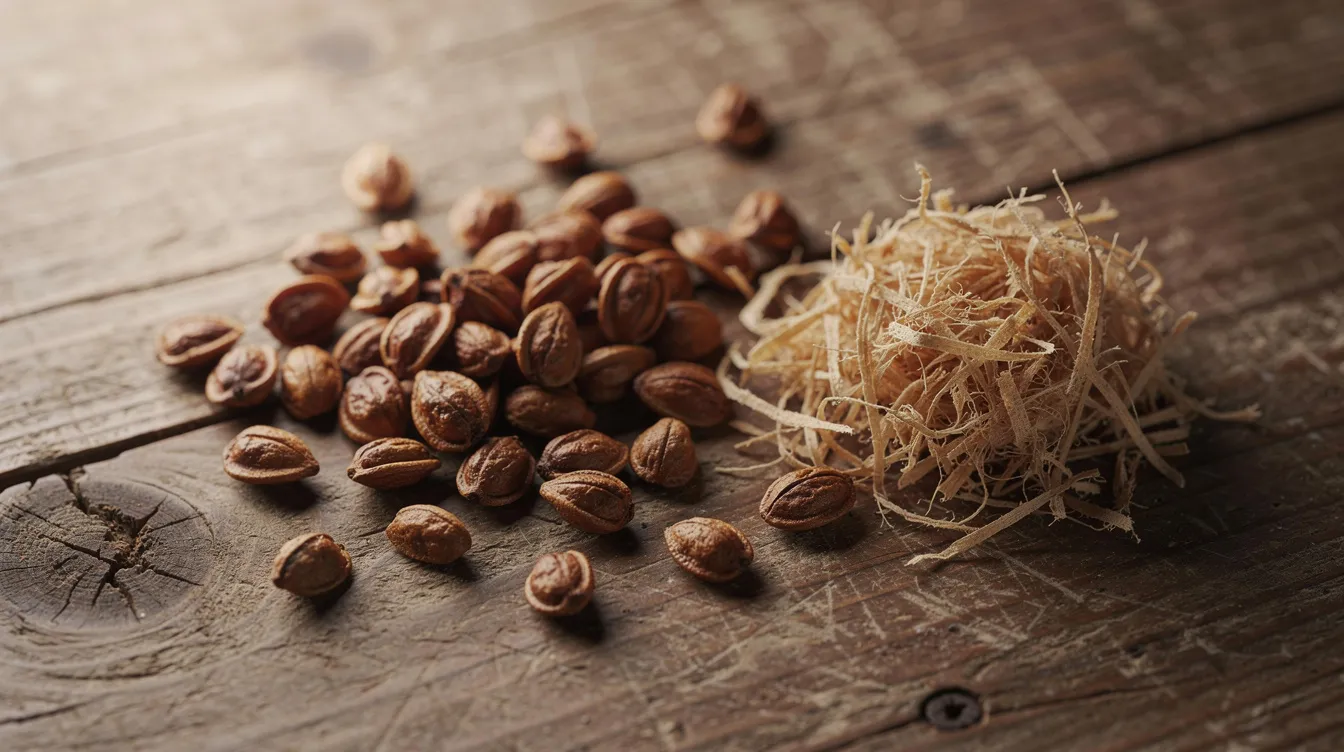
Akuamma Basics: Plant, Seed, and Traditional Uses
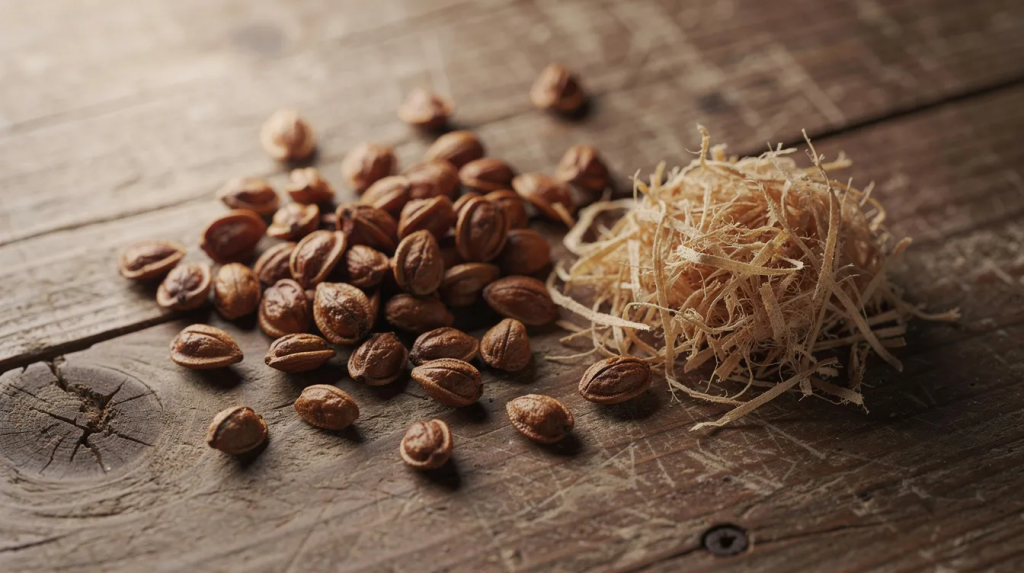
Picralima nitida is an evergreen tree native to tropical regions of West and Central Africa, including Ghana, Nigeria, and Côte d’Ivoire. In village traditional medicine, the akuamma seed has been chewed or prepared as crude decoctions for generations to manage pain, fever, and gastrointestinal disorders.
When you see “akuamma” in commerce, it almost always refers to the dried akuamma seed or its powder – not bark or leaves, even though multiple plant parts have documented folk uses. Akuamma is marketed globally as a dietary supplement, typically as capsules or loose powder.
The main alkaloids in akuamma seed include:
Akuammine (the most abundant, roughly 0.5–0.6% of dried powder)
Pseudoakuammigine
Akuammicine
Akuammidine
Picraline
All belong to the monoterpene indole alkaloids family. Total alkaloid content in seeds runs approximately 4–5%. Akuamma contains monoterpene indole alkaloids like akuammine, which puts it in the same broad class as compounds found in other plants such as Mitragyna speciosa (kratom), though with distinct structures and potencies. Traditional preparations involved whole seed or crude decoctions, which differ substantially from modern standardized akuamma extract products sold online. The reported uses – pain relief, gastrointestinal upset, and malaria-related symptoms – are rooted in historical practice, not modern clinical trials. Akuamma is traditionally used in West Africa for fever treatment alongside those other applications.
Kava Basics: Plant, Root, and Cultural Context
Kava (Piper methysticum) is a pepper-family shrub cultivated for centuries across the South Pacific – Fiji, Vanuatu, Tonga, and neighboring islands. Kava is associated with a long-standing history of human consumption, and it has been used traditionally in the South Pacific for centuries in both ceremony and daily social life.
Traditional kava drinks are prepared from peeled, dried kava root and rhizome, pounded or ground, then kneaded with cool water and strained through cloth. This aqueous preparation is what Pacific Islanders have consumed for generations. Kava is traditionally consumed in social settings to facilitate relaxation, and it is often used socially as a sober alternative to alcohol.
Modern products range from whole kava root powder for home beverages to standardized kava extract in capsules and tinctures, often labeled by total kavalactone percentage. Noble cultivars are preferred; non-noble “Tudei” varieties carry a reputation for more adverse effects and higher flavokavain content.
Exploring modern kava formats? Shop kava products at Poppy Lotus, including Nine Mile Botanicals Kava Extract 30% capsules, Wunder Grape+Kava gummies, and Kava Suta Zen Blend tablets made with M. Hirsuta and kava extracts.
-
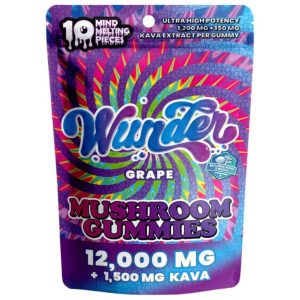 Price range: $5.89 through $29.99View options This product has multiple variants. The options may be chosen on the product page
-
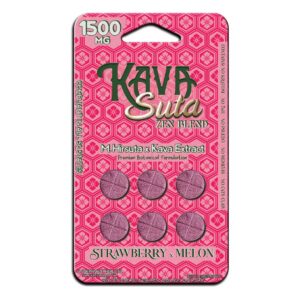 $39.99Up to 10% offView options This product has multiple variants. The options may be chosen on the product page
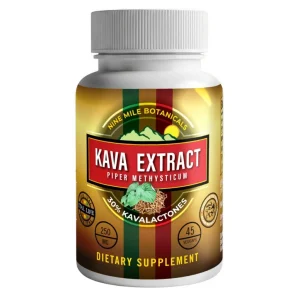

Typical traditional effects include social relaxation, decreased anxiety, muscle ease, and mild sedation – usually in evening or community settings. Kava root is traditionally used as a beverage for its anxiety-relieving properties and calming effects. Worth noting up front: a 2002 U.S. FDA advisory flagged rare but severe cases of liver injury linked to kava-containing products, and safety debates continue.
Compound Classes: Akuamma Alkaloids vs Kavalactones
Chemical class matters because it determines which receptors a compound can reach, how the body processes it, and what risks it carries. Akuamma’s compounds are alkaloids; kava’s are lactones. That single distinction explains most of the difference in how these plants interact with the brain.
Akuamma alkaloids are indole alkaloids – nitrogen-containing molecules structurally related at a high level to other indole compounds found in different plants. A study published in the Journal of Natural Products (2020) characterized six akuamma alkaloids isolated from Picralima nitida and tested them against more than 40 CNS receptor targets. Several akuamma alkaloids showed primary interactions at opioid receptors, with akuammine demonstrating a mu opioid receptor Ki of 0.30 µM – measurable but far weaker than classical opioids. Akuammicine proved to be a more potent kappa opioid receptor agonist.
Kavalactones are a different story entirely. Kavain is the major kavalactone in kava, joined by dihydrokavain, methysticin, yangonin, and others. Kava’s main compounds are kavalactones, not alkaloids. They are lipophilic, non-nitrogenous lactones that primarily modulate GABA-A receptor function and certain voltage-gated ion channels rather than opioid receptors.
The takeaway: kava’s psychoactive chemistry does not resemble opioids. Akuamma alkaloids interact with opioid receptors directly, placing them in an opioid-active substance category – even if their potency is modest compared to prescription opioids or other opioids.
How Akuamma and Kava Act in the Body
Understanding what these plants actually do once you consume them requires looking at both receptor data and subjective reports – while keeping research limitations front and center.
For akuamma, several active alkaloids show measurable binding at the mu opioid receptor, but most function as a partial agonist with weak efficacy. In animal models, natural seed alkaloids produced limited analgesic effects in standard thermal nociception assays. Akuamma is studied for its effects on opioid receptors and is often explored for its pain-relieving properties, yet the claim that akuamma is stronger than kratom is not supported by controlled research. Kratom’s mitragynine and especially 7-hydroxymitragynine – sometimes further metabolized to mitragynine pseudoindoxyl – produce much more robust opioid effects in preclinical work.
For kava, kavalactones enhance GABAergic signaling, inhibit certain voltage-gated calcium and sodium channels, and may influence monoamine reuptake in relevant tissues. Kava is studied for its effects on GABA-A receptors. Kava’s effects can include sedation and muscle relaxation, explaining its anxiolytic and calming reputation.
User reports reflect the pharmacology: akuamma is often described as subtle, possibly mildly analgesic and sedating. Kava is more clearly anxiolytic and social, frequently accompanied by mouth numbness and a “heavy” body relaxation. Both akuamma and kava can produce relaxation and sedation, but through fundamentally different pathways. Neither akuamma nor kava typically produce alcohol-like impairment.
Plant Materials and Common Preparations: Seeds vs Roots
The part of the plant used shapes preparation choices and what you can expect for onset and duration.
Common akuamma formats:
Whole dried akuamma seeds
Seed powder for teas, capsules, or direct ingestion
Concentrated akuamma extract marketed for pain or as a way to replace kratom
Common kava formats:
Noble kava root powder for traditional beverages
Instant kava drink mixes
Tinctures
Akuamma seed use typically involves steeping or boiling powder, while kava root powder is kneaded in cool or room-temperature water and strained. Onset for both generally falls in the 20–60 minute range depending on preparation, with kava drinks sometimes hitting faster when made from finely ground root. Duration varies – a few hours for most people with either plant.
Because extraction efficiency differs between products, different brands’ powders and extracts can deliver very different doses of active alkaloids or kavalactones even at the same gram amount. Lab-tested products with verified alkaloid or kavalactone percentages offer more predictability than unverified powders.
Akuamma, Kratom, and Kava: Overlapping and Diverging Roles
Many readers arrive at akuamma vs kava after searching for akuamma and kratom. Here’s where these three plants converge and diverge.
Both akuamma and kratom share the broad class of monoterpene indole alkaloids, but their structures, receptor binding profiles, and potency differ significantly. Kava lacks this compound class entirely. The kratom leaf from Mitragyna speciosa, native to Southeast Asia, contains several compounds – particularly mitragynine – that bind opioid receptors with far greater efficacy than akuamma’s isolated alkaloids.
Online interest in using akuamma to replace kratom has grown, especially in regions where kratom access is restricted. However, the idea that akuamma can replace kratom is not backed by controlled human evidence. Akuamma alkaloids interact with opioid receptors but are less potent than kratom, making a direct substitution unreliable.
Perceived effects differ accordingly:
Factor | Akuamma | Kratom | Kava |
|---|---|---|---|
Primary effect | Mild sedation, subtle analgesia | Dose-dependent energy or opioid-like relief | Anxiolytic, social relaxation |
Compound class | Indole alkaloids | Indole alkaloids | Kavalactones |
Primary receptor target | μ/κ opioid | μ opioid | GABA-A |
Evidence depth | Very limited | Growing but incomplete | Moderate (small trials) |
No standardized conversion exists between doses of akuamma, kratom, and kava. Switching among them is not evidence-based addiction treatment, and self-directed substitution during kratom withdrawal can complicate care.
Safety, Side Effects, and Dependence Concerns
Both plants carry risks, and absence from controlled-substance schedules does not mean proven safety. Both akuamma and kava have uncertain safety profiles.
Akuamma concerns:
Akuamma’s safety in humans is not well established. Animal experiments hint at possible genotoxicity and reproductive toxicity, though data remain preliminary.
Akuamma has an LD50 of 707.107 mg/kg in rodents – a reference point, not a human safety threshold.
Akuamma may cause nausea or stomach discomfort when consumed.
Combining akuamma with alcohol raises additional safety concerns.
The question of whether akuamma is addictive remains open: opioid receptor activity creates a theoretical dependence potential, but no established withdrawal syndrome exists for akuamma in humans. Marketing akuamma as “nonaddictive” is premature given the underlying dependence questions.
Kava concerns:
Kava can trigger digestive upset and drowsiness, along with coordination issues and skin changes with heavy use.
Kava may lead to liver toxicity in rare cases. Kava may cause severe liver injury, according to a 2002 FDA advisory. Kava products have been linked to rare cases of serious liver injury, and kava has documented risks of liver toxicity and potential adverse effects.
Kava is associated with a lower risk of dependence compared to alcohol, but caution is warranted with frequent use.
Both should be avoided alongside alcohol, benzodiazepines, prescription opioids, or other sedating substances due to additive CNS depression and unknown interaction risks. Medical history matters – anyone with liver disease or on CNS-active medications should consult a clinician first.

Research Boundaries: What We Know and What We Don’t
Both akuamma and kava sit at the edge of pharmacology and ethnobotany rather than mainstream medicine. Additional research is needed before either can be recommended with confidence.
Akuamma gaps:
Virtually no randomized human clinical trials examine analgesia, mood effects, or standardized dosing.
Akuamma’s addiction potential remains uncertain due to limited human data. A 2026 web based survey found no akuamma-related substance use disorder cases – a point of data, not proof of safety.
Seed composition varies by region, harvest, and storage. Analytical work using techniques like chromatography b methods is helping to describe akuamma’s alkaloid profiles, but standardization is far from routine.
Most evidence comes from laboratory studies and animal experiments showing that akuamma alkaloids affect opioid receptors, which do not alone prove real-world benefit or safety.
Kava gaps:
Several small clinical trials and meta-analyses have examined kava extracts for generalized anxiety, with modest positive results. But outcomes depend on specific standardized preparations, not generic kava teas from variable sources.
Long-term safety data in chronic users are limited.
Neither plant has gone through the rigorous process required for FDA approval as a medication for pain or addiction. Dosing rules, long-term safety, and drug-herb interactions remain incompletely defined for both natural products.
Experimental Derivatives, Addiction Treatment Claims, and Regulatory Context
There is an important distinction between natural plant preparations and experimental derivatives designed in laboratories using medicinal chemistry techniques.
Research groups have taken several alkaloids from Picralima nitida and created a chemically modified derivative with dramatically increased potency at opioid receptors. For example, a study published in ACS Chemical Neuroscience (2023) showed that modified akuamma alkaloids – specifically an N-phenethyl substitution on pseudoakuammigine – achieved roughly 70-fold increased receptor potency at the mu opioid receptor and 7-fold greater selectivity. These modified akuamma alkaloids with increased potency are research tools, not ingredients in the akuamma seed powder you buy online. Research shows modified akuamma alkaloids can increase opioid receptor potency, but an isolated compound from a lab bench is a different thing from a retail capsule.
Marketing that suggests akuamma can treat opioid withdrawal, kratom dependence, or opioid use disorder is not supported by any controlled clinical protocol or FDA approval. Self-directed substitution can complicate medical detox or residential treatment outcomes. For anyone experiencing withdrawal or managing substance use, FDA-approved medications and structured treatment programs remain the evidence-based path.
As of late 2026, akuamma, kava, and kratom remain unscheduled at the U.S. federal level, but this does not override state laws. Among psychoactive drugs derived from other plants, legal status can shift as adverse event reports accumulate. A recent review on kava for substance use disorders highlights theoretical interest in kava for alcohol relapse prevention but no clinical endorsement yet.
Practical Use: Choosing Between Akuamma and Kava
If you are considering either plant, start by clarifying your goal.
For situational anxiety and social relaxation: Kava has more consistent human data and a longer track record. Noble-cultivar, aqueous-prepared kava root is the form closest to what traditional cultures and clinical studies have used.
For mild discomfort or as a kratom-adjacent botanical: Akuamma is more commonly marketed this way, but akuamma seeds have been used traditionally for pain relief without modern clinical validation. Establish akuamma’s actual alkaloid content through lab-tested products if you proceed.
Practical guidelines:
Start with low doses. Gauge individual response before increasing.
Look for independent lab testing confirming active alkaloids or kavalactone content.
Avoid mixing with alcohol, other opioids, or other sedating substances.
Consult a clinician if you take CNS-active prescriptions, have liver disease, are pregnant, or have a history of substance use disorder.
For chronic pain or opioid use disorder, FDA approved medications and structured pain management programs have far stronger evidence than any akuamma or kava regimen. Botanical alternatives are not substitutes for evidence-based medical care. For related resources on evidence-based treatment, speak with a healthcare provider familiar with both herbal pharmacology and standard therapies.
FAQ
Can akuamma and kava be taken together?
Combining akuamma and kava has not been systematically studied in humans. Both can cause sedation through different mechanisms – opioid receptor activity for akuamma, GABA modulation for kava – so additive effects on coordination and alertness are plausible. Avoid driving or operating machinery, and try only one plant at a time to gauge your response before considering any combination.
Is akuamma legal where kava is legal?
Legality is jurisdiction-specific. Many countries and U.S. states have clearer regulations around kava than akuamma, which often flies under the regulatory radar due to fewer documented adverse events. Check both national and local regulations before purchasing. Remember that legality does not imply endorsement, proven safety, or FDA approval for medical use.
Does akuamma show up on drug tests like opioids?
Routine employment opioid screens typically target morphine-like metabolites, not the different alkaloids found in akuamma. There is currently little published data on cross-reactivity. If you are in a safety-sensitive job or under legal supervision, disclose supplement use to your testing authority rather than assume any substance will be undetectable.
Is kava safer than alcohol for social relaxation?
Kava does not impair judgment in the same way alcohol does and is not associated with the same degree of behavioral disinhibition. However, it still affects reaction time and can stress the liver in susceptible individuals. Whether kava is “safer” depends on dose, frequency, liver status, and product quality. Neither kava nor alcohol is risk-free, though kava is associated with a lower risk of dependence compared to alcohol.
Can akuamma or kava be used during pregnancy or breastfeeding?
Both akuamma and kava lack robust human safety data in pregnancy or lactation. Some animal studies on akuamma alkaloids raise concerns about developmental toxicity, and kava’s hepatotoxic potential adds another layer of caution. Pregnant or breastfeeding individuals should avoid these botanicals unless specifically cleared by a qualified healthcare professional who understands their pharmacology and medical history.